

June 6, 2012 | Read Time: 5 minutes
Our nation is in the run-up to what some call “taxmageddon” or “budgetmageddon” and what others simply say will be “falling off the fiscal cliff.”
While most nonprofit leaders are focusing on whether the budget debates now under way in Washington could reduce charitable tax deductions, and thus possibly donations, they and their organizations should instead devote their attention to policy decisions that could shred the social contract. The House of Representatives has already approved cutting trillions and trillions of dollars from government programs and charities that are critical to low- and moderate-income people. Worse may be yet to come.
Charities and foundations must confront immediate and near-term policy battles of extraordinary consequence. Yet they seem to have their blinders on, or simply fear controversy no matter what the stakes.
The latest challenge comes as Republicans have made clear they want to repeat last year’s divisive struggle over raising the debt limit. In the House, they have already concentrated all the deep spending cuts to domestic programs while increasing money for defense—going against the agreement they made with their Democratic colleagues and the White House last year to spread the cuts evenly.
Making matters worse, conservatives want to preserve Bush-era income-tax cuts for wealthy Americans, an action that would cost the Treasury an estimated $1-trillion over 10 years. In the House, they have already passed a budget plan that would give millionaires an additional tax break averaging $265,000 a year while cutting more than $3-trillion from programs that serve low-income people and finance charitable programs that help them.
This is not chump change. Just the decision to exclude defense spending from budget cuts means that Congress will need to find $55-billion more than expected in domestic cuts. That’s more than what America’s foundations give away in a year. The amount that the budget would cut over 10 years is seven times as great as the total that foundations will give during that time.
The deep cuts passed by the House would mean that 2 million people could lose food stamps altogether and 44 million others would get smaller subsidies. The House budget would also eliminate block grants to the states that now help nonprofits provide services to 23 million people, over half of them children. Disabled people who count on Meals on Wheels, needy people seeking child-care aid, youngsters in foster care, and many other vulnerable people would no longer get much help from government-subsidized programs.
And the assault on federal aid to nonprofits isn’t over. Both congressional Democrats and Republicans want to pass legislation to prevent interest rates on student loans from rising on July 1 as planned. But the way they want to go about it is completely different. Democrats want to pay for the student-loan measure by ending some tax cuts that benefit businesses. Republicans suggested paying for it by taking money away from government-subsidized programs that nonprofits run to prevent obesity, cancer, HIV/AIDS, and other health dangers.
As a growing number of lawmakers have tried to destroy America’s safety net and reshape the role of government away from caring for the common good, nonprofits and foundations have been mostly silent. They are spending so much energy on improving their own operations, they seem to be forgetting about the larger picture. Or maybe they figure it’s better just to go along with the will of politicians rather than to challenge them.
While that might be in the interests of some organizations and institutions, it does not serve society well. And it certainly works against the interests of the increasing numbers of poor and middle-class Americans who face harder and harder times. The profoundly disturbing increase in economic inequality threatens all of us, even those who land in the top 1 percent.
Our nation desperately needs nonprofit leaders to step up to help Americans understand the dangerous course lawmakers are pursuing and what it means for ordinary citizens and the organizations that try to serve them.
While nonprofits can’t get involved in partisan activities, they have lots of room to act. The heads of nonprofits and philanthropies need to lead average citizens to find their full and vital voice and speak out for the good of each and all of us.
Foundations and nonprofit organizations can provide money and other help to build assertive and ambitious voter-education efforts. They can help people better understand critical issues and the solutions that elected policy makers are considering or failing to put on the table.
Charities can also:
- Propose policies that make sense and urge people to promote action on them by communicating with lawmakers and members of the executive branch.
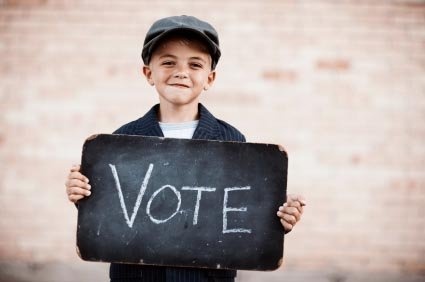
- Run voter-registration efforts and encourage and help people to participate fully in the democratic process. In particular, they should rally their own constituencies, people who use their services, volunteers, and staff members to sign up to vote.
- Operate nonpartisan turn-out-the-vote campaigns so that the people they serve, often the most marginalized, make their voices heard at the ballot box.
The stakes now are huge for charities, foundations, and communities across America. The way Congress and presidential candidates resolve the fiscal issues we face today will determine our future for years to come. Policy choices made now could sharply worsen the quality of life for the overwhelming majority of Americans. We may well find both government and nonprofits without the resources to moderate the gravely deteriorating circumstances we face as individuals and as a society.
Most Americans agree on the broad goals of what the nation needs. They want an overhaul of the tax code that forces the wealthy to pay a fairer share of what the nation needs to pay its bills. They want real changes in Medicare, Medicaid, Social Security and other entitlement programs that will achieve long-term savings while protecting people who depend on them. They want investments to stimulate the economy and create jobs. And they want to be sure that the defense budget bears its share of the deficit-reducing burden, especially as wars wind down.
Nonprofit organizations and philanthropies can maintain their silence on such issues and fail America or they can help lead us back toward the common good by promoting popular action in our shared interests. They don’t have much time if they are truly to serve our society.







