IRS Rules Against Lobbying Chill Nonprofit Participation in Democracy

By LAWRENCE OTTINGER
Contributor
June 16, 2013 | Read Time: 7 minutes
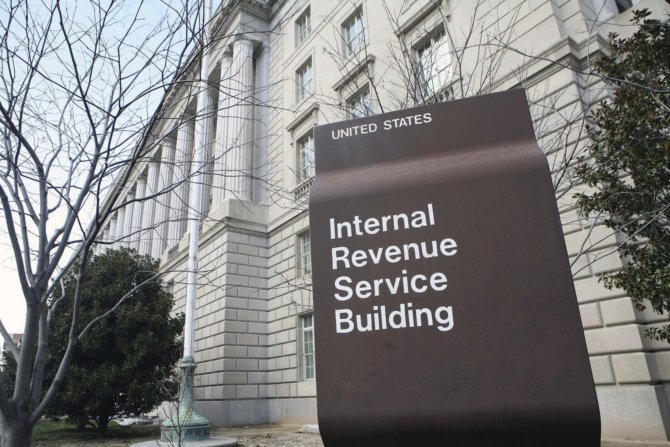
The political jockeying prompted by the Internal Revenue Service’s mishandling of applications for tax-exempt status has obscured a real opportunity for change: People of every political stripe agree that it’s time to change the rules that govern lobbying and campaign activities by charities and social-welfare organizations.
Now it’s up to nonprofits to forge a broad coalition to lobby Congress and the IRS to seize the moment to fix problems that have festered for decades but have grown worse in the past few years.
Today’s fuzzy rules chill nonprofit participation in our democracy and make it costly for small groups to follow the rules, and make it difficult for government to enforce rules fairly.
It’s quite possible to adopt clear rules that encourage nonprofits to influence public policy without opening the door to sham front groups for business or partisan political interests.
Let’s start by looking at the easiest rules to overhaul: the restrictions on lobbying.
Civic leagues and other social-welfare organizations, governed by section 501(c)(4) of the Internal Revenue Code, are permitted to lobby as much as they want; that’s why their donors can’t deduct contributions to them.
That’s smart policy. But the restrictions on lobbying by charities don’t make sense.
The main problem is that the IRS has two sets of rules. The ones that govern more than 90 percent of charities date back to 1934 and say that lobbying may not be a “substantial part” of a charity’s activities. But the IRS does not define “substantial part” and requires charities to review a wide range of the activities of all staff members and volunteers to determine how much involves advocacy. That’s expensive and time-consuming but necessary because the price of violating the rules is steep: Nonprofits would lose their tax-exempt status.
In 1976, Congress passed a clear and sensible approach charities could choose to follow instead of the 1934 law. Under that approach, charities may spend up to a fixed percentage of their budgets on lobbying.
Congress should simply require all charities to follow the 1976 approach. But first, Congress needs to update and simplify the law so it makes sense for all charities to use. Conservative legal experts like this idea because it reduces the amount of governmental intrusion on the First Amendment activities of charities.
Mainstream nonprofits also like it. In fact, in 2005 a broad coalition of groups, including the Alliance for Justice, Focus on the Family, and United Way Worldwide, joined together and persuaded Congress to pass one aspect of simplifying the 1976 rules: eliminating the separate limits for lobbying a lawmaker directly and grass-roots lobbying, which rallies supporters to press for a policy. Unfortunately, though, it was part of larger legislation that did not become law.
Now let’s urge all groups to come together and push Congress to drop the 1934 approach altogether for charities. Based on objections from some religious groups about the state-church boundaries, such organizations were exempted from the lobbying rules in 1976, and that policy should remain in place and allow any faith-based group the chance to follow the rules if they want.
Just as important as the lobbying issues are questions about electioneering—whether social-welfare groups should be allowed to politick and, if so, how much is the right amount.
Under today’s law, charities are flat-out prohibited from supporting or opposing candidates or political parties in elections for public office. Most nonprofit leaders think that’s right, though some religious groups say they have a First Amendment right to take a stand on particular candidates, at least from the pulpit
Social-welfare nonprofits present a trickier challenge. They were established by Congress as civic groups to be “operated exclusively for the promotion of social welfare,” but the Treasury Department later defined that to mean being “primarily engaged in promoting in some way the common good and general welfare of the community.”
That muddy approach led to the IRS’s failed process for reviewing and enforcing limits on nonprofit electioneering and now raises four questions to consider:
• Should the IRS return to enforcing the law as it was originally worded and prohibit social-welfare groups from partisan politics?
• If working “primarily” for social welfare continues to be the standard, what amount of political spending on election ads and the like should be allowed?
• What is the clearest way for the IRS to spell out what kinds of activities amount to partisan campaign intervention?
• Should social-welfare groups be required to disclose the names of donors and the amounts of their gifts?
Most nonprofit leaders would support strict limits on politicking. While a complete ban provides a clearer standard, social-welfare groups are now so accustomed to making candidate endorsements and participating in some electoral activity that a complete ban may be difficult and undesirable.
What might work best is to pass a strict limit on just how much can be spent on political activity. For example, Greg Colvin, a nonprofit tax lawyer, testified before Congress that a 10-percent limit on total spending would make sense.
Brad Smith, chairman of the Center for Competitive Politics and a former commissioner of the Federal Election Commission, has suggested 30 percent or 35 percent.
In addition, Mr. Smith has offered a worthy proposal to deal with the growing number of groups setting up shop in the heat of a campaign and then disappearing. He suggests that social-welfare groups be prohibited from spending money on partisan politics until they have received tax-exempt status from the IRS or, if that did not happen fast, within one year of their creation.
An idea Mr. Colvin has worked on with other nonprofit experts, known as the Bright Line Project, has also gotten a lot of attention in the wake of the problems uncovered at the IRS. The plan would do away with the subjective approach of today’s rules and state explicitly what social-welfare groups can and cannot do.
Two other ideas have been floated but aren’t likely to gain traction. Some experts have argued for simply eliminating social-welfare groups altogether. That would bring clarity but cause problems for groups that have important social purposes but don’t fit the rules for charity status.
At the other extreme, some have suggested just letting social-welfare groups do as much partisan politics as they want. The downside is that this allows explicitly partisan groups to masquerade as civic leagues and jeopardizes the integrity and tax-exempt status of these organizations.
Of the many issues raised by the involvement of nonprofits in politics, disclosure issues are perhaps the stickiest. Many charities zealously protect the privacy of their supporters (especially those groups that pursue controversial or unpopular causes).
Of course, if Congress were to prohibit or strictly limit election activity by social-welfare groups, then there would not be the same need or demand for disclosure.
Given today’s circumstances, though, more and more charity leaders realize that it’s important to force social-welfare groups to play by a different set of rules when it comes to identifying supporters and that voters need to know who is backing the groups that are barraging them with negative ads and other information.
To be sure, some conservative leaders actively oppose disclosure entirely and others want to limit such publicity to a nonprofit’s biggest contributors. But a sign of changing views is that Independent Sector’s board has adopted new principles supporting public disclosure of most donors (as well as recommending that nonprofits inform donors of the organization’s political activities).
And the Supreme Court is leaning that way, too. After all, eight of the nine Supreme Court justices, including Justices Scalia and Ginsburg, upheld the constitutionality of requiring corporations, including social-welfare groups such as Citizens United, to disclose their campaign activities so that they would be accountable to voters.
At a time when we have so much agreement about what is wrong with today’s approach to governing nonprofit advocacy and politicking, it’s crucial for foundations and other nonprofit leaders to bring together people of different views and tell Congress that now is the time to pass strong and sensible rules.
Otherwise, how can we expect nonprofits to do the job we count on them to do—to bring together people who care for the common good so they can play a vigorous role in shaping policies that affect all Americans?