
Joel Fleishman’s Vision for Philanthropy Should Inspire Us All
A cheerleader for the foundation model, Fleishman understood what philanthropy could accomplish when done right.

By Yossi Prager
Contributor
November 15, 2024 | Read Time: 6 minutes
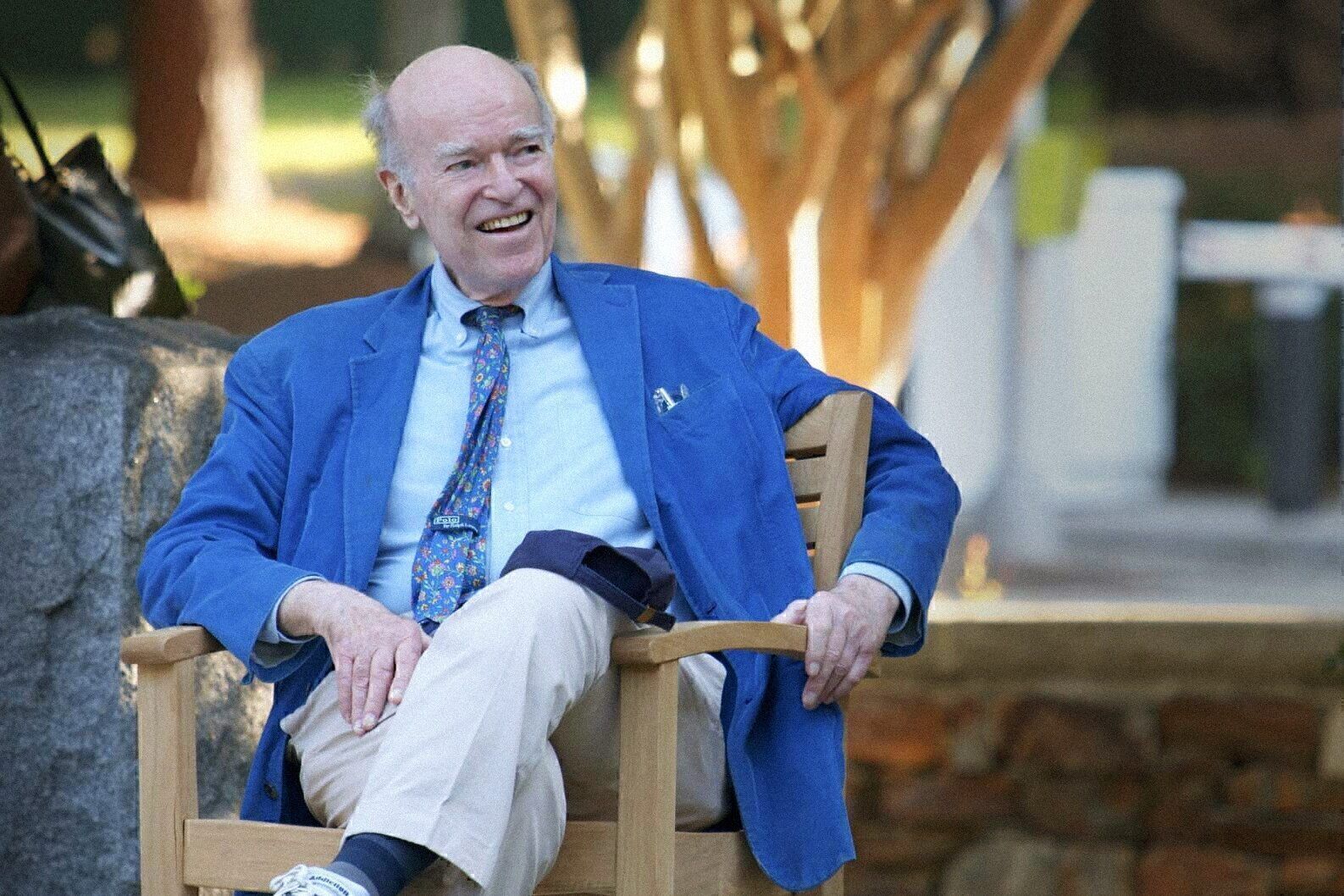
The philanthropic world recently lost one of its greats, Joel L. Fleishman. He served as president of the Atlantic Philanthropic Services Company, the American arm of the Atlantic Philanthropies, and was a masterful scholar at Duke University and a mentor to literally hundreds of people.
Joel’s teachings reverberate across the philanthropic world. He elevated my own vision as a foundation professional and offered a strong defense of the foundation model — but only when it was done right. For Joel, that meant taking bold, strategic risks that create a road map for successfully addressing major challenges in a foundation’s area of interest.
I was never formally a student of Joel’s but learned about philanthropic strategy from him when the AVI CHAI Foundation, where I was then North American executive director, engaged him to track and report to the field on the organization’s plan to spend down its assets. The decision to spend down was triggered by the desire of the founder, who died in 1999, to have the money spent within the lifetime of the trustees who knew him personally.
From 1994 to 2019, AVI CHAI dedicated itself to promoting Jewish commitment and internal unity in North America, Israel, and the former Soviet Union. After a year of assessment, Joel’s initial report came as something of a shock. Rather than a chronicle of our work, it was a polite but stinging critique.
Joel noted that AVI CHAI lacked three critical elements needed for a successful spend-down: Trustees focused on the big picture rather than the details; attention to identifying philanthropic partners and successors; and a program to build the internal capacity of its grantees. The ultimate success of AVI CHAI’s spend-down is due in large part to the foundation’s embrace of Joel’s critique and the revamping of our philanthropic approach. Over time, Joel and I became close friends, and his mentorship remains a source of strength and wisdom for me.
A High Bar
In many ways a cheerleader for foundations’ potential impact on society, Joel nevertheless insisted that funders strive to meet a high bar to earn their favorable tax treatment.
It’s easy to understand why society offers a charitable deduction to grant makers who contribute directly to nonprofits that in turn immediately use the money for charitable purposes. Less clear is why the government should offer a deduction to organizations and individual donors who put aside money for charity — whether in a foundation or a donor-advised fund — and then let most of the contribution sit there unspent year after year, generating investment growth but helping no one.
Joel’s answer, as spelled out in his 2007 book, “The Foundation: A Great American Secret; How Private Wealth Is Changing the World,” is that the tax treatment of foundations gives them a unique competitive advantage over other sectors. Most organizations have stakeholders who hold them accountable for failing to produce timely results. Companies are accountable to shareholders, nonprofits to donors, and government officials to voters. That accountability discourages risk-taking, especially if the positive outcome will take many years, even decades, to materialize. Foundations, however, are accountable only to their boards and, with significant endowments, are free to take long-term risks.
Most of the greatest achievements by foundations began with high-risk experiments that took more than a decade to blossom and then decades more to achieve full-scale expansion. Often it was government that brought the societal benefits to scale, as in the emergency phone system, or 911, public libraries, charter schools, and — with a single Supreme Court decision — marriage equality.
For Joel, foundations and DAFs only justify their tax deductions if they strive to seize their competitive advantage. Practically, this means that funders who take a tax deduction to set aside money shouldn’t just make good grants. Rather, they should develop and implement a strategy for using their assets to achieve important societal improvements.
Toward that end, individual funded programs shouldn’t stand alone. They should be linked, practically or conceptually, to the foundation’s other efforts so that, taken together, they advance its larger strategic goal. Grant makers should also measure their outcomes so that they and others learn how to have the greatest impact.
Relatedly, Joel didn’t believe that foundations fail when their ideas turn out to be wrong. A sector that should be embracing risk will inevitably fail, often before achieving success. A failed effort that adds to society’s knowledge about how not to tackle problems is a step toward a better approach in the future.
So when do foundations fail? When the desired results don’t materialize because the funder lacked a defined strategy and clear goals, didn’t consult the communities it aimed to help, or didn’t conduct adequate market research. Foundations also fail, according to Joel, when they aren’t transparent about disappointing results and don’t learn from them. Successful philanthropy is in many ways like successful businesses, even if the objectives are different and measuring return on investment is more challenging.
When to Wind Down
Joel devoted his 2017 book, “Putting Wealth to Work,” to the question of whether foundations should plan to exist in perpetuity or eventually spend down their assets. Here, too, he focused on foundations’ larger purpose and strategy.
If the primary problems addressed by a foundation are time-limited, then Joel felt the funding should be, too. If the nature of the problem has no end date, funders should continue operations — with one caveat. Since existing in perpetuity is the means and not the goal, Joel believed that even perpetual foundations should consider spending down if an extraordinary opportunity arose to make substantial progress against the goal through significant investment.
As an example, Joel cited the Whitaker Foundation, which spent down its $450 million in assets in the 1990s to create the field of biomedical engineering. The foundation determined that the only way to jump-start the field was to invest in biomedical engineering departments at several universities simultaneously, which required spending all its assets.
Joel was not completely rigid in the application of his philanthropic principles. He understood that funders often feel an obligation to their alma maters, to causes in which friends are honored, or to charities that touch their hearts. Joel applauded these kinds of gifts if they were in addition to, not in place of, the larger strategy.
Joel was an observant Jew, and a mutual friend in his hospital room told me that he passed away immediately after reciting one of the most sacred words in the Jewish liturgy, Shema (“hear”). Joel no doubt was referring to the foundational biblical verse, “Here O Israel, the Lord is Our God, the Lord is One.” But I also take his words literally, as an exhortation to remember and apply his life lessons as we implement our philanthropic plans.
I have now left the field of foundation leadership and joined the Jewish Funders Network to bring my 30 years of experience to advising members in their philanthropy. In this role, I embrace Joel’s clear thinking about effective philanthropy, as well as his personal humility and compassion. Joel’s enthusiasm about the unique role philanthropy can play in society has inspired me in this next phase of my career. I hope others join me in following Joel’s lessons as they pursue their own journeys.





