November 28, 2017 | Read Time: 5 minutes
When Giving Tuesday first sprang to life six years ago, the nonprofit world was much different — as was the role of the first day focused entirely on ditching holiday commercialism to support the common good.
But as we kick off today’s campaigns, Giving Tuesday is not just an alternative to the frenzied holiday shopping fest. I hope it serves instead as unifying force for nonprofits under existential attack from a former partner: the U.S. Federal government, and in particular, the Trump administration.
That was hardly the case on the first Giving Tuesday. Back then, President Obama believed in collaborating with nonprofits. He believed philanthropy could be a driving engine of positive change. And hard as it is to remember those gauzy early days, social media was just beginning to promise a new age of networked enlightenment and involvement.
But as we all hold our breath about whatever hate the White House will offer today, we must make this Giving Tuesday more than a cultural signifier for generosity. It’s a lot to ask of a day of fundraising, but because of its success, there are few events in the nonprofit calendar that match Giving Tuesday’s ability to unify the nonprofit world — and therefore to help resist the forces that threaten its existence.
Distrust of Nonprofits
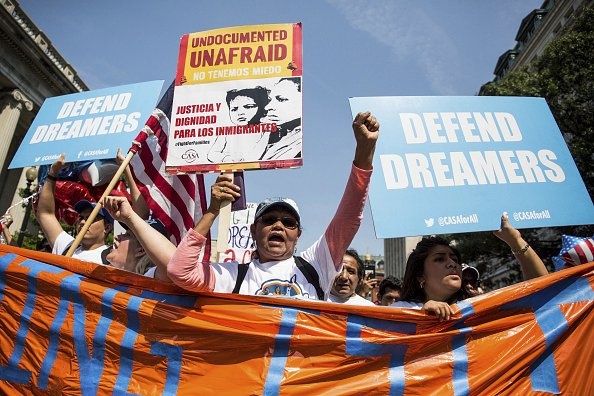
Do not doubt that threat. American civil society itself is under sustained attack, and our organizations are not winning the battle. There is a systematic drive to erase many of the ties that bind nonprofits to a generally liberal government. Every day, we see signs of trouble, such as the gutting of environmental regulations, the xenophobic treatment of immigrants, the grotesque budget plans aimed at hurting the poor, the slashing of State Department ranks and diminishing of American aid overseas. Whether you work in health care, social services, ecology, the arts, education, or any other part of the nonprofit world, you’re worried about where we’re going — or you should be.
And it’s not just President Trump. He represents a broad populist upwelling that devalues and distrusts institutions in general and nonprofits and the government in particular.
As David Callahan, editor of Inside Philanthropy, wrote in The Guardian this month, Republicans are basically ignoring the pain a tax measure would cause that effectively eliminates the charitable deduction for all but the richest Americans. At the same time, those politicians are considering deep cuts in spending that would hurt the very people nonprofits serve and increase demands for services.
“The Republicans’ new cold shoulder toward nonprofits — which employ 10 percent of the labor force and enrich every corner of American life — isn’t so surprising. It reflects the rising grip of libertarianism within the party as well as a tribal fixation with cultural enemies. These trends have marginalized conservatives who actually care about the poor and see local nonprofit organizations and faith-based social-service groups as key players in the fight against poverty.”
That’s the one-two punch that spells such deep trouble for nonprofits: the structural and fiscal changes imposed by an administration that doesn’t care about our work and the potentially long-term damage of culturally disconnecting a large section of the populace from the work of charities. While tax-code changes proposed by Republicans would reduce charitable giving by up to $13.1 billion, according to the Indiana University Lilly Family School of Philanthropy, the long-term cultural damage may be worse. An America that doesn’t value its nonprofit institutions is a chilling thought indeed.
The Cost of Diversity
Add to that the damage that could be caused by the passage of a proposal to allow nonprofits to endorse political candidates and get involved in partisan campaigns. As Catholic University law professor Roger Colinvaux noted in a Chronicle opinion article, under Republican plans to essentially repeal the so-called Johnson Amendment, “partisan politics would overtake the nonprofit world, casting institutions designed to promote the public good into the depraved den of identity politics and selfish motives.”
But there’s another way to look at it: Ending the proscription against nonprofit political activities would cast disarmed nonprofits into a swirling and violent battle with no preparation, few allies, and little in the way of unified leadership.
The strength of the nonprofit world in many ways is our diversity, but that comes at a cost: With little more than our status in the tax code to bind us together, we end up as decentralized competitors for dollars up and down the donor pyramid. As the stock market goes up, philanthropy is up, and most of us are content to continue our annual competition for dollars.
But the people we serve shouldn’t pay the price for our lack of unity. That’s why Giving Tuesday should become a day of rallying the troops, a moment of rare unity when we compete for donations, sure, but also ride a new cultural wave that (we hope) ties a great range of donors to causes that matter — and perhaps to the idea of philanthropy itself.
So as we all wade through the videos and emails and Facebook posts and tweets today, and make our gifts, let’s please consider the threat to the work we all try to do and plan to make Giving Tuesday the start of an effort to fight the forces that harm social-good organizations. That coalition will be a win for the people we serve — and for America.
Tom Watson is president of CauseWired, a consulting firm that advises nonprofits. He is a regular columnist for The Chronicle of Philanthropy.