June 4, 2009 | Read Time: 8 minutes
Americans’ interest in volunteering is so high lately that for many nonprofit groups every day feels like Thanksgiving at a soup kitchen. Far more people are offering their time than can be easily accommodated.
As a result, much of this new interest will be squandered unless we change the way government, the business world, and nonprofit organizations think about putting donated labor to work.
One reason for this unprecedented surge is the inspiration offered by government leaders.
In April, President Obama signed the Edward M. Kennedy Serve America Act into law. Last year the governors of California and New York appointed service czars to their cabinets. New York City is now creating the post of chief service officer.
Additionally, the recession has forced both companies and their employees to rethink their role in society.
Those trends make this a pivotal time to catalyze the contributions that professionals can make by offering their skills to benefit nonprofit groups.
While much of the focus has been on getting volunteers to provide direct services, such as to prepare meals, paint schools, and clean up rivers, that is not the type of volunteer help that nonprofit leaders say they need the most.
Instead, they say they need donations that will strengthen their organizational structures — services from skilled professionals who spend their days working in marketing, human resources, accounting, information technology, finance, strategy setting, and other areas of management.
In a national study released by the Deloitte consulting firm in April, 95 percent of nonprofit groups reported that they needed more pro bono services.
Corporate leaders are beginning to understand this need. As Bill Gates wrote in an opinion article in The Wall Street Journal last year: “The value of corporate involvement lies as much in expertise as it does in monetary support.”
The challenges nonprofit groups face today demand that we find a better way to insert business expertise into the nonprofit world. In building a bridge between business and nonprofit groups, we must devise solutions that both improve our communities today and build a lasting resource for nonprofit organizations.
If crafted well, an army of pro bono consultants can help nonprofit groups strengthen their own abilities to adapt so they can deal with constantly evolving social, economic, and environmental challenges. In addition, pro bono collaboration creates an opportunity for nonprofit groups to work effectively with the business world and government to develop innovative solutions to meet the needs of communities around the country.
Fortunately, we have a better idea of what it takes to make such efforts work today than we did a decade ago. I started the Taproot Foundation eight years ago with the goal of harnessing human capital (professional expertise) to help the human condition by strengthening nonprofit organizations to be more effective in serving society.
At that time, most nonprofit groups were leery of using pro bono service, citing the adage: You get what you pay for.
Traditionally, less than 50 percent of pro bono service projects ever got completed, according to our estimates. That made using pro bono services too risky an investment of time and energy for resource-strapped nonprofit groups.
Now, after working on more than 1,000 pro bono projects in seven cities, we understand the art and science of pro bono service. Today we reliably complete more than 90 percent of the pro bono projects that we start. The satisfaction ratings for those projects and their results are in a similar range.
We recently looked back on those first 1,000 projects to better understand how to overcome the obstacles that previously prevented so many pro bono projects from receiving a passing grade.
What emerged were three clear lessons for ensuring the success of pro bono service projects:
Rigorous and effective screening methods are essential. Since 2001, 20,000 people have applied to serve on pro bono projects through the Taproot Foundation. In reviewing their résumés, asking them in-depth questions about their skills, and conducting interviews with each of them, we have found that nearly 60 percent of those who apply are not qualified to carry out the roles they had hoped to fill.
Given the number of bad résumés most organizations get when doing a job search, that percentage is not actually shocking. It does, however, mean that a nonprofit organization shouldn’t just assume that any person who walks in its front door offering to serve as a marketing manager is qualified to do the needed work.
Nonprofit organizations that receive pro bono services need to be in a good position to accept them. Roughly half of the nonprofit groups that apply to the Taproot Foundation for pro bono support are not prepared to act as good clients. Many of the projects they pitch could not realistically be successful, even when led by an expert.
For example, a proposed project may be too large for a team of pro bono consultants to tackle in a reasonable time frame. Of the remaining half of our nonprofit applicants, 75 percent of them require a significant level of coaching at the beginning to align their expectations and effectively identify a pro bono project that would really meet their needs.
This is not a “nonprofit issue” but rather the nature of setting up any consulting relationship. However, those issues tend to be exacerbated when a consultant is offering their services free.
To ensure the successful completion of pro bono consulting engagements, somebody needs to play the role that a “partner” does at a consulting firm and get involved when the consultant and the client are at odds. Keeping a project on track requires continuous attention.
Good project management is as important as anything else involved in pro bono services. Of the projects we arranged, 65 percent of them encountered a challenge that would probably have been fatal had our staff members not intervened.
For example, we have witnessed situations where a critical team member — from the consulting side or the nonprofit organization — has to drop out. Getting everyone back on track often requires careful management of senior-level officials on both sides.
Understanding the things that can undermine a pro bono project is critical to building the tools and systems needed to make sure such projects help nonprofit groups.
If we take action now, it is easy to imagine that some $2-billion worth of services could be made available to nonprofit organizations annually by 2020.
To meet that goal, companies, professional-services firms, universities, nonprofit organizations, and government agencies will each need to play a critical role.
Companies like the Gap and Capital One have already taken the leadership role and invested time and money to determine how to build pro bono programs within their companies.
Capital One, for instance, has created pro bono corps in multiple units of the company such as marketing, technology, and human resources. Those corps work with Capital One’s community-affairs department to get the most benefit from any contribution of time and services.
By 2020, pro bono programs like those should be as commonplace at Fortune 500 companies as efforts to encourage employees to serve on boards and work in traditional direct-service activities.
When people try to understand pro bono services, they often look at the legal profession. Top law firms regularly dedicate 3 percent to 5 percent of their billable hours to pro bono efforts. It is easy to look at this skeptically and note that law firms are able to make this investment because of the large revenue they typically generate from paying clients.
So a more practical comparison might be the investment in pro bono made by architecture firms, which typically have very slim profit margins. It is now standard practice among architecture companies to devote 1 percent of their hours to pro bono work.
By 2020 it needs to become a standard at all marketing, management, human-resources, information-technology, and other consulting firms to at least match this bar.
Business schools and other graduate programs at universities have begun to make pro bono service part of the experience for students and faculty members. That not only provides critical resources to nonprofit groups in college towns, it also helps to instill an ethic to serve one’s community early on in the professional careers of the next generation.
By 2020 such programs need to a formal part of the curriculum at universities, a part that students expect and cherish as part of their professional training.
To channel all this interest, we need a robust set of organizations to serve as intermediaries to connect professionals who want to help with nonprofit organizations that most need their services.
Those organizations must screen and train business professionals, prepare nonprofit groups for projects, and help troubleshoot as challenges arise.
And finally, government agencies must identify areas that would most benefit from pro bono support and rally professionals and corporations to donate their skills and expertise.
Governments should also support those organizations that manage pro bono projects and ensure their effectiveness.
With a real partnership between government, nonprofit organizations, and business, we can meet the most critical organizational needs of nonprofit groups today and for generations to come. This is the new frontier of the community-service movement.
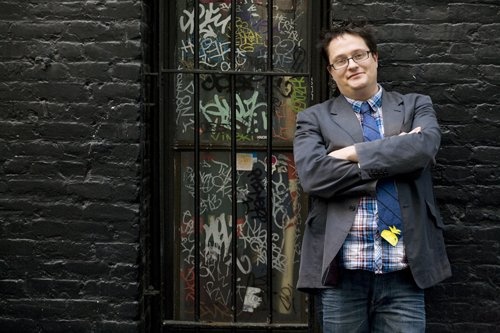
Aaron Hurst is founder of the Taproot Foundation, a New York organization that works to link professionals nationwide to volunteer their skills to charities. He is also the co-author of the new children’s book, Mommy and Daddy Do It Pro Bono.