Michael Joyce’s Mission: Using Philanthropy to Wage a War of Ideas

By WILLIAM SCHAMBRA
Contributor
March 9, 2006 | Read Time: 8 minutes
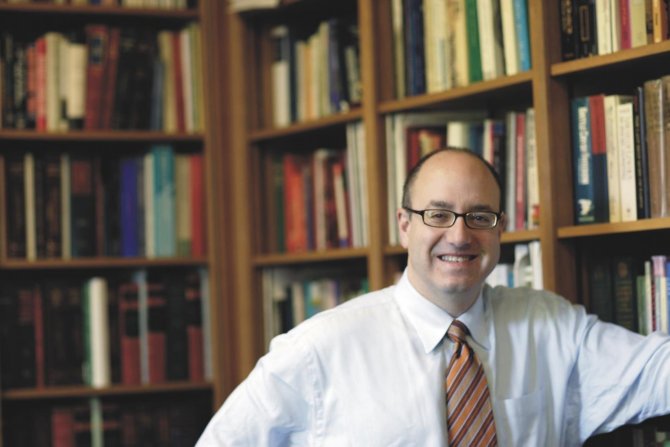
It was typical of Michael S. Joyce, who died last month at age 63, to focus one of his last major speeches about conservative philanthropy not on abstract ideologies or arcane public-policy concepts, but rather on his memories of a sultry evening in the late summer of 1995, when he appeared in the pulpit of Holy Redeemer Institutional Church of God in Christ, Milwaukee’s largest African-American congregation.
He was there as the chief executive of the Lynde and Harry Bradley Foundation, one of the nation’s foremost conservative backers of “school choice,” an effort to provide low-income parents with government-subsidized vouchers they could use to send their children to private schools.
The Wisconsin Supreme Court had just issued an injunction against Milwaukee’s groundbreaking school-choice program, and several thousand parents who had been counting on it to escape what they considered failing public schools suddenly faced an uncertain and foreboding future.
That setback “was but one of many on the road to parental school choice — there will no doubt be more,” Mr. Joyce noted in a lecture at Georgetown University. But that moment “demonstrates the patience of the approach we took and the abiding faith in the possibilities of active citizenship, even in the poorest communities, that undergirded our giving philosophy.”
Mr. Joyce’s rousing speech was capped by the announcement of $1-million in Bradley Foundation grants to tide the voucher families over until the program was reaffirmed. As he often noted afterward, this was the moment when school choice stopped being a dry-as-dust policy idea, and assumed a human face — the face of the desperate mother quoted in The New York Times who “would rather go to jail” than send her children back to the public schools.
Most of the accounts of Mr. Joyce’s career will no doubt focus on the central role he played in training, supplying, and deploying conservatism’s intellectual troops in modern America’s war of ideas. Indeed, as fellow conservative foundation leader James Piereson has already noted, “he basically invented the field of modern conservative philanthropy.”
Born into one of Cleveland’s proudly blue-collar, Democratic, Irish Catholic neighborhoods in 1942, Mr. Joyce soon joined the ranks of the neoconservatives, who found that the liberalism of their fathers had turned against the sturdy, working-class values of family, church, and neighborhood that had boosted generations of Americans out of poverty.
Under the patronage of “godfather of neoconservatism” Irving Kristol, Mr. Joyce became executive director of the John M. Olin Foundation from 1979 to 1985, and then president and CEO of the Lynde and Harry Bradley Foundation from 1985 to 2001.
In those posts, backed by boards of directors scrupulously devoted to carrying out the original intentions of Mr. Olin and the Bradley brothers, Mr. Joyce helped direct millions of grant dollars to the scholars, writers, nonprofit organizations, and think tanks that today represent the intellectual infrastructure of the conservative movement.
It was necessary, in his view, to construct a set of parallel intellectual institutions, because the virulent radical doctrines of the 1960s counterculture had ruthlessly and systematically expelled conservative views from the primary cultural and intellectual organs of American life — the universities, the news media, Hollywood, and the professions of law, education, and theology.
Against liberalism’s belief in compulsory governmental redistribution of wealth, Mr. Joyce’s grantees helped revive the defense of a vigorous, free marketplace that had generated and generously dispersed historically unparalleled amounts of wealth.
Against liberalism’s apparent abandonment of the defense of the West under the influence of morale-sapping, relativist doctrines of multiculturalism, Mr. Joyce’s grantees argued for a vigorous, unabashedly patriotic defense of our nation’s freedoms.
Against liberalism’s moral doctrine of “if it feels good, do it,” Mr. Joyce sought to shore up traditional commitments to family, faith, neighborhood, and voluntary associations — the local, value-generating institutions that he had known in Cleveland, and that taught personal and political self-governance, reflecting the dignity of the individual’s divinely endowed, immortal soul.
Mr. Joyce summed up his work as “using philanthropy to support a war of ideas to defend and help recover the political imagination of the founders.”
Unlike most foundation leaders today, whose speeches seldom rise above banal professions of gauzy ideals or strings of procedural clichés — pleas for more collaboration, leverage, impact, measurable outcomes, and so forth — Mr. Joyce always explained exactly where he stood. He never hesitated to spell out fully and coherently his vision for American philanthropy, anchoring it in his understanding of the designs of America’s founders.
Insofar as conservative philanthropy helped to reshape the public-policy world over the past three decades, Mr. Joyce argued that it was because liberal foundations continued to pursue abstract, hopelessly utopian schemes of social engineering long after they had been discredited. Meanwhile, conservative philanthropy chose instead to work modestly and realistically “with the grain of human nature and in accord with the genius of the American republic.”
While his critics might dispute that view, no one questioned his uncanny ability to unearth obscure but promising conservative ideas and scholars, and his willingness to nurture them over the long haul with oft-renewed, open-ended grants, free of any nonsense about business plans, leadership training, capacity-building, and multiyear projected impacts.
Many now suggest this mode of grant making is critical to conservative philanthropy’s success. Mr. Joyce operated this way because he regarded nonprofit management to be subsidiary detail. It was never allowed to divert a grantee from the pursuit of its larger visions or purposes, which were, in his view, drawn from the enduring but endangered principles of the American founding.
Win, lose, or draw, those principles demanded consistent, unwavering support. Given the prominence of those notions in today’s political discourse, it’s easy to forget Mr. Joyce’s labors throughout the wilderness years, during which conservatives, like their hero Whittaker Chambers, seemed to be on “the losing side of history.”
While Mr. Joyce was at home in the intellectual salons of American cultural life, his real passion was for the hopes and dreams of those he addressed that sweltering evening from the pulpit of Holy Redeemer Institutional Church of God in Christ.
For the primary sin of liberalism and its philanthropy, in his view, had been to reduce once-proud individuals to passive, helpless clients of credentialed social-science experts, who alone possessed the arcane technologies necessary to comprehend and master the larger social forces determining human development.
Against this view, Mr. Joyce posed the founders’ belief in active, energetic, self-governing citizens, fully able to manage their own lives according to their own traditional values and everyday common sense, democratically organized into families, houses of worship, neighborhoods, and voluntary associations.
Hence Mr. Joyce led the Bradley Foundation into a brutal, unrelenting struggle to bring school choice to Milwaukee, and to the parents of Holy Redeemer, with, as he noted, many setbacks along the way, and others no doubt still to come.
He did this not because it would merely replace a liberal approach to schooling with a more conservative, market-based approach. He did it because he believed that this was the only way to free otherwise disenfranchised parents from the grip of a moribund, indifferent education establishment, enabling them to make one of the most critical, life-shaping decisions about their families for themselves. School choice, in short, helped produce active, committed citizens.
Similarly, he guided Bradley into efforts to reform Wisconsin’s and America’s welfare systems. Here, the purpose was to reorient welfare toward creating personally responsible, productive workers out of perennially dependent petitioners for government assistance.
In the course of that effort, Mr. Joyce came to understand the centrality of small, grass-roots, faith-based institutions as the means by which low-income people could, as the founders intended, solve their own problems in ways that social-service professionals often overlooked or ridiculed.
In pursuit of the faith-based notion, Mr. Joyce directed funds not only to the analysts in Washington and New York who argued for it.
He also supported the smallest, scrappiest community groups a few blocks from Bradley headquarters in Milwaukee’s inner city, who were, as he often pointed out, creating jobs, tackling crime, tutoring young people, and conquering drug addiction without a single condescending social-service professional or overbearing government-contract officer in sight.
When George W. Bush began to formulate his own “compassionate conservative” proposals for advancing faith-based solutions to social problems as a part of his campaign for President, he called on Bradley-supported activists and scholars like Robert Woodson, Marvin Olasky, Myron Magnet, and James Q. Wilson. But he also consulted Milwaukee neighborhood leaders like Cordelia Taylor of Family House, a local community-based center that provides care to poor elderly people, and Holy Redeemer’s Bishop Sedgwick Daniels. It was hardly coincidence that President Bush should have included in his first inaugural address a call to Americans to be “citizens, not spectators.”
Inasmuch as one element in conservatism’s recent success has been its ability to overcome a deep-seated, historic image of indifference to the poor, it was possible precisely through the development of serious conservative programs for reform in the way low-income Americans gain access to education and social services.
Mr. Joyce was at the very heart of such efforts. He fought to the end of his life to ensure that conservatism would never forget the faces of those parents at Holy Redeemer, and would continue to craft social policies that reflected the founders’ commitments to individual spiritual dignity and citizen engagement through voluntary, civic associations.
William A. Schambra is director of the Hudson Institute’s Bradley Center for Philanthropy and Civic Renewal, in Washington. He worked with Mr. Joyce as a program director at the Lynde and Harry Bradley Foundation, in Milwaukee.