New Overtime Rules Are Good for Nonprofits — and Good for America

By GARA LAMARCHE
Contributor
July 26, 2016 | Read Time: 5 minutes
With the incredible momentum we’ve seen for workers’ rights in the past few years, why would some nonprofit leaders fight to squeeze unpaid labor out of their committed and hard-working employees?
Shortly after the Department of Labor announced in May that the federal government would raise the overtime threshold to $47,476 as of December 1, a Habitat for Humanity leader wrote in the Portland Press Herald that the new threshold would imperil workers’ “benefits, schedules, and other incentives.” Godfrey Wood, executive director of the local Habitat affiliate, implied that he’d have to slash “services or jobs” if the threshold were raised to reasonable levels.
The results of a new online survey by the National Council of Nonprofits echoed the spirit of Mr. Wood’s opinion article. Thirty-three percent of the organizations that responded warned that they would reduce services as a result of overtime costs, and 34 said they might be forced to cut jobs.
Progressives are used to hearing threats and hyperbole from conservative lawmakers on economic issues, but we don’t expect to hear such from nonprofit leaders whose lives and work are devoted to social justice.
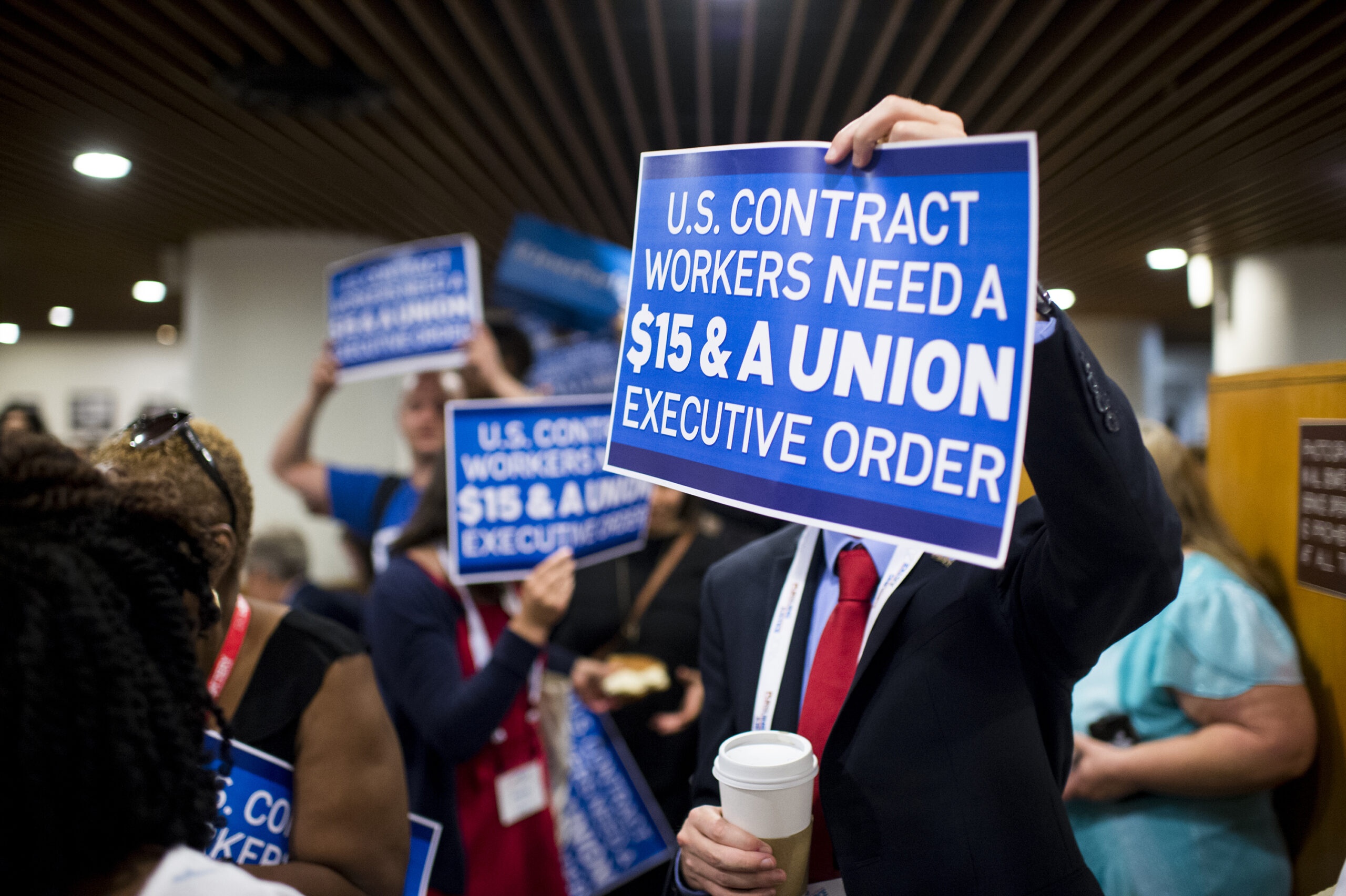
Let’s be clear: The long-overdue revisions on overtime pay are not only a matter of justice, they’re essential for a prosperous America. For far too long, the salary threshold has been stuck at $23,660 — meaning if you are a full-time, salaried employee making more than that amount per year, your employer doesn’t have to pay you time-and-a-half for any work over 40 hours a week. With the new threshold, middle-class workers will finally get a much-deserved raise, just as the fight to raise the minimum wage to $15 an hour has elevated incomes for low-wage workers.
Are nonprofits truly a necessary exception to this rule?
I’ve worked for and with charitable organizations for my entire career. As president of the Democracy Alliance, and as someone with a 40-year career in human-rights organizations and philanthropy, I work with exceptional nonprofits every day. The new overtime threshold is not a danger but a benefit for the women and men who lead the work of nonprofits in promoting human rights, the environment, education, and health.
The Wrong Message
Here’s Habitat for Humanity’s mission statement: “Seeking to put God’s love into action, Habitat for Humanity brings people together to build homes, communities, and hope.” But what kind of communities are we building, and what kind of hopes are we fostering, when nonprofit executives argue that they can’t do good works unless their selfless workers toil without minimally adequate compensation? What kind of a message is that for the people these nonprofits are supposed to help?
If the very people we rely on to battle poverty and economic disparity in this country are working 70 hours a week in exchange for $30,000 a year, something is very wrong. It’s embarrassing to see executive directors for these honorable institutions publicly demand the right to pay their employees less than a livable wage or, in some cases, even less than the minimum wage.
These nonprofit leaders aren’t operating out of malice, of course. It’s human nature to react to proposed policy changes with pessimism, to imagine the worst. Look at the minimum-wage debate: Every time a city or state proposes raising the pay floor to $15, business owners and nonprofits respond by promising the apocalypse. And yet, that apocalypse never arrives.
The responses to that National Council of Nonprofits poll are based on assumptions, not data. What’s more, they’re anonymous and self-selecting, and thus misleading. As anyone who’s ever read a comment thread knows, our worst selves can emerge when we speak anonymously and with no repercussions. Most nonprofit leaders I’ve talked with tell a different story: They say meeting the new overtime requirements will be a lot of work, but they know that it will be better for their employees and, ultimately, better for the organization as a whole.
Learning to Adapt
Change is difficult, and the new overtime rules will require employers to change. Nonprofits will have to maximize efficiency. Many will figure out ways to get the most from a 40-hour-a-week schedule. Some might have to consolidate positions to get employee salaries above the increased threshold.
But just as it is human nature to imagine the worst when confronted with a change, it’s also human nature to plan, adapt, and thrive once the change actually arrives. Nonprofits have a long history of stretching resources to meet the challenge at hand. They are led and staffed by are clever, compassionate people. They can rise to this occasion.
Conservative politicians want to carve exceptions out of this new overtime threshold. When a regulation is shot full of omissions and exclusions, that gives employers more ways to violate or ignore the law. We can’t allow a few nonprofits to manipulate our goodwill into irreparably damaging everyone’s right to overtime pay.
In the end, we all do better when we all do better. An America with nonprofit employees who work a reasonable 40 hours a week, and who therefore have more time to invest in their families and communities, is a stronger America. A country in which dedicated nonprofit employees are fairly compensated for their time is a stronger country. We can’t have a tiered economy in which some workers are second-class citizens, because when that happens, we’re all second-class citizens. It’s time to ensure that America’s nonprofit employees enjoy the dignity they deserve in return for all their hard work.n
Gara LaMarche is president of the Democracy Alliance and was chief executive of Atlantic Philanthropies.