
President Obama’s Lessons for Nonprofit Leaders: Advice From ‘A Promised Land’

By Mark J. Pelavin
Contributor
December 14, 2020 | Read Time: 6 minutes
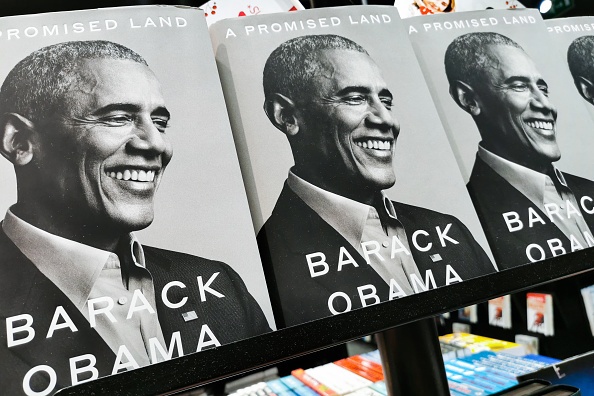
In the early days of his late-night television show, David Letterman often presented a segment entitled “limited perspective” in which a dentist might review a movie by focusing exclusively on the actors’ teeth or a shoe salesman might review the footwear choices in a Broadway show. In that spirit, I offer the perspective of a nonprofit consultant on lessons leaders in the field can glean from former President Barack Obama’s remarkable new memoir, A Promised Land.
Be generous with praise, and with credit. Scarcely a page in this hefty book goes by without President Obama putting in a good word about someone on his team. He makes a point of mentioning names of these staff members and describing his interactions with them. For example, in discussing his decision process leading up to the raid on Osama Bin Laden, Obama writes, “My brain was churning with calculations, thinking about the decision I’d have to make as soon as Buddy and Von and other butlers cleared away the dessert plates.” Not just “the staff” or “the butlers,” but Buddy and Von. Reading this sentence over, I’m struck that it adds absolutely nothing to the narrative. The only reason it’s in the book is so Obama has a chance to recognize Buddy and Von.
That generosity of spirit is essential to leading a successful nonprofit team. Too often nonprofit leaders convey an impression that working for a good cause is its own reward. While that’s true to some extent, staff at nonprofits have the same need to hear praise for their work as anyone else.
Take the long view. Reading A Promised Land offers a glimpse at how hard it is to be the president. Every day requires facing only difficult decisions and constantly shifting gears — one day it might be dealing with troop levels in Afghanistan or an oil leak in the Gulf of Mexico; it could also be health care or the need for economic stimulus. A normal day consists of multiple new crises.
Obama managed to keep his cool by staying focused on the longer term. “I often felt steadiest when things were going to hell,” he writes. “I have been asked about this personality trait — my ability to maintain composure in the middle of a crisis. Sometimes I’ll say that it’s just a matter of temperament or of being raised in Hawaii. … If I’m talking to a group of young people, I’ll describe how over time I’ve trained myself to take the long view, about how important it is to stay focused on your goals rather than getting hung up on the daily ups and downs.”
Every organization has ups and downs, even if they are not as steep or as frequent as those facing the White House. And every organization has (or should have) long-term goals that are (or should be) the North Star toward which they steer. Not letting daily distractions blow you off course is critical to reaching your goals.
Be self-aware. The book includes many examples of Obama making decisions to attend or not to attend an event because he believes his presence would either send a message or be a distraction. “The continuing elevation of me as a symbol ran contrary to my organizer’s instincts,” he writes. “It was personally disorienting, too, requiring me to constantly take stock to make sure I wasn’t buying into the hype and remind myself of the distance between the airbrushed image and the flawed, often uncertain person I was.”
Good leaders know that part of their value is symbolic and that they can change a dynamic just by entering or not entering a room. They also know that their “image” may not always match up with their internal feelings. For example, when I was responsible for a 5,000-person conference, I made a point of regularly stopping by the staff work room, seeing part of my job as “cheerleader in chief” for the event. I finally learned that rather than boosting staff morale, these drop-ins mostly made everyone nervous. I had assumed I was too nice a guy to make anyone nervous.
Identify blind spots and face them head-on. One of the most powerful episodes in A Promised Land is not about international diplomacy or negotiations with Congress but about tension within Obama’s own staff. Obama was surprised to hear from one of his most trusted advisers, Valerie Jarrett, that many of the women on his team, especially the younger women, were not comfortable speaking in meetings or otherwise sharing their views.
That led to a long, difficult meeting between the president and some of the women. Writes Obama: “As I listened to these accomplished women talk for well over two hours, it became clear the degree to which patterns of behavior that were second nature for many of the senior men on the team — shouting or cursing during a policy debate; dominating a conversation by constantly interrupting other people (especially women) in midsentence; restating a point that someone else (often a female staffer) had made half an hour earlier as if were your own — had left them feeling diminished, ignored, and increasingly reluctant to voice their opinions.”
All leaders have blind spots. Male leaders’ obliviousness to the concerns of women on staff are certainly a common one, as are the failures of white leaders to appreciate the experiences of employees of color. The push for diversity, in all its forms, requires strong leaders who are prepared to hear where they’re falling short and to have their blind spots exposed.
Focus on process. This may be the most important insight for nonprofit leaders, who are often subject to countervailing pressures from many directions. Obama describes how, as president, he faced very few easy decisions — those were all made before they reached his desk. Instead, he was left to settle the closest calls. He found that the best way to make those decisions was to focus on a sound process, not an ideal result.
“Chasing after the perfect solution led to paralysis,” Obama writes. “On the other hand, going with your gut too often meant letting preconceived notions or the path of least political resistance guide a decision — with cherry-picked facts used to justify it.” But by focusing on “a sound process — one in which I was able to empty out my ego and really listen, following the facts and logic as best I could and considering them alongside my goals and my principles — I realized I could make tough decisions and still sleep easy at night, knowing at a minimum that no one in my position, given the same information, could have made the decision any better.”
How many of us succeed in “emptying our egos” and “really listening?’ Those are two of the hardest tasks leaders face, and two of the most crucial.
Maybe it’s too soon to know how history will judge Barack Obama’s presidency. But we already know he’s a world-class memoirist, a gifted writer with the hard-won experience and the self-knowledge necessary to offer important advice to politicians, parents, policymakers, and, yes, nonprofit leaders during these challenging times.





