March 22, 2007 | Read Time: 8 minutes
No matter who is elected to replace President Bush next year — Democrat or Republican — odds are that he or she will seek ways to promote small and religious-oriented charities.
That won’t please many nonprofit leaders. Designed to direct public attention and money to social-service groups that blend a religious orientation into their missions, President Bush’s White House Office of Faith-Based and Community Initiatives never caught on with most mainstream nonprofit officials, who viewed it as a political sideshow at best, unconstitutional at worst.
But ignoring the office is a mistake, and it is now — when presidential candidates are shaping their agendas — that nonprofit groups and foundations should begin to consider how they might wish to shape the next iteration of this concept.
Why does the idea of supporting religious and grass-roots charities have so much staying power? Although President Bush frequently argued that America’s religious “armies of compassion” were more humane and effective than secular programs at feeding the hungry or clothing the poor, in fact his interest in them was but the latest manifestation of a larger trend running through the past three decades of American politics.
Over that time, the federal government had come to be viewed by citizens as cold, distant, bureaucratic, and inaccessible — a view that has by no means dissipated.
At the same time, as Douglas Sosnick, Matthew Dowd, and Ron Fournier write in their book, Applebee’s America, people in the United States have come to feel an “insatiable hunger for community, connection, and a higher purpose in life.”
Consequently, every modern American president, Democrat and Republican alike, has carved out a prominent place in his agenda for America’s small, tightly knit, often faith-oriented local organizations, to satisfy that hunger.
President Jimmy Carter sought to tap into the “neighborhoods” movement of the mid-1970s, maintaining that “the only way we will ever put the government back in its place is to restore the families and neighborhoods to their proper places.”
Similarly, President Ronald Reagan’s “private sector initiatives” effort called for “an end to giantism, for a return to the human scalethe scale of the local fraternal lodge, the church organization, the block club, the farm bureau.”
President George H.W. Bush’s “thousand points of light” program reflected his view of America as a constellation of “thousands of ethnic, religious, social, business, labor-union, neighborhood, regional, and other organizations, all of them varied, voluntary, and unique.”
Perhaps sensing a surge in religious sentiment, public figures imbued the “small community” notion with more of a faith orientation during the 1980s and 90s. Thus President Bill Clinton argued that “our problems go way beyond the reach of government. They’re rooted in the loss of values, in the disappearance of work and the breakdown of families and communities.”
Problems will be solved, he continued, only when “all of us are willing to join churches and other good citizens who are saving kids, adopting schools, making streets safer.”
Had Al Gore, rather than George W. Bush, succeeded Mr. Clinton in 2000, we would still have had something like the current White House effort to support religious charities, given Mr. Gore’s view that “where this approach can help us meet crushing social challenges that are otherwise impossible to meet, such as drug addiction and gang violence, we should explore carefully tailored partnerships with our faith community, so we can use the approaches that are working best.”
Looking to 2008, Republicans understand that President Bush’s faith-based program was an important part of his appeal to conservative religious voters as well as to Hispanics, all of whom value strong families and communities. The GOP is not likely to discard such a useful political device any time soon.
Democrats similarly realize that an emphasis on religious charities can help them woo people who have long been solid supporters of conservatism, which explains why Sen. Hillary Rodham Clinton is already on record as saying “there is no contradiction between support for faith-based initiatives and upholding our Constitutional principles.”
Curiously, while small, religious nonprofit groups are likely to loom even larger within our political system, they remain on the periphery of mainstream philanthropy — prophets without honor in the nonprofit world.
It’s not that the large, trend-setting foundations are overtly against anything small or religion-oriented. But such prejudices inevitably accompany philanthropy’s proud, often-stated determination to get at the “root causes” of social problems.
Locating the genuine reasons for human ills demands professional expertise able to penetrate far beneath the superficial, self-deluded moral and religious explanations typically offered by everyday citizens. The complex, sophisticated, multimillion-dollar enterprises required to harness advanced medicine, social science, or technology are in another universe from the scruffy, rough-hewn, storefront religious nonprofit groups that have figured so prominently in political rhetoric.
Consequently, a chasm grows between political celebration of, and philanthropic contempt for, the most immediate level of civic association. When presidential administrations seek out neighborhood groups, “private sector initiatives,” or points of light for support, they find only groups that have had little experience with writing grant proposals, accounting, or measuring results, thanks to icy neglect by foundations that exclusively award money to well-staffed, thoroughly professionalized nonprofit groups pursuing the root causes.
It doesn’t have to be this way. The next version of the community and faith-based agenda could be much improved were at least some foundations to devote money and assistance to otherwise neglected religious organizations that provide social services.
This is a task ideally suited for newer, smaller foundations not yet in the thrall of root-causes orthodoxy, many of which are established by individuals of modest wealth and strong religious conviction. Such foundations could devote themselves to seeking out the most effective religiously oriented projects in their own backyards. That can be done by quietly consulting respected pastors and community leaders, who may be invisible to the downtown power structure but are well-known to anyone on the streets in need of help and support.
The critical point is to seek out what’s already there — the civic associations established by citizens and neighbors themselves, reflecting their own sense of moral purpose and community. This is the obverse of standard philanthropic procedure, which is to assume that all is void until a program officer with a degree in nonprofit management dreams up a new project. A grant of $10,000, which may be nothing more than the vacation- condo fee for one of those professionals in a root-causes project, can be precisely what keeps the doors open at a small, religious enterprise. Just as valuable are the validation, contacts, and advice that accompany the money.
There is no reason why at least one foundation in every city, town, or rural region in America shouldn’t be willing and able to turn to this work. With each foundation financing and publicizing a dozen or so proven, trusted community and religious groups close to home, hundreds of small grass-roots nonprofit groups distributed throughout the country would be engaged in building their communities while at the same time gaining visibility and experience in seeking and accounting for donated money.
As the next presidential election nears and some of the candidates begin to formulate their own versions of a way government can nurture the growth of religious charities, we can now insist that they go beyond noble, abstract rhetoric about the need to empower grass-roots groups. We should expect them to visit, learn about, and discuss knowledgeably the groups that best exemplify their understanding of a healthy civic association.
Within the limits of campaign-finance laws, genuinely serious candidates will even put down earnest money toward their community agenda. They will ask their own campaign contributors to increase their annual charitable giving, directing it to the most effective community leaders whom they have met on the campaign trail. By the time the next administration takes office, it will have canvassed the genuine needs to be met by a community or faith-based effort, and have compiled a solid list of potential federal grantees.
But whatever transpires subsequently in Washington, a great deal will have already been accomplished in the course of the campaign. Many small to medium-size foundations will have become more directly acquainted with — and encouraged to reshape their giving programs by — nonprofit groups in their own backyards, which have much greater wisdom about meeting urgent needs in their cities and towns.
Perhaps the next time a large national foundation comes to town seeking matching funds to start an expensive, flavor-of-the-month, silver-bullet solution, local foundations will decline to sign up. They can instead urge the national grant maker to join them, by backing proven local programs already making modest but concrete progress.
If the mainstream foundations begin to encounter this sort of resistance from enough local grant makers, they may finally be forced to re-evaluate the grant-making orthodoxy that has sidelined so many of our most productive nonprofit groups.
Does this sound like a far-fetched scenario for foundations and politicians? Of course. But consider the experience the Rev. Alvin Love of Lilydale First Baptist Church in Chicago had with a young community organizer who would have been a model program officer for a foundation that was serious about neighborhood philanthropy.
After the organizer had tracked him down in his out-of-the-way church, Rev. Love noted, “He just asked me what was important to me. I was really impressed with the fact that he spent more time listening to me and trying to hear what I thought was important in the neighborhood, rather than my experience of people coming in and telling me what I ought to do.”
This ideal program officer was the young Barack Obama, now a U.S. senator from Illinois and a serious candidate for the presidency. The distance between a sensible community and religious program and the next presidential administration is not as great as we think. Foundations willing to reorient themselves from root causes to grass roots can reduce the distance even further.
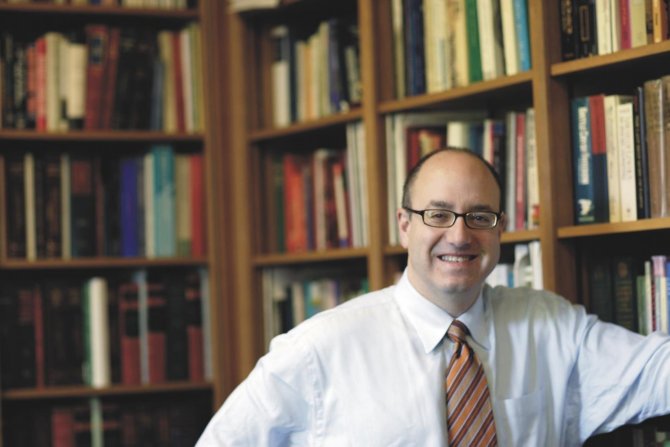
William A. Schambra is director of the Hudson Institute’s Bradley Center for Philanthropy and Civic Renewal, in Washington.