

October 28, 2012 | Read Time: 6 minutes
Hollywood never gets it right when it sets out to depict philanthropy. Donors are shown as meddlesome bumblers, wealthy scoundrels, or superheroes able to work wonders with a simple check.
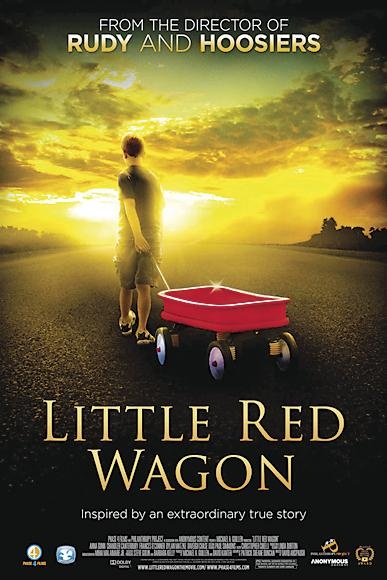
However, a new movie, “Little Red Wagon,” depicts philanthropy in a way that anyone who has ever tried to help a worthy cause will immediately recognize. Yet, despite having a well-known director and cast, it faces a difficult time making its way into theaters. That may contain a lesson about how much interest audiences—or Hollywood executives—have in realistic films about philanthropy.
The film is the first underwritten by the John Templeton Foundation’s Philanthropy Project, which seeks to use “the moving image to inspire and enable every man, woman, and child to be a philanthropist.”
It is based on the true story of Zach Bonner, a precocious, red-haired 6-year-old in Tampa, Fla., who is so moved by news reports of nearby children and families left homeless by a hurricane that he sets out—with a wagon in tow-to collect supplies to help them. He proved to be adept at doing so, collecting what amounted to van loads of water, tarps, and other items, and gaining the attention of local news media.
Assisted by his sometimes exasperated mother and often sulky teenage sister, Zach decides to raise his sights and create an organization that could provide both necessities (like toothpaste) and “kid stuff” (toys and candy) to homeless children. Soliciting donations from both local merchants and national companies, he fills up backpacks and distributes them at shelters. He also organizes holiday parties and other projects. A subplot about another mother with an endearing child, who becomes destitute through no fault of her own, shows just how helpful these efforts can be.
To raise money and attention for homeless children, Zach embarks on a well-publicized hike with his family from their home to the state capital in Tallahassee, a distance of 250 miles. That forms the dramatic centerpiece of the movie, as he and his family struggle to complete the grueling walk. They manage to do so, and in the process, Zach demonstrates his transformation from a child, growing up in a comfortable home, to a purposeful philanthropist, willing to sacrifice his well-being to help those less fortunate.
The film also portrays some familiar situations charities encounter. In one scene, for example, with an imposing stack of papers in hand, Zach and his mother show up at the local Internal Revenue Service office, unable to figure out how to apply for the charity status they are told they need to obtain foundation grants. (A kind-hearted IRS employee offers to help.)
In another, a politician bloviates about how much he cares about helping homeless children and vows to “walk every step of the way” to Tallahassee with Zach. But no sooner does the hike get under way than the politician is shown jumping into an official car and speeding off.
In real life, as in the film, these and other challenges have not kept Zach from pursuing his cause. His charity—the Little Red Wagon Foundation—has now distributed over 4,000 backpacks to homeless children and has also generated donations of books and school supplies, both in the United States and internationally. It has been recognized with Presidential Volunteer Service and Points of Light awards, as well as featured in national media stories.
When he was 10, Zach followed his first walk with another, from Tallahassee to Atlanta, and then a third, from Atlanta to Washington, D.C. Three years later, he went all the way from the Atlantic to the Pacific Ocean, making him the youngest person known to have hiked across the United States. On his walks, he carried a GPS device—dubbed the “Zach Tracker”—that enabled his fans to follow his progress and contribute online.
But, where “Little Red Wagon”—the movie, not the charity—has so far been less than successful is in reaching audiences. Though it premiered at the Heartland Film Festival in Indianapolis a year ago, it is just now opening at a small number of theaters, mostly in the South and Southwest. Showings in major entertainment centers, such as Los Angeles and New York City, are not currently scheduled.
That is not because the film lacks star power. The director, David Anspaugh, was responsible for the enormously successful “Hoosiers” and numerous other films and television shows. Chandler Canterbury, who plays Zach, has an impressive and growing list of screen credits for a 14-year-old. Anna Gunn, who has the role of his mother, has starred in an award-winning television series, as well as on the stage on Broadway and in Los Angeles.
To be sure, “Little Red Wagon” lacks the special effects, souped-up sounds, and sensational action that are often featured in today’s blockbuster movies. The closest any of the characters comes to using foul language is an occasional “frickin’.” The closest it comes to violence are some heated mother-daughter arguments, although one of the homeless children does fall, breaks an arm, and bleeds a bit. As for nudity: Forget about it.
In other words, “Little Red Wagon” is what used to be known as “wholesome fare,” which makes it a rarity among not only today’s Hollywood productions but also films on philanthropy. The philanthropist it portrays is neither a meddler nor a scoundrel, only a kid who wants to help other kids.
Nothing bad comes of his actions but rather some modest good. Though arduous for a 6-year-old, his heroics were, literally, pedestrian, unlike those of superwealthy donors, who in movies and television programs are stereotypically shown swooping in on chartered planes to attack a dread disease with grants. Zach just did what he thought he should do under the circumstances—and hoped others might do, if he had been the one who needed assistance.
The real problem with “Little Red Wagon” may be that it speaks in prose, rather than poetry. It depicts actions that are so deeply ingrained in American society— so commonplace in so many communities—that they may no longer attract special attention. As a result, films about philanthropy as it really occurs may not seem sufficiently interesting or entertaining to audiences or to those making decisions about box-office appeal.
Though of little consolation to its producers or foundation supporters, the good news is that, despite the way philanthropy has been portrayed in the popular media, Americans remain committed to it and have little need to see even so well-made and admirable a movie as “Little Red Wagon” to be inspired to give and volunteer.





