
The Best Candidates for Foundation Leadership Often Come From Within

By James Canales
Contributor
August 9, 2013 | Read Time: 5 minutes
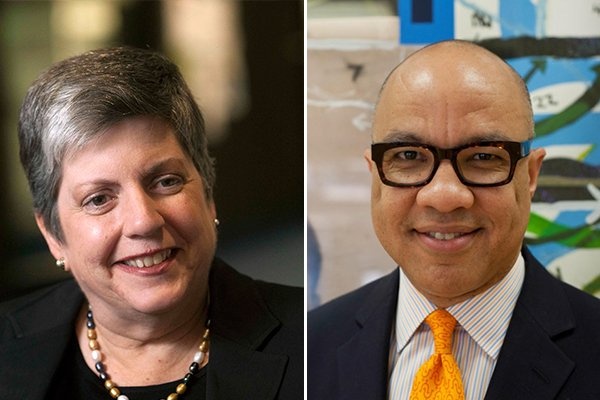
The past few weeks have brought the conclusion of two high-profile presidential searches: at the University of California system and the Ford Foundation.
At UC, many people were surprised by the appointment of a relative outsider, Janet Napolitano, secretary of Homeland Security, to a leadership role that has typically been reserved for those with substantive experience in higher education. And at the Ford Foundation, the elevation of its vice president Darren Walker to the presidency spoke volumes about the premium that Ford’s board placed on previous philanthropic experience.
What’s instructive here is that the board of each institution acted in opposition to history and tradition—in one case by appointing an outsider to higher education, in the other by appointing an insider to philanthropy.
These moves should invite those of us in philanthropy to ask: Why is this so unusual? In what other industries would the appointment of a talented leader with deep and relevant experience be viewed as anomalous? Philanthropy has come to accept the appointments of outsiders to our leadership ranks as the norm and to view the promotion of insiders as the exception.
Given the ways in which foundations are evolving, driven by the introduction of a new generation of donors, who bring novel ideas about how foundations can have impact, and the emergence of new tools and strategies to create social change—consider impact investing—it’s worth exploring how our leadership pipeline needs to evolve as well.
Acknowledging the old saw that “when you see one foundation, you’ve seen one foundation,” certain traits may nonetheless lead to greater success as a foundation CEO today. Here’s a set of skills critical for foundation leaders to possess in today’s dynamic environment. And I would contend that previous philanthropic experience helps leaders to develop and refine these particular skills:
Ability to drive and participate in effective collaborative work. It is becoming a well-accepted truism in philanthropy that we can no longer solve alone the complex and intractable challenges we confront. Even those of us who lead big foundations must acknowledge that sheer dollars may not produce the results we seek. This reality forces us, in a productive and healthy way, to behave more collaboratively. For foundation leaders, that places a premium on demonstrated capacity to build constructive partnerships, to understand how different parts of the nonprofit world can contribute to social change, and to build and foster internal cultures that make collaboration a centerpiece of everything they do.
Many foundation staff members today already possess these skills—just witness the examples of collaborative funds, affinity groups, learning communities, and other ways that foundations share ideas and strategies. Ours is not a competitive industry; we exist to facilitate and enable leaders to do their best work and realize their visions for social change. Therefore, our ability to act collaboratively will be essential to achieving that vision.
A capacity to foster effective relationships and build trust. Effective collaborative work requires bonds that are best forged through experience working together. Foundation staff members who spend their time understanding the organizations and players that influence specific causes possess a distinct advantage over outsiders. At the James Irvine Foundation, the time we invest to build relationships with our philanthropic peers, our nonprofit grantees, government officials, and business leaders is time well spent because it helps to uncover areas of shared interest and opportunities to work together toward mutual goals. In considering candidates for CEO roles, boards should not underestimate the time it takes to build, cultivate, and foster such relationships and the advantages of those candidates who bring these intangibles to the role.
An embrace of humility. Foundations are taking welcome steps to become more transparent and less insulated. Groups like the Center for Effective Philanthropy and the Foundation Center have encouraged and facilitated this trend. The increasing presence of social media will only accelerate this emphasis on transparency and accountability.
In this context, foundation leaders today need to behave in ways that are more accountable, more accessible, and perhaps even more humble. Leaders who embody the qualities of grace and humility and who fully recognize that the truly hard work happens outside the walls of the foundation will have a greater capacity to drive success, certainly much more than leaders who are persuaded that money alone confers power and who thrive on ego gratification. The best staff members at foundations today understand this very clearly.
As boards consider such hard-to-measure, yet vital, human qualities for their candidates, it’s incumbent to explore what experiences their candidates have had in demonstrating their commitment to and living out these values.
In proposing these attributes, in no way do I seek to show any disrespect for the many talented, effective, and successful leaders of foundations today who have come from outside the philanthropy world.
Nor do I seek to argue that foundation leadership roles should solely be the province of existing foundation staff. Rather, my intent is to underscore the value of philanthropic experience in order to expand the pool of candidates for leadership roles by looking within.
Many of the traits that are essential to leadership are the very ones that the most successful foundation staff members come to learn, practice, and hone by virtue of their experience in philanthropy, including both the successes and the failures.
For the foundation world to cultivate the leadership needed to realize our full potential, it will be to our benefit—and those we support—if boards redouble their efforts to look within and demonstrate that they value the hard work of effective philanthropy staff members.
The board of the Ford Foundation has made a wise and inspired choice in the appointment of Darren Walker, as any of us who have worked with him can attest. But perhaps an equal contribution is the message it sends about the value of philanthropic experience as a precursor to leading a foundation.
The day may well come for philanthropy when the appointment of an outsider becomes the exception rather than the norm.





