
To Address Drops in Giving, My Nonprofit Turned Fundraising Into a Game
Fun and collaborative approaches to giving can be more successful than conventional efforts focused on major donors, the author found.

By Dana Nichols
Contributor
April 17, 2024 | Read Time: 7 minutes
Like many nonprofits, the organization I lead, Cannonball Kids’ Cancer Foundation, has seen giving by individuals drop sharply. In 2022, we faced a decline of 42 percent year-over-year. after surges during the pandemic.
Our organization’s mission to raise money for innovative, readily available, and accessible pediatric cancer treatments means we face a challenge common to organizations focused on tough problems. It’s hard for donors to feel optimistic about the prospects for finding cures — and it’s especially hard for us to reach people who haven’t supported our organization before.
We knew we had to do things differently and that coming up with a new fundraising goal wasn’t enough.
Rather than just raising money, we wanted to spark meaningful engagement and conversation to inspire current donors and draw in new ones. Our solution: Buck traditional fundraising approaches and turn raising money into a game.
The result was the League of Undercover Donors — a fundraising effort that in seven months reached more than 230 supporters in 23 states and two countries other than the United States. Tokens that we created traveled more than 684 miles on average. We raised more than $20,000 in small donations averaging $87.50. In the end, 28 percent of our new pool of donors last year came through this effort.
Crucially, the League drive raised half of what our annual year-end campaign typically raises. In other words, in the game’s first year, new supporters donated nearly as much as those already familiar with our mission. And compared with other types of fundraising efforts, the staff time wasn’t very intensive.
We believe our experience offers valuable lessons for organizations trying to attract new donors. Here’s how it worked.
We produced 300 tokens: thick, metal coins engraved with our logo on one side and a unique QR code on the other. We handed them out wherever we could — to people who support Cannonball, and to our friends and acquaintances; at fundraising events; and in public places, such as near the Golden Gate Bridge, when we traveled to San Francisco for work. We encouraged people to scan the code to donate, but asked them to keep the campaign, gift amount, and their participation secret.
Giving Decline
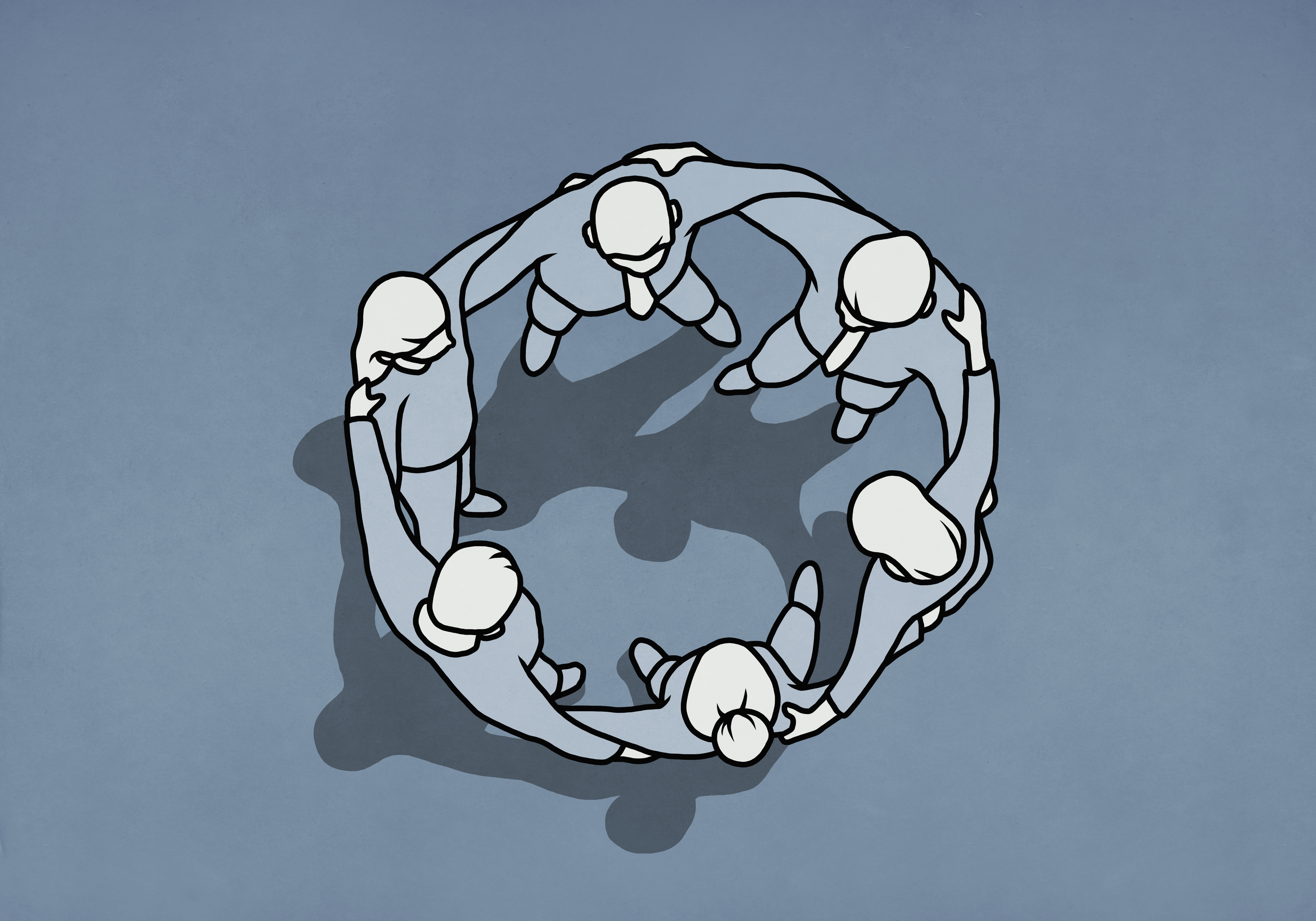
Once they contributed, we told them to give the token to someone else, who could also scan, donate, and pass it on. Imagine a massive game of telephone, but each person could fund childhood cancer research.
Participants were asked not to post about the League on social media. This encouraged in-person connection and created the feel of a secret society. Donors also received an induction letter and swag confirming their membership in the society. Throughout the year, the League’s virtual Chief Benevolence Officer, “Bea L. Truistic,” updated donors with the status of their specific token — its last known whereabouts, distance traveled, and money raised — as well as the collective amount donated by League agents.
As we do with all of our campaigns, we provided updates on how funds were being used, including information on the clinical-trial research supported by donations. The token itself gave participants a peek into their impact as well: Scanning the QR code showed participants how much money both the token and campaign raised and provided information about the organization and mission.
Conventional philanthropy often places undue importance on major donors. And urgent causes such as childhood cancer typically emphasize the negative to drive donations. But at a time when individual giving has reached a historic low, dipping to 64 percent of total giving in 2022, business-as-usual won’t cut it. The League of Undercover Donors challenged the idea that philanthropy is mostly for the wealthy, turning it into something egalitarian, collaborative — and even fun.
Dismantling the Pyramid
Philanthropy is often guided by a donor pyramid, a hierarchical structure where small gifts make up the big base and larger donations compose the smaller tip. Fundraising teams try to push people up the pyramid, encouraging them to make bigger donations that eventually land them at the top.
Our campaign avoided this strategy in favor of an approach that engaged, cultivated, and communicated with a broader range of donors at every level.
This was intentional: We wanted each donor to feel valued regardless of the size of their contribution. By emphasizing major supporters, the traditional pyramid may ignore everyone else, leaving them unsure if they’re making a difference. Many, as a result, aren’t certain they should even bother donating, especially when they can only give a few dollars to an enormous challenge, such as pediatric cancer.
The League of Undercover Donors removed that psychological barrier to giving, countering the classism and status perpetuated by the pyramid and often inherent in philanthropy. Everyone could take part just by getting their hands on a token, offering a tangible reminder that each contribution makes a difference.
Additionally, the League of Undercover Donors didn’t focus on giving levels and required donation amounts. Instead, participants could connect to a larger effort that emphasized the collective impact rather than worrying if their gift was big enough to help cure cancer.
Beyond the Gala
Nonprofits often play it safe, sticking to conventional fundraising methods, such as galas and year-end giving campaigns. But the League of Undercover Donors pushed our staff to think beyond that event-centric approach. This proved especially useful as we, like many organizations, are already burdened by a busy calendar.
It also encouraged creative freedom and experimentation from our staff, which led to breakthroughs we can use in future campaigns. When brainstorming fundraising drives, we can now ask, “How are we building community? Is this donor experience memorable?”
Creativity in fundraising requires comfort with both risk and failure. In addition to learning what worked, we also learned what didn’t. At first, we placed too much emphasis on the League theme, leaving some donors unsure if it was a real fundraiser or a scam. We increased messaging about the purpose of the campaign to ensure the game was fun but clearly connected to our organization and cause.
Each Generation Matters
Nonprofits do themselves a disservice by not actively encouraging charitable contributions from people under 45. Ahead of this campaign, Cannonball Kids polled its supporters to understand their relationship with their own charitable giving. In conversations with our millennial and Gen Z donors, we learned that while they’re motivated to give, many don’t believe they can effect change with the small amount they can donate. And while older generations want to understand what their individual gift will accomplish, younger donors are more open to viewing the group’s collective efforts as their own.
We used this information to structure the League of Undercover Donors, making sure supporters had regular opportunities to hear about the League’s progress and total amount raised, without focusing on the hopelessness of the cause. It’s safe to say this worked: We heard from young supporters that they appreciated such a light-hearted, collective approach to solving a difficult problem.
As nonprofits continue to navigate the best ways to increase individual giving and attract new donors, they can no longer rely on the old fundraising playbook, which has turned philanthropy into an elitist endeavor. Instead, they need to experiment with methods that encourage more people to join in, and that celebrate every donor and gift — at any level.





