
Trump’s ‘America First’ Stance Alarms Globally Active Foundations

By Caroline Preston
Contributor
March 9, 2017 | Read Time: 8 minutes
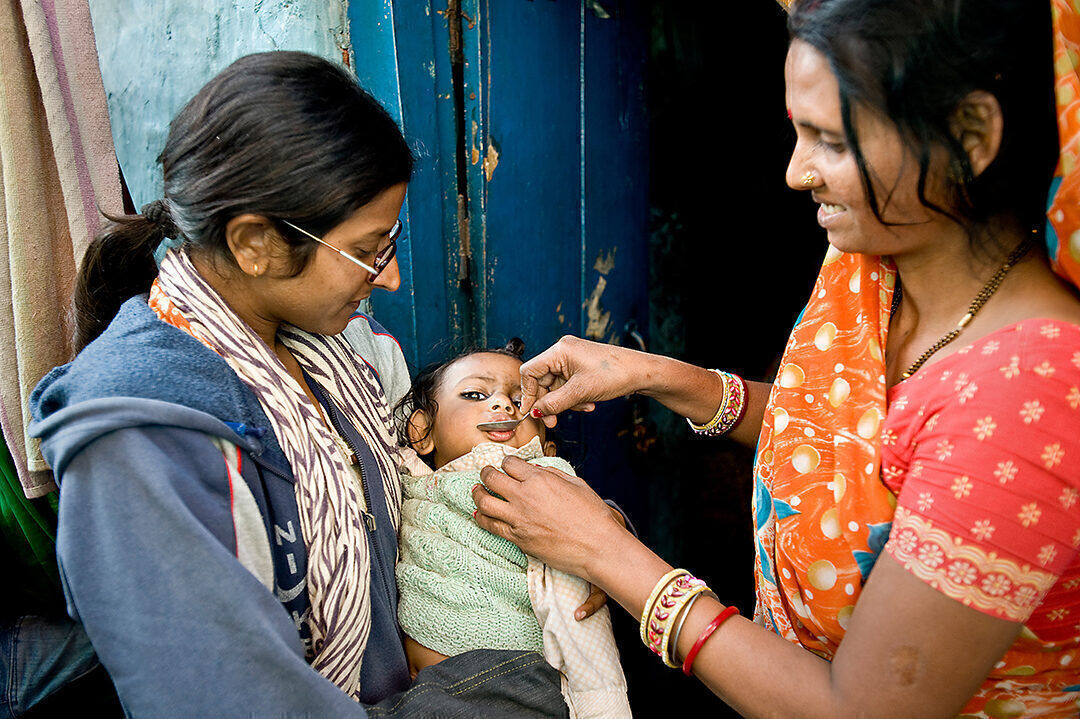
President Trump’s proposed cuts to U.S spending on foreign aid have dismayed foundation officials whose work to mitigate climate change, fight famine, and strengthen civil society abroad could be complicated, and even undermined, by the administration’s “America first” policy.
But despite their alarm, few grant makers have taken immediate steps to modify or reallocate their giving. For now, they are watching closely as threatened reductions to foreign aid wend their way through the budget process. Foundation leaders say they may do more in the coming weeks as the scale of threats to an array of priorities comes into sharper focus.
“We aren’t seeing the same coordinated response that we’re seeing from the [nonprofit] community,” said Natalie Ross, senior director of global philanthropy and partnerships at the Council on Foundations, referring to the advocacy push by international charities such as the ONE Campaign, the Save the Children Action Network, and Oxfam. “Foundations are still trying to think about what this means for them. We really don’t know where the cuts will be made and there are a couple conflicting signs of where things will go.”
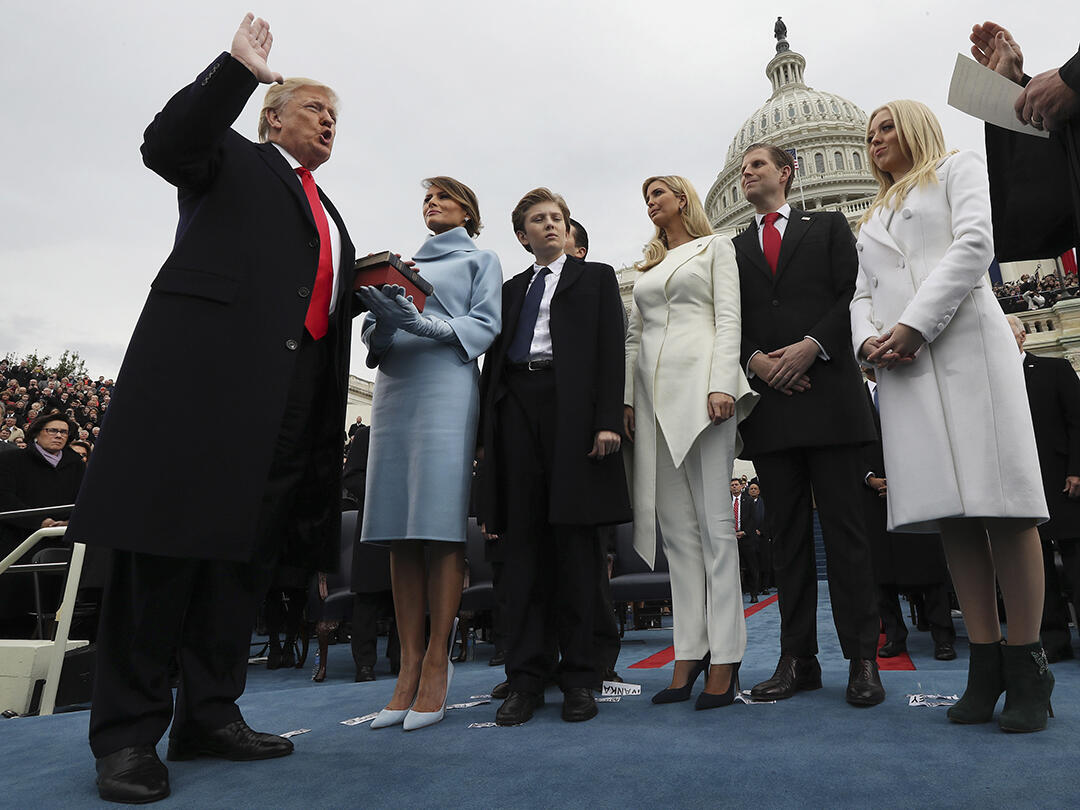
President Trump has reportedly called for the budgets of the State Department and the U.S. Agency for International Development to be cut by 37 percent. Those plans sparked fierce, and bipartisan, opposition in Congress, with Sen. Lindsey Graham, the South Carolina Republican who chairs the Senate appropriations subcommittee that oversees international spending, calling the budget “dead on arrival.”
The 37 percent figure may be an opening volley, but even if the reductions are halved in budget negotiations, the repercussions would be “horrifying to consider,” said Travis Adkins, senior director of public policy at Interaction, a Washington-based association of international aid charities.
Giving Boost
Among the foundations moving more quickly is the Rockefeller Brothers Fund, which tackles a range of issues on which the new president has broken with past policies, including voting rights in the United States, the Middle East peace process, and the U.S.-Iran nuclear deal.
The fund’s board is slated to vote this week on a plan to increase its overall giving by more than 10 percent in response to the political environment, said its president, Stephen Heintz. The additional money would allow the foundation to be “flexible and nimble” in responding to grantees — old and new — that find themselves affected by administration policies and other political shifts, he said.
“We’re watching all of this very closely,” said Mr. Heintz.
A Case for Aid
Rajiv Shah, the former USAID administrator who joined the Rockefeller Foundation on March 1 as its president, is making a results-oriented, efficiency-focused case for the United States maintaining its commitments in poor countries. In a Washington Post op-ed he wrote with Post columnist and former George W. Bush speechwriter Michael Gerson, and in an interview with The Chronicle, Mr. Shah asserted that foreign aid helps avert wars and needless deaths.
“When focused on results, when appropriately targeting those who are vulnerable, we can very efficiently save lives, fight disease, reduce poverty and its correlated consequences of hunger and child death,” he said, “and in so doing promote the cause of stability, which is very much one of the core purposes of America’s national-security and foreign-policy stance under any president.”
Bill and Melinda Gates, in their annual letter and in public statements in recent months, have also warned against aid cuts and emphasized that philanthropy cannot fill the gaps if the federal government slashes overseas assistance. Although U.S. foreign aid represents a tiny slice of annual federal spending — roughly $42.4 billion, or less than 1 percent — that’s still more than the Gates Foundation’s entire endowment. (The foundation declined an interview for this article.)
Risk of Blowback
Patrick Gaspard, a former senior adviser to President Obama and ambassador to South Africa who joined the Open Society Foundations in January, said the Trump administration’s isolationism potentially endangers U.S. citizens by allowing terrorism, the drug trade, disease epidemics, and other global threats to build strength in poor nations with weak governance.
“If the United States is not attendant to these issues that run well beyond our borders — and attendant to them, not just by monitoring, but by providing meaningful leadership — then those are going to be challenges that are visited on our shores,” said Mr. Gaspard, Open Society’s vice president of programs.
In November, Open Society announced a $10 million fund to fight hate crimes and threats to immigrants in the United States. Foundation officials say they are exploring where the dollars can have the most impact, but as of yet no new commitments have been made.
After Mr. Trump’s January executive order barring U.S. entry to people from seven Muslim-majority countries and all refugees, the Rockefeller Foundation contributed $500,000 each to the American Civil Liberties Union, the International Rescue Committee, and the Anti-Defamation League. The presidential directive was blocked by courts and has since been modified. Mr. Shah said that for now the foundation has no specific plans for additional grants in response to White House policies and that its giving will be driven by the 103-year-old fund’s “results-oriented and science-based approach.”
In an email, Vartan Gregorian, president of the Carnegie Corporation of New York, said the foundation regularly reviews its commitments and has found that its priorities, which include fighting nuclear proliferation, are more “timely and urgent than ever.” More than a half dozen corporate grant makers contacted for this article either declined to comment or said they were sticking to their existing commitments.
Return of the ‘Gag Rule’
The administration’s revival in January of the so-called “global gag rule” — a policy barring federal funding to nonprofits abroad that inform women in poor countries about abortion — also sparked new giving.
At a conference last week organized by a Dutch cabinet minister, governments and private donors pledged more than $190 million for international charities that would lose funding as a result of Mr. Trump’s ban. Big commitments came from European governments but also the Gates Foundation ($20 million) and an anonymous American donor ($50 million).
Ruth Levine, who oversees the William & Flora Hewlett Foundation’s grants on global development and population issues, said the fund is exploring “strategic gap filling” — how small grants can best offset some of the reduction in federal aid. In 2016, U.S. funding to family planning alone totaled more than $600 million. “Nobody is in a position to fill in any significant portion of that gap,” said Ms. Levine.
The Hewlett fund is seeking to mobilize money for Marie Stopes International. The charity, which provides abortion and contraceptive services, stands to lose $30 million, or 17 percent of its income, as a result of President Trump’s reinstatement of the gag rule, also known as the Mexico City policy for the location of the 1984 health conference where it was first introduced by President Reagan. Hewlett also plans to pay for research on the consequences of the policy and to support nonprofits in Africa and elsewhere as they press their own governments to pick up more of the tab for reproductive health.
Fighting the Cuts
As the federal budget is negotiated in the coming weeks, global aid charities are doubling down on efforts to preserve funding rather than making contingency plans. The United Nations Foundation’s Better World Campaign recently led a lobby day for life-saving vaccines and is encouraging citizens to contact lawmakers about foreign-aid cuts, said Peter Yeo, the campaign’s president.
Save the Children, which receives more than a third of its budget from the U.S. government, is focused on stopping the administration’s budget scything and hasn’t yet taken steps to deal with the possible fiscal fallout, said Brendan Daly, senior director of communications for the group’s advocacy arm.
The nonprofit Water for People is hoping that negotiations for its first government contract — $450,000 to extend a program installing toilets and improving sanitation systems across Rwanda — will be unaffected by the new administration’s tilt.
Like other groups, Water for People is contemplating how its role and responsibilities in Africa, Asia, and elsewhere will be altered if the Trump administration ups sticks. If diplomats and aid officers pull back, said Eleanor Allen, the charity’s chief executive, nonprofits will have a more urgent role to play in fostering connections with local communities, helping to preserve access to basic needs, and continuing “to improve relations and cooperation in countries around the world.”
Alex Daniels contributed reporting to this story.
Clarification: This article has been amended to make clear that Save the Children has not yet considered steps like a hiring freeze in case federal funds are cut.





