June 27, 2016 | Read Time: 4 minutes
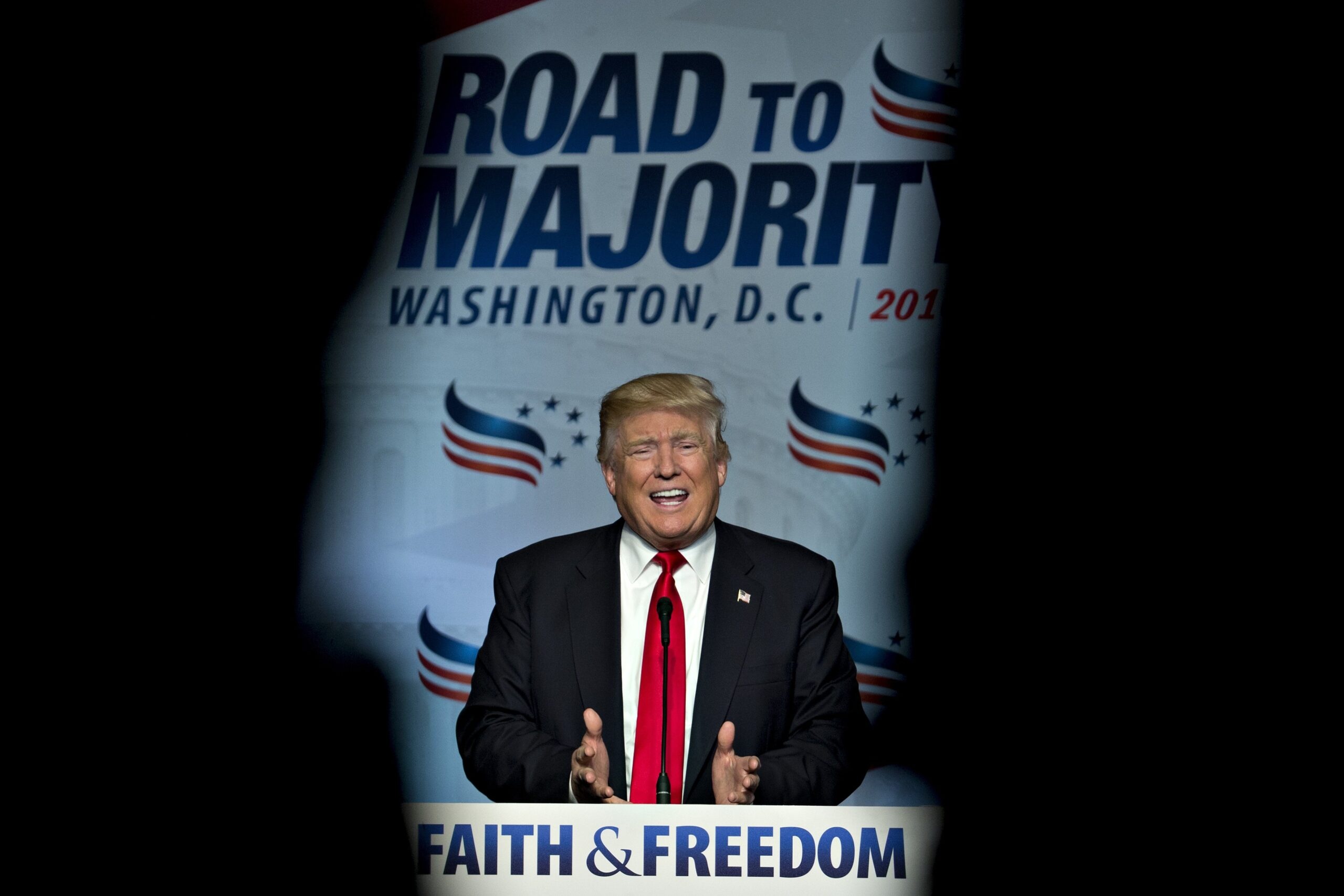
Donald Trump last week told an audience of Christian conservatives in New York City that religious leaders should have the legal right to publicly support or oppose political candidates.
With just a few sentences, the presumptive Republican nominee for president demonstrated his disdain not only for the separation of civic and religious life but also for the separation of politics and charity that has been a hallmark of federal law and tradition.
America, Mr. Trump claimed, is hurting due to “Christianity’s slide to become weaker, weaker, weaker.” He suggested that America should be “freeing up your religion, freeing up your thoughts. You talk about religious liberty and religious freedom, we don’t really have any religious freedom,” and “They’ve taken a lot of power away from Christianity.”
Then, as if Christianity were in need of a savior, he immodestly announced, “I think maybe that will be my greatest contribution to Christianity — and other religions — is to allow you, when you talk religious liberty, to go and speak openly, and if you like somebody or want somebody to represent you, you should have the right to do it.”
Donald Trump could not be more wrong on this issue.
While the question of religious influence on civic life has been the subject of healthy debate during the more than two centuries since the United States was established, the First Amendment makes clear what America’s founders intended. The amendment’s first words — “Congress shall make no law respecting an establishment of religion, or prohibiting the free exercise thereof” — are unambiguous: There cannot be a national religion, and the government cannot interfere with anyone’s right to adhere to any religious beliefs he or she wishes.
Some people, and apparently Mr. Trump is among them, believe that religion is taking a hit these days, that the government is hindering religion from doing its job, at least as far as permitting religious leaders to make political statements from the pulpit.
That is a remarkable argument, especially given that we don’t see leaders of mosques or synagogues expressing concern about their restrictions on politicking, nor have we heard many complaints of this nature from moderate and liberal Christians.
What people who say they feel overly restrained by federal restrictions on politicking really want, however, is not so much protection from the government but the right to use religion to influence government. What else could Mr. Trump mean when he says he wants religion to be freed to take part in politics?
Mr. Trump fails to recognize that no one in America, regardless of his or her faith and regardless of what charitable causes he or she supports, is denied the right to speak openly about politics. What the law says is that it’s a problem when the leader of a charity acting pretty much as a spokesman for that organization starts spewing politics. Sadly, that happens in the religious sphere far too often.
Mr. Trump blames Lyndon Johnson, who, as a United States Senator, pushed a legislative measure that banned charities and religious congregations from getting involved in partisan politics. But Congress has never wavered on this issue and in recent years has made the ban even stronger.
As the Internal Revenue Service explains, “All section 501(c)(3) organizations are absolutely prohibited from directly or indirectly participating in, or intervening in, any political campaign on behalf of (or in opposition to) any candidate for elective public office.”
The ban on direct politicking on the part of charities has been and continues to be a good idea, no matter how difficult it is to define what the limits truly are. That nonprofits are seen as strong advocates for their causes, not partisan players, is what makes their views so valuable.
Aside from the cognitive chaos typical of the way Mr. Trump speaks — I wonder if he even gave the matter much thought and was simply extemporaneously pandering — his comments on religion also raise questions about why the United States allows religious organizations to be tax-exempt and therefore eligible to accept tax-deductible donations.
The nature of the charitable deduction makes all of us, whether we’re religious or not, financial supporters of religion. This is a fact, and if we take the idea of separation of church and state seriously, it may actually be an argument to remove the charitable status of all religious organizations and, yes, deny the charitable deduction for gifts to them. That may seem radical, but when you think of the issue, it’s a logical extension of the principle inscribed in the First Amendment.
If that’s not going to happen, religious organizations, because they get such a big subsidy from the charitable deduction, should at least be required to file a Form 990 so the IRS and the public can see how donations are spent.
By arguing otherwise, religious leaders — and all who agree — are speaking out of both sides of their mouths.
Now it’s time for everyone in the nonprofit world to recognize the dangers when a presidential candidate wants to distract us from meaningful debate on issues in philanthropy to advance his own political ambitions and agenda.
Doug White directs operations in the fundraising-management program at Columbia University.