
White House Actions on Gun Violence Open Opportunities for More Philanthropic Investment

By Jen Pauliukonis
Contributor
April 13, 2021 | Read Time: 6 minutes
President Biden stood in the Rose Garden last week and told the American people the truth: Gun violence in the United States is an epidemic and a public health crisis. Outlining the largest federal investment in gun-violence prevention in 30 years, he announced a series of urgent steps his administration is taking in the face of congressional intransigence. Then the president gave voice to another hard truth: “This is just the start. We’ve got a lot of work to do.”
Biden was able to announce his plans from a position of strength due to the rising power of an American gun-violence prevention movement made up of large, well-known national organizations as well as largely underfunded and often unrecognized nonprofits and advocates working far from the national spotlight. For philanthropic organizations interested in investing in gun-violence prevention, these state and local groups represent a tremendous opportunity.
Despite what the gun lobby wants us to believe, Americans have not become inured to the carnage we see every day. On the contrary, volunteers operating on shoestring budgets continue to effect real change and save lives. Since 2014, for instance, 17 states and the District of Columbia have passed extreme–risk protection laws, providing family members and law enforcement with the tools to petition courts to temporarily remove firearms from those who pose a danger to themselves or others.
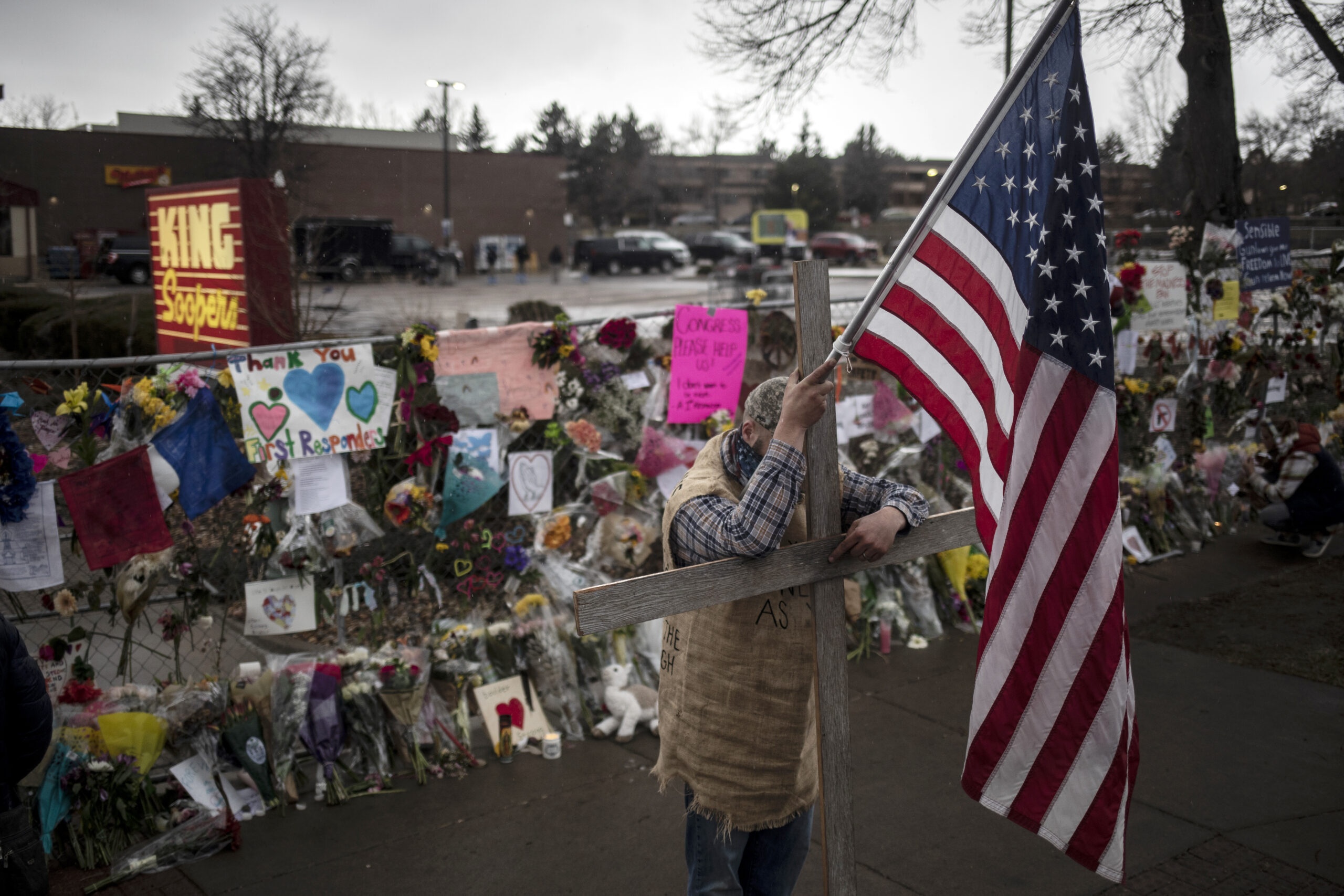
In the last two legislative sessions, Virginia enacted 25 gun-safety laws, and bills have passed in nine other states that establish grant programs for community violence-intervention efforts. A firearm permit-to-purchase bill is making its way through the Delaware legislature, and Colorado lawmakers are considering a package of gun-violence prevention measures in the wake of the recent mass shooting in Boulder. All of this is a direct result of local and state organizing.
Some of these efforts have received funding from foundations with the foresight to invest in the vision and experience of small groups working on the ground. With the White House taking bold steps, now is the time for philanthropy to do the same and vastly expand that network of support.
My organization, the Coalition to Stop Gun Violence, offers a model for how to do that. With philanthropic backing from a new anonymous donor, we recently launched the Safer States Initiative, which provides state and local activists with the financial, management, and policy assistance they need to accelerate and expand their work.
So far, the effort has invested in organizations in Colorado, Delaware, Illinois, Kentucky, Minnesota, New Mexico, North Carolina, Pennsylvania, Washington, D.C., and Wisconsin. These partnerships have allowed us to elevate leaders with local expertise who can authentically engage with the most affected communities. Building these partnerships is especially critical in Black and brown neighborhoods, where residents are disproportionately harmed by gun violence.
With both 501(c)(3) and 501(c)(4) components, our effort is able to provide nonprofits with resources for educational, programmatic, and electoral work. For instance, the additional funding we gave to the Delaware Coalition Against Gun Violence allowed the group to play a role for the first time in key state elections, resulting in the ouster of a senate incumbent supported by the National Rifle Association. This left the Delaware senate with a majority of lawmakers who support gun-violence prevention and opened the way for the potential passage of several new laws, including handgun purchaser licensing, limitations on high-capacity magazines, a ban on so-called ghost guns, and domestic-violence firearm prohibitions.
The Safer States Initiative also allows local groups to target resources where they are needed most. New Mexicans to Prevent Gun Violence hired a program director to lead the implementation of the state’s extreme-risk law. Whitney/Strong, a Kentucky organization led by a gun-violence survivor, introduced the state’s first bipartisan extreme-risk legislation and lobbied for the first gun-violence prevention policy hearing in more than a decade. The Illinois Gun Violence Action Committee expanded its efforts in key districts and is working to pass a bill strengthening the state’s firearm licensing laws. And the DC Justice Lab is collaborating on a report to develop guidelines for addressing racial equity in gun-violence prevention laws.
Give Local Leaders Autonomy
Ensuring more successful outcomes will require consistent and robust funding from organizations and individuals with national reach. Donors also need to be true partners in this work. Top-down mandates and assumptions from large advocacy groups and well-intentioned foundations miss the point and the potential of these relationships and will fail to provide local leaders with the power and autonomy they need to succeed.
American history is full of examples of social change that began in statehouses and made their way into federal law, including the successful fight for same-sex marriage. Gun-violence prevention groups have adopted a similar approach with the backing of a small and dedicated group of grant makers, most notably the Joyce Foundation and members of the Fund for a Safer Future. But now is the time for the larger world of philanthropy to put its full force behind building power in states.
The reality is that when President Biden stepped up to the podium last Thursday, he was responding to a landscape that is fundamentally unchanged from when he served as vice president. The recent mass shootings in Atlanta and Boulder grabbed our attention and the headlines, but they continue to represent a tiny piece of the overall problem and do not reflect the true pervasiveness of gun violence in this country.
An astonishing 40,000 people die from firearms every year in America, and every day more than 100 people on average are killed by gun violence. That’s the combined numerical equivalent of the mass shootings in Atlanta, Boulder, El Paso, Texas, Parkland, Fla., Sandy Hook Elementary School, Columbine High School, and the Tree of Life Synagogue in Pittsburgh — every single day. The highest rates of gun deaths occur in rural communities. Firearms are the leading cause of death for Americans ages 1 to 24. Fully 60 percent of gun deaths are suicides.
Rising Gun Sales Lead to Rising Gun Deaths
No corner of America is untouched by gun violence, and despite widely shared perceptions, gun violence did not drop during the first year of the pandemic — it went up. Gun homicides and unintentional deaths increased by 25 percent in 2020, probably due at least in part to a coinciding boom in gun sales.
The numbers are horrific, but we activists and advocates aren’t about to give up. In fact, we have grown and learned and have established a powerful foundation to build on together. For those of us who have done this work for decades, the opening created by the president’s executive actions gives us a chance to draw on an enormous knowledge base to permanently overhaul our nation’s gun laws.
We must empower the experts on the ground with consistent funding, deeper training, and more support to do the work they already know how to do. What begins at the local level with the backing of motivated philanthropies can ultimately change our country.





