
With an Ambitious Goal, Charities Could Lead the Economy’s Recovery

By CLAIRE GAUDIANI
Contributor
January 9, 2011 | Read Time: 6 minutes
Philanthropy continues to grow ever more dynamic despite the Great Recession. Now America needs foundations and nonprofits to do what they have done in every other economic crunch since the late 18th century—help stimulate a Great Recovery.
As the 2011 opens, it may be time for everyone in the nonprofit world to consider a New Year’s resolution. We should commit to a shared purpose that builds the nation’s spirit and financial strength by enabling the poorest 15 percent of Americans to achieve middle-class well-being.
Seem impossible? Philanthropy has already led the nation to what seemed “impossible.” From 1909 to 1915, philanthropy led Americans to eradicate the scourge of hookworm that was ravaging hundreds of thousands of lives in 11 Southern states. Philanthropy was invested in fighting the disease. Regional and local groups worked together toward a national goal and achieved success in less than six years.
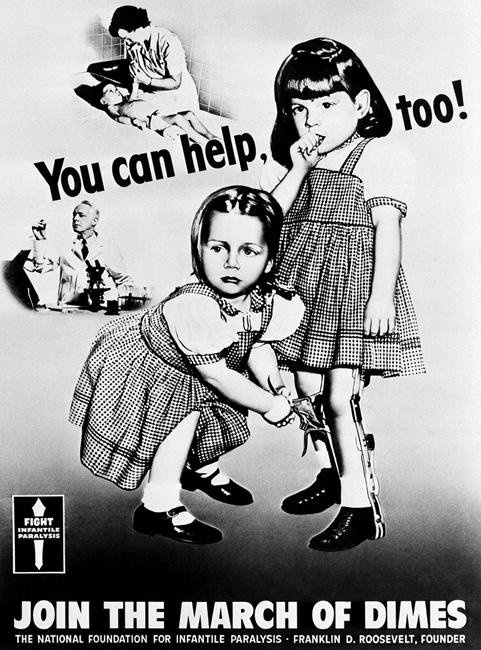
And in the midst of the Great Depression, Americans collected funds a dime at a time, four billion dimes, to fight polio. The Mothers March of Dimes engaged only the best laboratories chosen by specialists. Local people worked to collect dimes, support stricken families, and recruit young candidates to pursue the advanced medical education and research that the dimes supported.
The story of ending child labor offers a similar story. American philanthropy knows how to do things that seem impossible.
Middle class well-being would mean the poorest 15 percent of our population would lower their infant and maternal mortality rates to those of middle-class families. Children in poor families would achieve the same language and reading readiness and high-school graduation rates as the middle class. And as adults, they would have the same incarceration and longevity rates as today’s middle class.
That would do wonders not only to give more people a chance to live the American dream but also to heal the shaky economy and trim the federal deficit.
With fewer people in poverty, government budgets would get some much-needed relief. Some $500-billion a year (that is half a trillion a year, every year) or 4 percent of the gross domestic product could be saved simply by lifting America’s children out of poverty, according to Harry Holzer, a Georgetown University economist and his colleagues. And with more people in the middle class, the nation would make greater strides in productivity and spending needed to expand the recovery.
Our nation’s spirit of optimism and idealism could use the lift that would come from aiming this effort at July 4, 2026, the day we will celebrate the 250th anniversary of the Declaration of Independence in 1776. Small groups of community residents could work together across the land to build access to life, liberty, and the pursuit of happiness for the neediest 15 percent of their population. We could call this our Declaration Initiative, our shared national purpose.
While the United States and all its citizens need philanthropy’s help to jump-start the nation’s idling economy and flattened spirit, foundations and donors also need to rally behind such an ambitious shared national goal as a way to regain America’s confidence in the use of private wealth to promote the common good.
An erosion of trust has already had grave consequences. In the past few years, more and more lawmakers and advocacy groups have sought to regulate philanthropy and legislate how foundations should give away their money. Some critics of foundations sought to require them to give more to help the needy. Now it’s time to work together to show Congress and the public that philanthropy can best aid the whole country when it is allowed to operate in freedom.
Philanthropy has never been better poised to take on a challenge as grand as eliminating the severest poverty in the United States. Many foundations have conducted extensive research on what works to fight poverty and have developed programs that show significant success in enabling the poorest to move toward middle-income levels of well-being.
What’s more, experiments are already under way using a marketplace approach to social change. Such an approach would offer new relationships and a host of locally appropriate ways to engage people in working toward the greater good. Everybody would learn.
Donors, foundations, and grass-roots community leaders together would craft a new relationship as “buyers” of services. They would collaborate as a team to investigate the best ideas for curbing poverty and its disabling effects. Together they would make decisions about what programs would work best for their communities. Everyone—even the poorest residents of our communities—would help raise funds (as the early 20th-century philanthropists Julius Rosenwald and Andrew Carnegie asked the local people to do). Communities would strive to make all their residents both donors and recipients. We are all beneficiaries when our democracy lives up to its ideals.
“Buyers” would work with “sellers”—the organizations and foundations that have developed projects based on solid research about what works to solve the most severe problems faced by the poorest Americans. Nonprofit “sellers” would make pitches to “buyers” in a kind of road show, conducting presentations about what makes their programs worthy of expansion.
These interactions would stimulate healthy dialogues about different approaches and expectations. As decisions were made cooperatively, commitments would also be made to assess and report results continuously. The 15 years we have to meet the target set by the Declaration Initiative would go quickly.
Lest we forget, when those hookworm and polio goals were achieved, philanthropy did not cut back support for the multitude of other causes it was supporting. So our commitment now to a shared national purpose must emerge along with continuing commitments to the rest of the whole philanthropic agenda.
Sadly, this kind of national idealism, supported by strong local action, has gotten lost in recent years. In this era of multinational corporations, big government, big philanthropic institutions, and billionaire donors, America’s exceptional history of citizen-to-citizen engagement on behalf of the greater good has often gotten overshadowed.
Money is available. Focusing on building America’s middle class is a rallying cry that conservative, progressive, and centrist donors can aspire to even in these politically divisive days. This focus attracts foundations and donors of all points of view to fulfill the aspirations that ring out in our nation’s Declaration of Independence.
The Declaration Initiative is an ambitious idea. Our republic was born from political and social ambition. Let’s spend 2011 and 2012 planning and testing the idea of a marketplace of “buyers” and “sellers” who will provide the ingenuity, the money, and work needed to curb American poverty over the next 16 years.
The Declaration Initiative offers a way to rekindle the spirit of generosity that created America’s greatest social triumphs. All donors deserve inspiration to make a difference, not legislation or coercion to take action as many foundation critics seek to impose.
We owe the founders fulfillment of the Declaration’s aspirations by the 250th anniversary of the republic. We need to show Americans that the spirit of idealism, optimism, and entrepreneurialism is alive and well—and that the institutions that mind the nation’s generosity are poised to lead the charge.
Today, only 85 percent of Americans have realistic access to life, liberty, and the pursuit of happiness. It’s time for philanthropy to extend that chance to every citizen.





