Bright Prospects for Asian-American Giving
The younger generation has more white-collar jobs than their elders

By Michael Anft
Contributor
August 11, 2013 | Read Time: 8 minutes
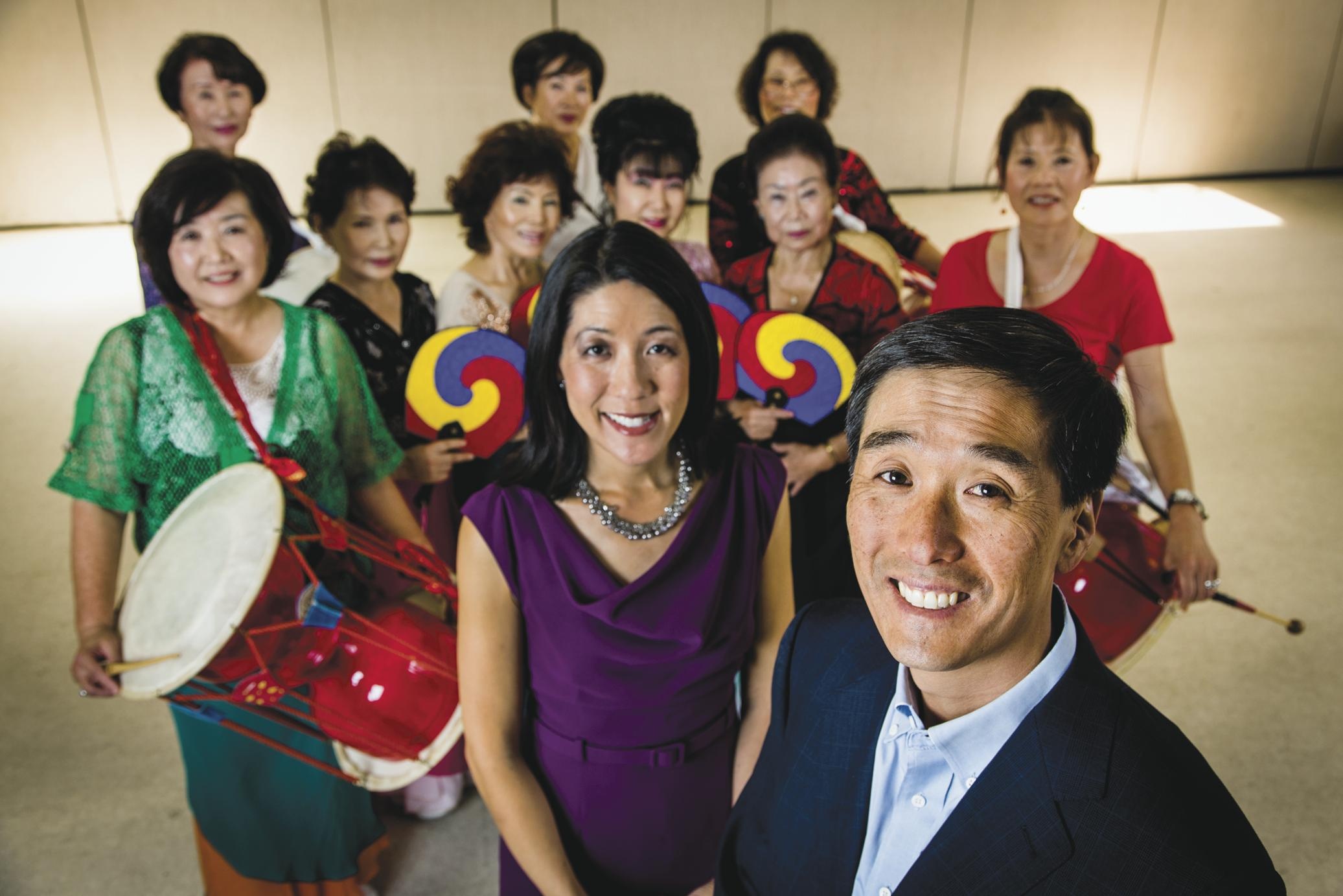
David Chun and his parents emigrated from South Korea when he was seven months old. His parents worked long hours to send him to the University of Virginia and Penn’s Wharton business school, where he excelled. In his early 30s, Mr. Chun founded Equilar, a business that provides data to corporations on executive compensation and governance.
But although his story follows the ever-upward arc traveled by some members of America’s “model minority,” it veers away from it in one important way: Unlike many other young Asian immigrants, Mr. Chun started making large charitable donations early in his career.
Now 45, Mr. Chun and his wife, Lillian, began regularly making significant gifts in their mid-30s to the Asian Pacific Fund. Formed in 1992, the fund is one of the oldest grant makers to Asian-American causes, including those that serve youths and help people in poverty meet their basic needs.
Since then, he has given tens of thousands of dollars to the fund. And he devised a way for his business to aid organizations. Recently, Equilar branched out to help nonprofit groups identify wealthy people who might make good donors to charitable causes. “As an immigrant myself, I saw how our family struggled and recognize that other people do too,” says Mr. Chun, who lives in Palo Alto, Calif.
Korean-Americans may be regarded in general as an up-by-the-bootstraps group, he adds, but such stereotypes obscure the needs of many Asian immigrants—and the importance of philanthropy to support them.
Asian-led households have a higher poverty rate than for whites, according to U.S. Census data. Nearly one-third of Asian-Americans are clustered in the expensive Los Angeles, New York, and San Francisco areas, and when the regional cost of living is factored in, 16.1 percent of Asian families live in poverty, compared with 10.4 percent of whites. Over all, 15 percent of Americans live in poverty.
Building a Pool of Donors
A growing number of grant makers have sprung up in the past dozen years to serve the needs of Asian-Americans. Those organizations, typically formed and supported by older Asians, are now developing strategies to reach young donors.
Their goal is to make people familiar with the work of foundations in the hope that they become regular donors who can sustainably support groups that typically provide basic social services, offer scholarships, or help youth and the elderly.
Younger Asian donors often have brighter financial prospects than their parents and grandparents had and may be more likely to support American charities, instead of following their parents’ example and sending money back to their native countries, says Mr. Chun.
“Our generation, in general, finds itself in more white-collar jobs than our predecessors, and is in a better position to give,” says Mr. Chun. “As we’ve grown into our professions, we’ve been able to raise ourselves up, so there’s more of an inclination to help others here, to share what we’ve earned.”
Community Ties
Leaders of Asian-American charities around the nation say they see that inclination among their younger donors. The key to reaching them, they say, is to promote giving at an earlier age and to encourage those who may have emphasized assimilation in the past to develop a stronger interest in people of their own backgrounds.
“A lot of our professionals have felt cut off from their own communities,” says Kyung Yoon, executive director of the Korean American Community Foundation, which raises money and makes grants to charities that serve the needy in the greater New York area.
The foundation holds a gala each year that raises about $1-million and is well attended by younger people.
The galas give the foundation an opportunity to tell prospective younger donors what it does and how its grantees help the less fortunate members of New York’s Korean community. Says Ms. Yoon: “We’ve given some of them a way to work with the organizations we support, or to make contributions to them.”
Studied Approach
Young donors tend to investigate the charities they are interested in more deeply than older philanthropists, says Audrey Yamamoto, executive director of the Asian Pacific Fund, which makes grants to 80 organizations in the San Francisco Bay area.
A key way the organization attracts supporters is in building relationships with Asian employee groups at corporations that have a large presence in Northern California, including Google, Intuit, and Safeway. People from those groups provide volunteer help for the grant maker’s events, and some corporate employees also make donations.
“What we see among younger donors is a desire to be more hands-on,” says Ms. Yamamoto. “They’re more interested in seeing outcomes firsthand, such as when kids receive gifts.”
The Asian Pacific Fund also plans to start a giving circle next year that will encourage multiple generations of families to pool their money into donations—with an eye toward getting the young into the habit of giving.
Youth Energy
The American India Foundation, in New York, is also focusing on the rising generation.
In 2007, the foundation opened five chapters for young professionals in major cities across the country, and a sixth will open in Chicago later this year. In the past six years, the fund has reaped donations from some of the 2,500 people who regularly attend chapter meetings. The donations so far this year have totaled $200,000. “We’re beginning to see very young people give, starting from their first paycheck,” says M.A. Ravi Kumar, chief executive of the group, which raises $8-million annually from donors in the United States and makes grants to charities that serve poor people in India. “Some of our youth galas raise $50,000 in an evening.”
More important, he adds, “the young people help us spread the word about the work we’re doing and bring all this energy with them. They seem to have questions for me 24 hours a day.”
One of them, Nitin Sacheti, a 30-year-old investment analyst in New York, says he and others decided to start the young-professionals groups after watching the foundation rely almost solely on friends of its founders, most of whom were older.
“We could see that AIF did great work in reaching charities in India that teach poor people how to prevent disease or care for their infants. But outside of a concentrated group of older donors, it wasn’t reaching as many people as it could,” says Mr. Sacheti, who has given $6,000 to the foundation this year.
He also sits on its advisory council. “We started looking at how some charities get to people through more of a feet-on-the-street approach and came up with the idea for these youth events—a way to get those feet in the door.”
At the New York chapter, as many as 200 people attend each of four annual events; two are focused on socializing, and the others on charitable work that benefits from the foundation’s grants.
“We make sure to have an element of the social and of the foundation’s work at all events,” Mr. Sacheti adds. “We’ve gotten a regular crowd of people in the 21-to-30 age group, but need to better target college-age people and those who are 31 to 40.”
Long-Term Benefit
Gifts from young people tend to be small, but foundation officials say their efforts to cultivate people in their 20s, 30s, and 40s will probably pay off in the long term.
The secret, says Ms. Yoon, is to start small. “We encourage younger people to give $1 per day,” she says. “We would much prefer to have 1,000 people do that than have one large donor give us $365,000. Getting people engaged with what we’re doing is key.”
Others say that Asian-Americans will know they have truly arrived as a force when their average household charitable giving regularly eclipses that of the general populace. “It would also be good to see, in 10 years or so, a foundation started by an Asian that is as large as a [David and Lucile] Packard or a Ford,” says Mr. Chun.
“We’re seen as successful in so many ways,” he adds. “We’d love to be the model minority for philanthropy too.”
Asians Do Give at the Office—and Often to Non-Asian Charities
Charities looking to attract gifts from the rising generation of Asian-Americans may want to try reaching them at the office, say experts.
Many Asian-Americans born in this country are driven by their careers, often to the detriment of philanthropy, says Dien Yuen, executive director of the Chinese American Community Foundation, which was formed in San Francisco in February.
What’s more, she says, many young Asians are more immersed in American life than their parents were, and as a result, they tend to give to non-Asian charities, such as the United Way—good news for fundraisers at those organizations.
“I see younger people come in and make small donations. Then, they get more involved, sitting on charity boards and taking part in mainstream groups, like the ballet,” says Ms. Yuen, a longtime foundation executive and consultant. “This new generation is unique. They’re moving toward the mainstream quicker.”
Filling a Gap
To capture a share of Asian-American dollars before they flow to other causes, the Chinese American Community Foundation is focusing on potential donors in their 40s who work in Silicon Valley. The fund’s treasurer, Buck Gee, says his links to networks of Chinese-American professionals there have begun to garner some support for the nascent foundation.
“There’s interest in doing this. The question is how,” says Mr. Gee. “We tell people about the causes we support and show them that they don’t get the public support they need. We encourage them to fill that gap.”