March 29, 2015 | Read Time: 4 minutes
Lead fundraisers and chief financial officers both oversee their organization’s money, and it’s not uncommon for them to clash: They are trained to look at numbers differently and tend to have very different personalities.
When they do collaborate, a chief financial officer can be a powerful ally of the fundraising staff. But building a productive relationship usually means overcoming some challenges.
For starters, consider their odd-couple personalities. To succeed, most fundraisers must be optimists, say nonprofit veterans: They have to be resilient, to weather rejections by potential donors. Chief financial officers, on the other hand, may seem like pessimists because they’re trained to avoid risk. They can irritate fundraisers by balking at certain expenses, like hiring high-salaried development talent or accepting donated property that would cost the organization money to maintain.
Other problems arise in board meetings when the fundraiser and the finance director each presents a different set of figures because they count income differently. Unlike the financial staff, fundraisers tend to use estimates and often count pledges before the money is in hand.
Such conflicts have become more common in the aftermath of the Great Recession as pressure has intensified on fundraisers to make up for shortfalls in government aid and other revenue. To help quell such tensions, Angela Seaworth holds an annual Development and Finance Symposium at Rice University, where she directs the Center for Philanthropy and Nonprofit Leadership. (The next one is slated for June 9 and 10.)
The two types of professionals each voice common complaints about the other, she says. Finance executives say chief development officers “need better financial acumen,” says Ms. Seaworth. “CFOs say that the CDO is always out to lunch,” thinking the person is goofing off when he or she is actually holding essential meetings with donors and other constituents.
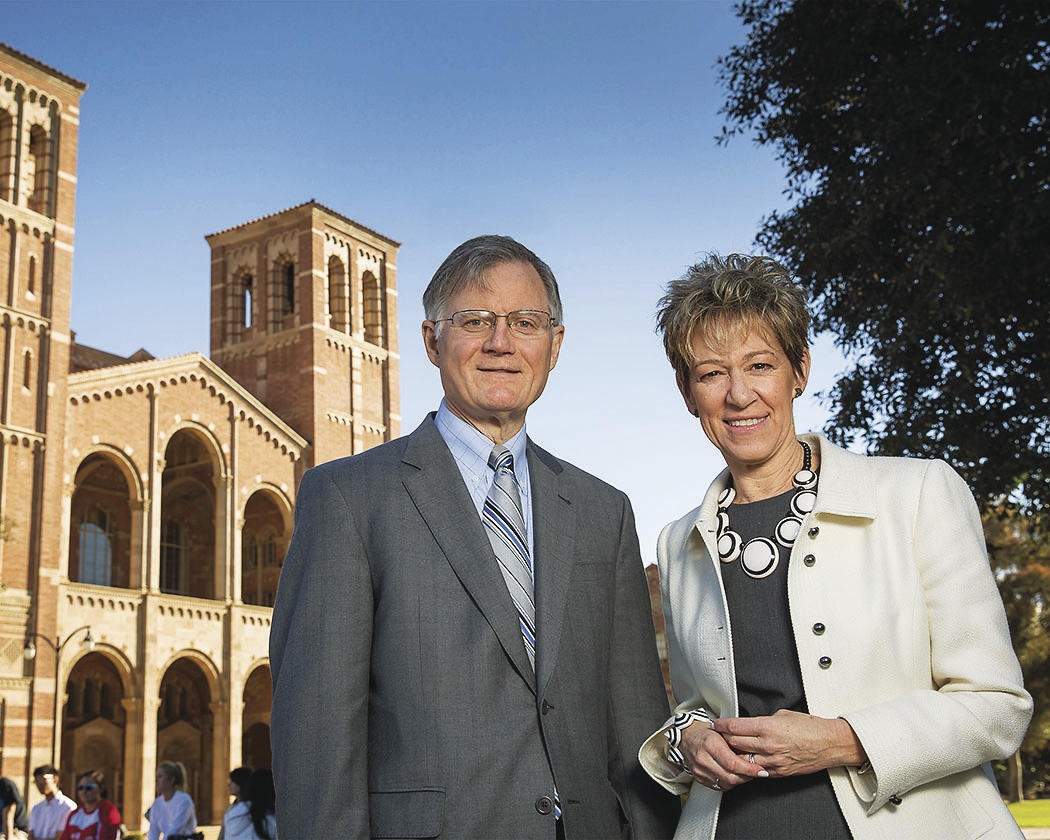
Productive partnerships take an effort to maintain. Consider the case of Rhea Turteltaub, who oversees fundraising as vice chancellor of external affairs at the University of California at Los Angeles, and the CFO, Steve Olsen, who are currently working on the institution’s $4.2-billion capital campaign, the largest drive to date by a public university. They offer tips on building a strong relationship between a nonprofit’s chief fundraiser and chief financial officer, gleaned from their more than 15 years of working together.
Treat colleagues like donors.
To raise money, Ms. Turteltaub says, it’s essential to give the chief financial officer and other coworkers the same respect and consideration she extends to donors. “Our mission is building enduring relationships in support of UCLA,” she says. “If we cannot do this internally, first and foremost, then we have no business being in a donor’s home or office.”
Appreciate differences.
Rather than being annoyed by each other’s personality and different skill sets, Mr. Olsen and Ms. Turteltaub view them as complementary.
“Rhea is more social than I am,” Mr. Olsen notes, an asset when wooing donors.
Because fundraisers are trained to be optimistic and upbeat, the risk-avoiding financial officer can come across as someone who quashes others’ enthusiasm for new ideas, says Ms. Turteltaub. “Steve doesn’t say no. He asks, ‘How can we get there?’ ”
Adds Mr. Olsen: “I do not see myself as saying no just to say it. I try to say yes as often as possible. Sometimes it isn’t possible.”
Let donors meet the CFO.
Mr. Olsen says he’s met with many UCLA donors over the years to talk about the university’s bottom line. “Donors are very sophisticated and vigilant. They need to know the objectives we stated will be achieved,” he says. “Because I’m a finance guy, I understand where they are coming from.”
Particularly with capital projects, when donors are “asking why does it take so long and cost so much, Steve is adept at getting donors to understand,” says Ms Turteltaub. “He is one of the best donor-relations people on our staff.”
Educate fundraising staff about finance.
Ms. Turteltaub says she asks Mr. Olsen, who also oversees capital projects, to make presentations to development officers so they understand, for example, why some gifts for new buildings on campus are more desirable than others.
“I wanted our staff to know the difference between opportunistic and strategic gifts of capital,” Ms. Turteltaub says. An example of a strategic gift is one for a new academic residential conference center that can be used by various disciplines. “We are unusually land poor, so we want shared-use facilities,” she says. “There is a lot of interest in opportunistic gifts by individual schools that want their own new building, but we are tough on those projects to maximize space.”
Another tactic Ms. Turteltaub has used repeatedly: having Mr. Olsen talk to her entire staff about the university’s budget and how he thinks about the financial landscape of the institution. Such a big-picture perspective is even more vital for fundraisers to have as state support for the university has declined, she says, and it helps them talk to donors with confidence.
“I want them to be able to convey that our institution is professionally managed and sound.”