For Calif. Nonprofits, Advocacy Work on $15 Minimum Wage Pays Off

By Megan O’Neil
Contributor
March 31, 2016 | Read Time: 7 minutes
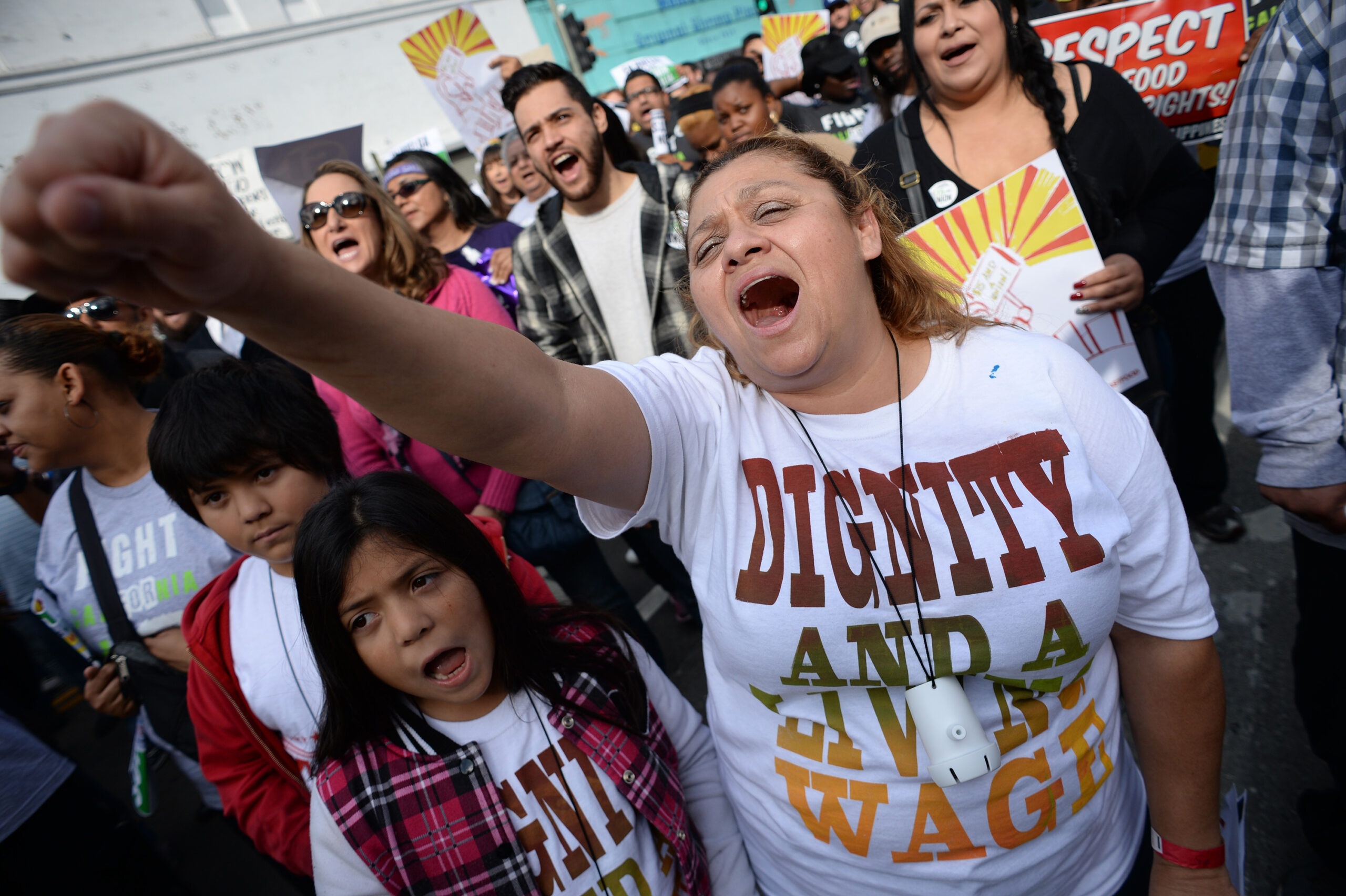
As California marches toward a $15 minimum wage — with major implications for the budgets of its 72,000 charities — nonprofit leaders say their advocacy work holds lessons for peers elsewhere amid a nationwide push to increase wages.
The California minimum-wage hike was approved by the state legislature on Thursday and is set to be signed into law by Democratic Gov. Jerry Brown on Monday. It will raise pay for millions of workers and be phased in over six years, starting at $10.50 an hour in 2017 and building to $15 in 2022.
Businesses and nonprofits with fewer than 25 employees will get one extra year to comply.
Cities including Los Angeles, New York, and Seattle have already passed a $15 minimum wage. Oregon is phasing in tiered increases that top out at $14.75 an hour. But California is the first state to go to $15, and its $2.3 trillion economy — bigger than that of most countries — makes the increase there the foremost test case of how charities will be affected by the law.
“Given these various laws and proposals going in different directions, different levels, and different time periods, nonprofits would be well advised to pay close attention to these changes that can impact their sustainability to continue advancing their missions,” Tim Delaney, president of the National Council of Nonprofits, said in an email.
High Stakes
There is no debate that the stakes are high for charities. California has 72,000 nonprofits that employ nearly 1 million workers, according to Nancy Berlin, policy director at the California Association of Nonprofits. Some 11 percent of those earn minimum wage.
Ms. Berlin and her colleagues started their advocacy work in 2014 by surveying the association’s members about what a minimum-wage increase would mean for them. Nonprofits expressed fears about being able to maintain the same level of services as they had in the past and about needing to reduce the number of employees. But worrying about overhead costs is only part of the equation for nonprofit leaders. Despite concerns, 77 percent supported increasing the minimum wage both because of the potential benefits for the poor people they serve, and because they didn’t want charities to be seen as the employers of a low-wage work force.
“They didn’t want to lose workers to other industries because they were paying less than McDonald’s,” Ms. Berlin said. “What nonprofits were saying is we just need a little more time. If we have a little more time, we are confident we can figure this out. We are very resourceful. We are resilient.”
She and others were concerned to see some business groups — which came out against the $15 minimum wage — speaking on their behalf.
“We didn’t necessarily feel they were reflecting the complexities of the nonprofit story,” she said.
The California Association of Nonprofits advocacy work included meeting with elected officials and others up and down the state.
“When I first started showing up at hearings and talking to labor unions, they were suspicious of us,” Ms. Berlin said. “They thought we would try and stop it.”
A central goal was to secure a multiyear phase-in approach to the increases. And one of the most critical parts of the policy work was effectively explaining the nonprofit sector as an important employer and economic driver in the state. The California Association of Nonprofits had recently conducted a major study of the economic clout of charities, and it handed out lots of copies.
“We got invited to many more hearings after that happened,” Ms. Berlin said. “They knew we had done our own research, had discussions in our community, and had something constructive to say.”
That work is already paying dividends, she said.
“I also think that helped us as we moved forward in other legislation that we are working on now because we are seen as a community that is serious and thoughtful and not afraid to speak up,” Ms. Berlin said.
In summer 2015, the California Association of Nonprofits hosted workshops to help nonprofit leaders think about the adjustments and changes that would need to be made to comply with a statewide $15 minimum wage. The association also began calling on grant makers and donors to take into account nonprofits’ increasing operational costs, work that continues. They should consider grants and other funding to patch up gaps, the association has said.
“We know from talking to funders privately that it is something they are looking at carefully and considering,” Ms. Berlin said.
Raising Salaries Now
Charity leaders said that talking to grant makers about the burden of increasing pay is only just starting.
“This is a game changer,” Cindy Duenes, executive director of the Center for Human Services in California’s Central Valley, said of the wage hike. “It is going to take a lot of collaboration and a lot of really strong communication with all the stakeholders.”
Her social-service organization employs more than 240 people, and roughly 80 percent earn less than $15, Ms. Duenes said. She worries about the impact of the wage hike on small charities that have limited capacities and sources of revenue. And she has her questions about the overall benefits: As companies pay their workers more, they may also increase the costs of goods and services, she says.
Start making increases now, little by little. It’ll pay off in many ways, including the bottom line.
Still, Ms. Duenes said she is relieved that the wage increases will come over multiple years.
“There is also an opportunity for us to get innovative and partner in new and innovative ways,” she said. “You can look at this as the glass half empty or the glass half full.”
Lorri Jean, chief executive of the Los Angeles LGBT Center, said in an email that the minimum-wage legislation will effect about 115 employees at her organization, costing it about $577,000 in additional pay.
“Honestly, I was quite dismayed by much of the nonprofit response to the proposed wage increases,” Ms. Jean said. “I felt like too many were losing sight of the bigger picture and focusing on dollars rather than what is really good for their employees and their clients.”
The Los Angeles LGBT Center plans to raise wages more quickly than required and is calling on other nonprofits and businesses to do the same.
“Don’t wait for a law to begin examining and improving the lowest salary scales within your organizations” is Ms. Jean’s advice for other nonprofit leaders. “Start making increases now, little by little. It’ll pay off in many ways, including the bottom line.”
And she encourages colleagues in other parts of the country who could soon be forced to pay higher wages to talk to government and foundation leaders.
“They’re all seeing what’s coming just like everyone else,” Ms. Jean said. “And, if you haven’t diversified your revenue streams before in order to bring in more private dollars, now’s the time to start or do better.”