Giving Tuesday and Digital Activism: How to Motivate Americans to Online Action

By Alison DaSilva
Contributor
November 19, 2015 | Read Time: 5 minutes
With Thanksgiving just a week away, America is now entering the biggest shopping time of the year. Last year alone, retail sales for the holiday season reached $616 billion, and there’s no end to the promotions for the next month. With Black Friday, Small Business Saturday, Cyber Monday, and emerging shopping holidays like Mobile Monday and Luxury Sunday, it can be hard to break through the clutter with a more altruistic message. But Giving Tuesday is looking to do just that, asking shoppers to observe the season of giving in a different way: to celebrate generosity by giving to their favorite nonprofit.
In its fourth year, Giving Tuesday is gaining momentum. In 2014, total donations grew nearly 63 percent and raised an estimated $45.68 million for nonprofits and causes around the world. Unlike the retailers and brands that flood our screen time with highly produced advertising messages, Giving Tuesday almost exclusively leverages the power of social media, asking consumers to first donate, then share their giving stories on social media using the hashtag #GivingTuesday. Last year alone, the effort garnered over 698,000 hashtag mentions and 32.7 million Twitter impressions.
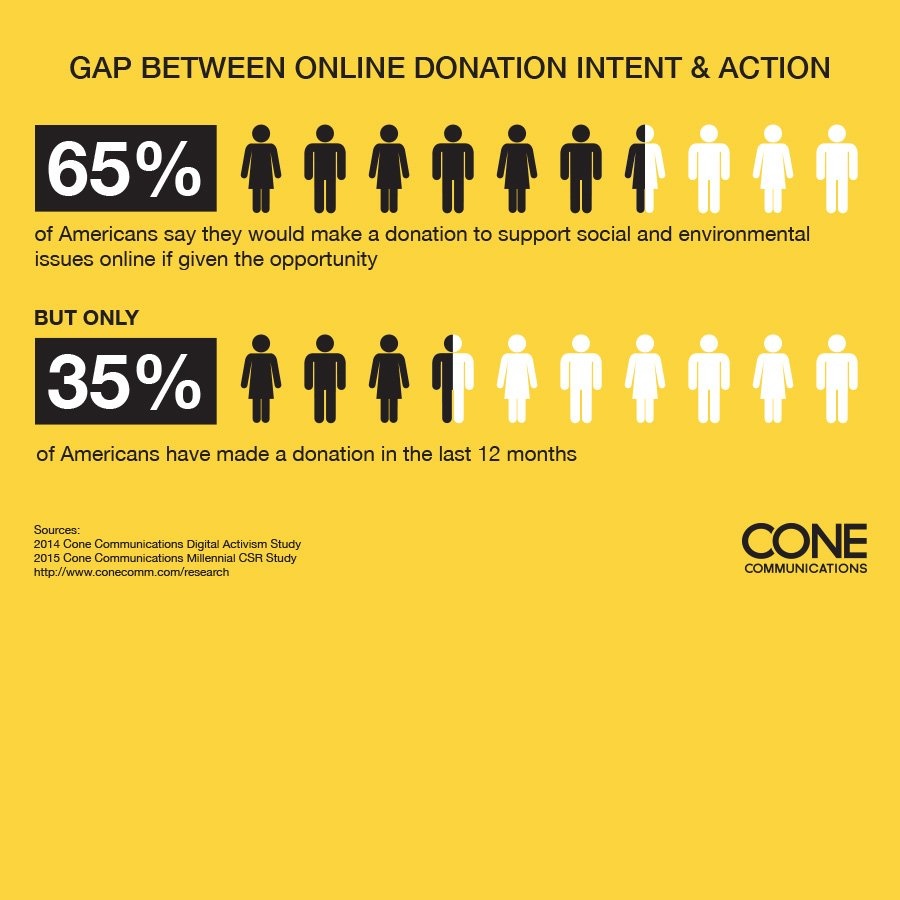
Even as Giving Tuesday continues to grow, there’s still opportunity for organizations to better harness the power of social media to raise awareness and funds. In fact, a sizable gap remains between what Americans say they will do and what they have actually done. Although 65 percent of Americans said they would make a donation online, only 35 percent have actually done so in the past 12 months, according to the 2014 Cone Communications Digital Activism Study.
Organizations looking to close this gap and motivate Americans to participate in Giving Tuesday need to understand what triggers will inspire action. For example, the majority of Americans are motivated by the chance to make a meaningful difference on an issue that is compelling or urgent. More precisely, these are some of the top drivers to online participation in social or environmental efforts:
- Their participation will make an impact (79 percent).
- There is an urgent need for immediate support (79 percent).
- It is easy to participate (77 percent).
- The issue is personally relevant (74 percent).
- The content triggers an emotional response (68 percent).
- The appeal allows participants to show their social networks what is important to them (57 percent).
Yet with the more than 15,000 nonprofits and 20,000 partner organizations that participated in Giving Tuesday last year — numbers that are likely to grow in 2015 — it’s going to a take a lot to stand out. Organizations looking to get Americans to put down their shopping bags and open their wallets in support of Giving Tuesday should appeal to what matters most:
Zero in on impact. Impact levels the playing field between nonprofit organizations, large and small. In fact, more than half (58 percent) of Americans say it’s more important for them to be able to have an impact on an issue than to be familiar with the organization they are supporting. This year, the Harlem Globetrotters have been growing goatees during the month leading up to Giving Tuesday and are encouraging their supporters to get involved with their GOATee for a Good Cause campaign by giving a goat through World Vision to a child in need. For a donation of $75, a goat can provide milk to nourish a family and bring in additional income.
Create urgency. Showing Americans why an issue is in need of immediate support is an important motivator to drive action. The Brain Aneurysm Foundation’s Giving Tuesday campaign uses data to clearly lay out why now is the time to donate: “1 in 50 people has a brain aneurysm. Every 18 minutes a rupture occurs. Only 50 percent of those that rupture will live. Thirth-three percent of those that do survive suffer permanent neurological damage and are unable to resume their normal lives.” The effort then ties in social networks through its 12 Ways of Giving social media campaign, highlighting an array of ways donors can show their support for the cause.
Build for ease. Keep it simple! Social media can make support as easy as a 140-character tweet or just the click of a button. Last year, the Home Depot Foundation used Giving Tuesday to kick off a month-long campaign asking individuals to honor vets during the month of December. The call to action was easy — for each tweet using the hashtag #DoingMore4Vets, the Foundation would donate $1 to four of its nonprofit partners, up to $400,000.
Make it personal. Americans, especially millennials, are turning to digital channels to show their networks what they stand for — in fact, over half of Americans (52 percent) use social media as a platform to talk about issues they care about. Online giving campaigns increasingly enable donors to personalize and share their social-impact commitments with their networks as a reflection of their personal values or brand. Giving Tuesday does this with the “#unselfie.” The campaign encourages individuals to write what cause they’ll be supporting this Giving Tuesday on a piece of paper, hold it in front of their face, and snap an #unselfie to broaden awareness and conversation for causes worldwide.
Giving Tuesday represents a growing opportunity to rally support and donations for important causes, but in reality only about 10 percent of Americans said they would be more likely to give online during the holidays, compared to their likelihood to give at other times of the year. This serves as an important reminder for all organizations to engage individuals all year long, appealing to what matters most to them to inspire deep and lasting relationships.
Alison DaSilva is executive vice president for corporate social responsibility planning and insights at Cone Communications.