How a Small School With No Alumni Network Raised $10 Million

By Kellie Woodhouse
Contributor
August 20, 2019 | Read Time: 9 minutes
Nearly 80 percent of the donors to Nativity School of Worcester’s $10.5 million capital campaign do not live in Worcester, Mass., an economically distressed city an hour outside of Boston that the school calls home.
Yet that does not stop the private, tuition-free middle school for at-risk, inner-city boys from trying to get potential donors through its doors at least once.
Everyone at Nativity — from the staff to the students to the longtime contributors — knows that in-person visits are the best way to cultivate a donor and begin a relationship that will help sustain the school for years to come.
“All you have to do is walk into the school and you’re like, ‘Oh I get it. This is a great place.’ This school really sells itself,” explained Julie Kaneb, a trustee and longtime donor to the school. “We get a pretty good rate of return on that kind of thing.”
The odds were stacked against Nativity from the beginning of its campaign in 2013.
Just 16 years old, the middle school is too green to rely on alumni funding. It serves students from families at or below the federal poverty line. Nativity has one full-time and one half-time advancement worker and competes with hundreds of charities in nearby Boston.
Yet on June 30, Nativity closed its first capital campaign, having exceeded its goal by $300,000 in six years by soliciting hundreds of modest donations. Some 560 people have contributed to the campaign, and the median gift is $150.
Unable to rely on alumni, students’ families, or the surrounding community for support, Nativity grew a grassroots network of champions and donors who used compelling narratives to introduce the school to their social circles, creating a “friend-raising” ripple effect.
“It’s very unusual to be able to pull off this kind of campaign if you don’t have a natural donor constituency,” said Gail Perry, a fundraising consultant who advises schools on fundraising but did not work on Nativity’s campaign. “They must have done a few things really well.”
Perfecting the art of fundraising has been essential for the school since its beginning.
Nativity does not charge tuition for the 64 boys who take part in school activities 11 hours a day. It relies solely on philanthropy to fund its annual operating budget, which in 2019 was $1.7 million and covered Nativity’s education enterprise as well as programs like a food bank for student families and high-school tutoring for graduates.
The capital campaign, called “It’s OK to Be Good Here,” allows Nativity to retire $3.5 million in debt on two school buildings and start a $4 million scholarship fund and endowment. It also includes $3 million to cover three years of operational funding, which administrators included in the total campaign goal as a way to negate the decrease in the annual-fund donations that sometimes accompanies a large, multiyear capital campaign.
Building Relationships
With a staff of 24, Nativity is an all-hands-on-deck kind of place.
“There’s a lot of challenges,” explained Patrick Maloney, Nativity’s president and former chief fundraiser. “In an organization as small as ours, as mission-based as ours, and as lean as ours, the director of advancement is just as likely to be on the phone with a major donor as she is to be getting a Band-Aid out of the first-aid kit because someone fell down at recess.”
Nativity relies heavily on its supporters and 24 trustees to spread the word about the school and its campaign. Donors who live in the wealthier suburbs of Boston often make the case for supporting Nativity at carefully planned dinner parties for their friends and acquaintances.
It was a friend, for example, who introduced Kaneb to Nativity. Since then, she has enlisted her children to volunteer on workdays, introduced much of her social circle to the school, and become a trustee.
“We try to get a crack in the door,” Maloney said. “You are constantly having to go out and tell your story to new people and leverage the people who are close to you to find more contacts.”
Although the majority of campaign donors — 68 percent — live in Massachusetts, just 21 percent are residents of Worcester, which was once an industrial hub of the Northeast. The median household income for the city’s 186,000 residents is under $46,000, according to the U.S. Census Bureau.
“There is no way that we could get all of our funding from the City of Worcester to survive,” Maloney said. “Almost our entire list of donors is in the ‘friends’ category.”
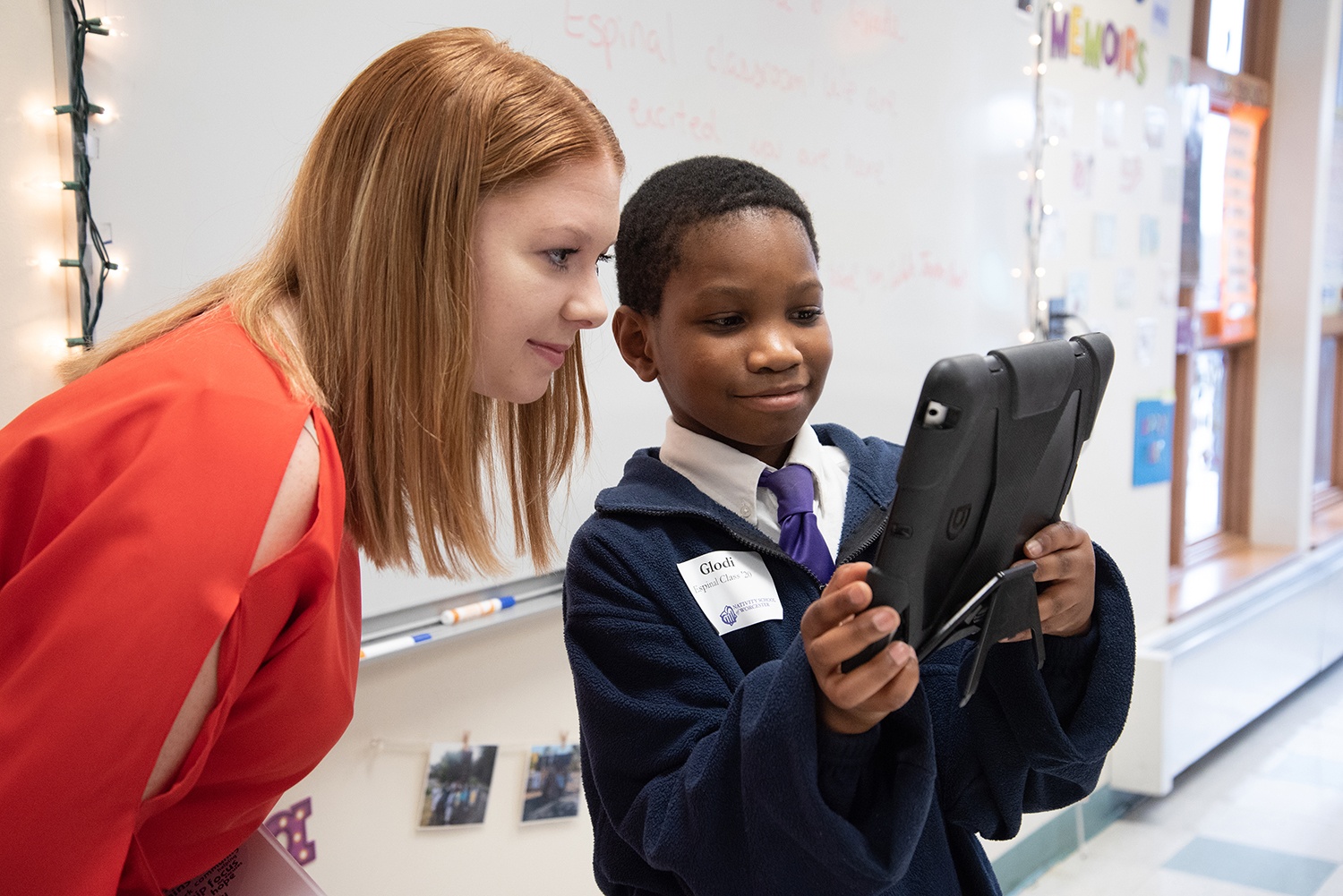
When a potential donor expresses interest in Nativity, administrators enlist student volunteers to give them tours of the school and explain how Nativity has changed their lives.
“You just know it’s something special once you are listening to those stories,” explained Joao Vickttor De Carvalho, a former student.
Attending Nativity in the mid-2000s put De Carvalho on the path to become the first person in his family to graduate from college. He eventually became a teacher at Nativity through the school’s fellowship program, which offers room, board, and graduate-school tuition in exchange for two years of teaching.
De Carvalho knows the Jesuit school’s four pillars by heart — strength, scholarship, character, and service. Like many current and former Nativity students, he has told his story dozens of times, whether in intimate one-on-one conversations or during speeches at large events.
Students, De Carvalho said, “bring the Nativity culture and Nativity atmosphere to the donors.”
Nativity shares many of its success stories — from a student’s science project to the fact that all of its graduates have received scholarships to private high schools — on mediums like Instagram and Facebook and in story-driven letters delivered by mail.
Often these materials do not include a fundraising solicitation.
Maloney has found that sharing information and “continuing the conversation” without asking for money is essential to cultivating long-term relationships with donors. He wants donors to see the continual impact of their philanthropy so they can feel confident about how Nativity stewards their donations.
“We spend a lot of time on building relationships, building trust, building confidence,” he explained, noting that more than $2 million of campaign donations is unrestricted. “To me, that says that the donor understands that we have all of these priorities but trusts us to make the right choice for the school.”
Overcoming Odds
Despite Nativity’s success, Maloney says the competition for donor resources — especially in a struggling city like Worcester — is fierce.
The school originally hoped to finish the capital campaign in three years, but it ended up taking double that amount of time.
“Every day you turn around there is a new nonprofit organization,” he said. “There just is constantly another person, another institution that is out there telling their story. … Even though it’s great, it’s also a threat to every other organization that’s doing the same thing.”
As Nativity neared its extended campaign deadline, Maloney and his team became concerned that donors were fatigued and the campaign was losing momentum. The school decided to break the larger capital campaign into smaller micro-campaigns.
With 18 months left in the capital campaign, Nativity told donors it wanted to create a $500,000 endowed fund for high-school scholarships. By pushing hard on this one priority, the school ended up exceeding its goal and raised $680,000 for the fund. It took the same approach to pay off its mortgage debt, raising another $500,000 for that endeavor.
“Focus on this more attainable goal created a burst of enthusiasm, and our donors responded,” Maloney explained. “These approaches motivated donors who may have been a little less focused on us as the campaign went into years three, four, and five.”
Perry says that many schools faced with similar obstacles — a lack of family or alumni funding sources and an economically challenged hometown — would have shied away from an ambitious capital campaign, falling prey to a pitfall she has seen many times during her years as a fundraising consultant: “thinking small.”
“They created something that was sticky,” Perry said of Nativity. “They overcame that tendency to be afraid.”