
September 2, 2015 | Read Time: 5 minutes
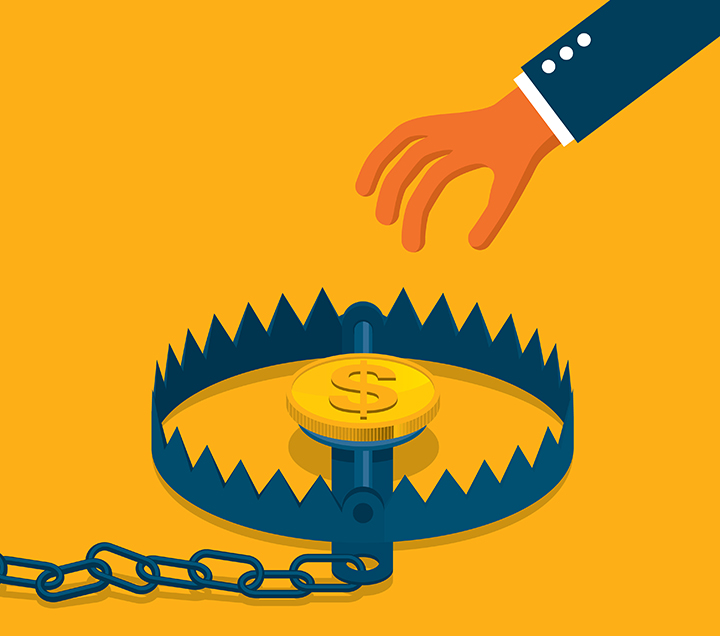
Did one of your charity’s employees just drive up in a tricked-out new luxury car? Have you checked the books lately? As sad as it is true, nonprofits are not immune to employee theft and fraud.
While fraud has decreased slightly in the for-profit world, it has risen steadily at nonprofits since 2010, according to a report produced by the Association of Certified Fraud Examiners.
“People think of nonprofits as serving a public good,” says Allan Bachman, the association’s education manager and the former head of a university’s audit department. “When you hear a charity has been defrauded, there’s an erosion of trust.”
Fraud can ruin a nonprofit’s reputation and result in monetary losses: Among the reported cases of nonprofit employee fraud in 2014, the median loss from the theft itself was $108,000, according to the report. For small charities operating on shoestring budgets, that level of loss can shutter an organization forever.
Fraud can also have lasting effects on small and large charities’ ability to attract donations.
“The reputational cost in many cases is bigger than the dollar cost, and that’s what’s really sad,” says John Slavek, a managing director with the risk-management firm Kroll, who investigated one of the biggest nonprofit bankruptcy cases in U.S. history. “They do lots of good work, and then once there is a case of employee fraud, donors start to question whether they want to give money to that organization.”
That should give fundraisers pause. At a time when so many charities are competing for money from the same donors, a single case of fraud can send that potential donor you’ve been courting into the arms of another organization, warns Michael Santocki, who is managing director of the management and professional risk group at Crystal & Company.
Who Commits Fraud
It is important to keep in mind that fraud can happen at any rung of the employee ladder, says Mr. Slavek.
A person who commits fraud is usually someone who has developed a level of trust and access within the organization over years, says Mr. Santocki. And there are some commonalities in motive and behavior.
That nonprofit worker who is stealing assets by creating fake invoices, misstating entries on balance sheets, or engaging in some other form of corrupt practice is often someone who is buried under extreme credit card debt, falling behind on mortgage payments, saddled with medical costs for a family member, or struggling with gambling or another personal-finance problem.
Fraud is also habit-forming. The person who steals from an organization initially to pay off debts can get used to the practice.
“They may take their first 10 bucks and sweat all night over it,” says Bradford Cook, an attorney with expertise in nonprofit fraud cases. “They don’t get caught, and they keep going because they see how easy it is.”
How to Avoid Fraud
The most important action a nonprofit can take to avoid fraud is to put in place a smart set of internal controls, says Mr. Slavek.
Here are some steps to consider:
-
Create an awareness program. Train all employees how and where to look for fraud, and establish reporting mechanisms, suggests Mr. Bachman.
-
Segregate financial duties. Make sure no one person has complete control of all aspects of a major responsibility, such as payroll or procuring and paying vendors, says Mr. Slavek.
-
Create redundancies. Implement a system of checks and balances where at least two people are involved in individual tasks, like hiring and firing, says Mr. Bachman. Require that checks be signed by two people, adds Mr. Cook, including a board member and a staff member, and ask questions if you are not sure what the check is paying for.
-
Set up an 800 number. Create a hotline where whistleblowers can call and anonymously report suspected fraud, says Mr. Slavek.
-
Establish vacation practices. Sometimes an employee who never takes a vacation might be celebrated within the organization for extreme dedication, but the truth may be darker. The person may be avoiding time off for fear a colleague who temporarily handles his or her duties will discover discrepancies and start asking questions, says Mr. Bachman. Implementing mandatory time off for all staff members, says Mr. Santocki, is a good way to avoid such a problem.
-
Create a board-led audit committee. Make sure the auditor answers to the board’s audit committee rather than the chief executive, says Mr. Cook.
-
Do your due diligence on personnel. Conduct employee background checks before hiring anyone, says Mr. Santocki. In addition, suggests Mr. Slavek, invest in ongoing credit checks for those employees handling the nonprofit’s money — but get their permission first.
-
Watch for dramatic lifestyle changes. Most obvious are a sudden penchant for high-end clothes or the purchase of a fancy new car that does not jibe with the employee’s means. “People do not steal money and bury it in the backyard; they’re spending it,” says Mr. Bachman.
-
Review monthly statements. Read the nonprofit’s credit card statements to find out who is spending money and what they are purchasing. Examine bank statements and balance checkbooks every month, says Mr. Cook.
-
Bond your employees. Invest in an employee dishonesty insurance policy, says Mr. Slavek. The cost of such insurance varies based on the size of your organization, the company you purchase it from, and your level of coverage.
All of the experts with which The Chronicle spoke said such internal controls are needed to head off fraud by nonprofit employees.
“People don’t start out as crooks,” says Mr. Cook. “They become crooks when it becomes easy to steal.”
Correction: An earlier version of this article misstated the opinion of Bradford Cook, a lawyer, about the relationship between a board’s audit committee and an organization’s auditor. The auditor should report to the audit committee, not to the chief executive of the nonprofit, he says.