July 1, 2019 | Read Time: 9 minutes
Growing up, Pam Vaccaro played a game with her Aunt Marty that one day would change her life. It was the 1950s. On an RCA black-and-white TV with a rabbit-ear antenna, Pam and her aunt watched a show called The Millionaire. Each week from 1955 to 1960, a mysterious, unseen benefactor would give an ordinary person $1 million.
Aunt Marty devised her own version of the show, where she would play the role of the millionaire and, using a real check from a defunct bank, write a check for a million dollars. Pam played the role of the executive secretary whose job was to deliver the check to its intended recipient.
“Check in hand, I would traipse off to the foyer and knock on the door of my uncle’s home office, pretending that it was the front door where the recipients lived,” said Pam. “My uncle was at work, so I’d sit in his chair and talk to the imaginary recipients across the desk. Meanwhile, Aunt Marty went off to the basement to throw in a load of laundry or to the kitchen to start dinner. When we reconvened, I told her how the money had changed the life of the family who received it.
“Once, I created a story about a woman with 10 kids who got to take all of them to the toy store. Another time, the story was about a family whose house had burned down — the clothes, the food, the toys, all gone. The $1 million would make them whole again.”
Despite her middle-class roots, Pam, at age 7, had already learned how much fun it can be to give to others.
A Mission to Award Kindness
I met Pam in 1994 through our professional organization, the National Speakers Association. One day we managed to squeeze in a lunch, and Pam mentioned that she wanted to start her own foundation. She had built a successful career as a professional speaker, trainer, coach, and author, and this seemed the next logical step.
“Do you have around $25 million?” I asked her.
She choked on her chopped salad. “It’d be a few dollars less.”
“Then I’d suggest a donor-advised fund — a mini-foundation.” She looked intrigued.
“What do you value?” I asked her.
Pam didn’t hesitate. “Kindness, compassion, and the elimination of the glass ceiling for women. I want to do something special for a high-school girl who exhibits kindness and consideration because I want girls with these traits to flourish and be recognized. I’ve seen that the smartest, the prettiest, and the most athletic always get kudos, but true kindness is rarely rewarded.”
She had already discussed the idea with her high-school friend Elaine, a development director at an all-girls Catholic high school, where Pam had been giving yearly unrestricted contributions.
“Now I want to create a specific award for a girl who exemplifies kindness and compassion,” Pam said. “Elaine cried when I told her. I was touched. I knew I was onto something. Elaine showed me a long list of her school’s awards, most of which were for academics and athletics.
Though some were for community service, not one was for kindness or compassion.
“I want it given to a senior,” Pam went on, “so that the award carries the same stature as the other end-of-the-year accolades. And I want a relationship with the girl, someone I can take out to dinner, stay in touch with, and help in nonmonetary ways. I envision the award as a catalyst to promote a culture of kindness and compassion throughout the school.
“But at this stage, Carol, I don’t know how to make it happen.”
Honing the Award
And so we began.
After listening to Pam outline her desires, we came up with the idea of starting a fund to endow an annual educational award of $1,500 to a high-school girl nominated by her classmates or teachers for exhibiting kindness and compassion. An advisory board that she’d appoint would review the nominations.
Pam chose the school that she and her friend Elaine attended: Notre Dame High School in St. Louis. It was one of the few all-girls schools that offered individualized learning as far back as the 1970s.
Step two was deciding how she wanted the money spent. “Do you want to consider education in the broadest of terms?” I asked. “Meaning the award can be spent on travel, volunteer work, mission trips … ballet, cello, or martial arts lessons … leadership workshops … self-improvement programs … and, of course, college.”
“Yes!” she said. “Great idea!” She wanted the award to extend a warm arm, not limit in a boa constrictor hold.
Pam also decided that each recipient would be asked to give away 10 percent of the award. This tithe could be for a friend or relative in need, her school, place of worship, or any nonprofit. As we discussed all the possibilities, Pam’s excitement was so palpable, I got goosebumps.
Next I suggested that she herself give out the award. After all, she is a professional speaker. When Pam emitted an excited squeal, we began crafting her speech.
She decided that a dry run in her lifetime would give her a chance to tweak the process and ascertain its value to recipients. The inaugural gift would be awarded in May 2019.
The advisory board would include two close friends, Pam’s son and a cousin. “They know my heart, so if it stops beating, I know they’ll continue the award,” she said.
Finally, we talked about how to fund this award if it became a major success. To endow it in her will would cost about $300,000, assuming a 5 percent interest rate. To fund it for 20 years at $1,500 a year would cost $30,000.
After 20 years, a past recipient, another donor, one of her two sons, or members of the advisory board could continue funding the scholarship. Pam would meet with her financial planner to devise a strategy that would fit her finances.
A Book’s Profound Impact
By the end of lunch, we’d set up Pam’s mini-foundation. The reason we could do it so easily: Pam came with a clear philosophy of giving, beginning with Aunt Marty and her millionaire game.
Another influence was The Sacred Heart of the World, a book by David Richo.
“It wasn’t the type I normally pick up, but its basic message touched me: How can I best love in this lifetime?
How do I make life easier for others who share this planet? I had assumed that I’d read a few pages and then toss it in a Goodwill bin. I was wrong. Its message of kindness and compassion changed my life.
“I entered a religious order at 18, but after six years, struggling with celibacy, I left the convent and haven’t belonged to a church since. When my dad came down with Alzheimer’s, I became his advocate in the nursing home. That’s when I became more spiritual. Kindness and compassion trump all the dos and don’ts of Catholicism.
“During this time, I decided to write a thank-you note each week to surprise someone who’d made my life better. With this decision, I began to see gratitude everywhere.”
Pam thanked the woman who grew tulips at the top of her street as well as the staff at her local McDonalds.
She thanked a turkey company for its clear directions on cooking, and the company sent her a turkey. “That was a surprise!” she said. Pam also wrote a note to a 19-year-old boy who had fixed her car. “Much to my surprise, he wrote back: ‘When I read your thank-you note, it felt like I’d gotten a million dollars. [Thank you, Aunt Marty!] And my boss gave me a promotion.’”
Ten years later, Pam is still writing notes. It’s part of the millionaire story — surprising someone with an act of kindness.
Unsurprisingly, kindness runs in her genes. When Pam’s mother was in high school, she won a Miss Kindness pin, which Pam safeguards with her mother’s wedding ring and other keepsakes.
“That award still has meaning today, still resonates. I fantasize about the recipient of my award telling her teenage daughter about it one day. I’m excited to fine-tune the details of my fund. Hopefully, I’ll live long enough to personally know and help the first recipients. To think that what I’m creating with this fund could last decades is an astonishing thought.”
Lessons Learned
For donors: Creating a plan to give after your demise doesn’t need to take months or years if you are clear on your philanthropic intent. You don’t have to be a millionaire to make a difference. Pam chose to be very specific in her giving: a specific type of student at a specific school.
She decided to beta test her plan within her lifetime. You can be as general or as specific as you want depending on your desires. For instance, you can give to a specific hospital to combat infant mortality or you can let your personal “committee” choose the hospital.
Also consider that Pam is working on a back-up plan. Schools come and go. What if the school closes, burns to the ground, or brings in a new administration that doesn’t value a kindness award? In another instance, a family friend set up a fund to provide free obstetrical care to women without insurance. Months after she died, the selected hospital stopped doing obstetrics. Without a plan B, the desired fund fueled a big family quarrel.
For nonprofits: Ask your donors to put their intentions in writing and to share them with you to ensure clarity regarding your nonprofit’s responsibility. Pam’s friend Elaine might retire or die before the program is fully launched and enmeshed in the school’s culture. Archive as much donor documentation as you can. Share with others the contribution, motivation, and joy this award brings to both your donor and your organization. This recognition will encourage others to make similar gifts.
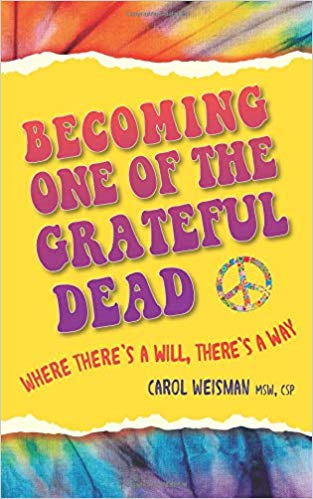
This article was excerpted from Becoming One of the Grateful Dead, by Carol Weisman. Reprinted with permission.