August 9, 2007 | Read Time: 6 minutes
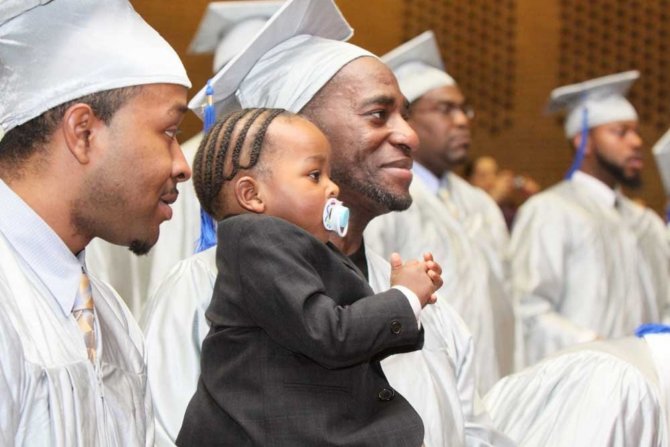
Q: I am a graduate student working on a project with a charity that helps young fathers who don’t have custody of their children learn parenting skills and get more involved in their children’s lives. We depend on grants, but because of the charity’s shortage of staff members, it has been hard for us to gather and analyze the data about the programs. And we need to show foundations these sorts of results in order to keep grant money flowing. How can a charity meet challenges like this when it’s so thinly staffed?
A: As a graduate student yourself, you already embody the most obvious and probably most feasible answer to the question: Find fellow graduate students to help. Some charities have looked to students of business or nonprofit-management programs to volunteer, for academic credit, their help with fund raising, marketing, and other important functions (see “School Work,” June 15, 2006). But in the case of program research you may get more appropriate help from aspiring anthropologists, economists, political scientists, or social scientists, who have the data-gathering, analysis, and writing skills you seek.
It is important, however, to recognize that such students aren’t just cheap labor. In fact, they are well on their way to becoming experts and can provide very sophisticated and otherwise expensive skills for little or no pay, notes Tommy Darwin, director of professional development and community engagement at the University of Texas at Austin. Nonprofit groups get the benefit of the research, while graduate and doctoral students get access to subject matter and, in some cases, the basis of a dissertation topic.
“Nice exchanges can and do happen,” Mr. Darwin says. But charities that work with advanced students must give them challenging tasks appropriate to their skills, or else risk souring the relationship before it begins.
Finding such students is getting easier because more and more universities have established some kind of office that enables partnerships among faculty, students, and civic groups, says Ira Harkavy, director of the Center for Community Partnerships at the University of Pennsylvania.
If the academic institutions in your area do not offer such an obvious channel, you’ll have a bit more legwork to do.
“Try to find which school or department is most oriented to this kind of work, and see if you can locate individual faculty members who might already be involved” in researching the field in which your charity operates, Mr. Harkavy suggests.
Alternatively, most colleges also have a community-relations office as well as a student-volunteer office that may be of assistance. Your state chapter of Campus Compact, a national coalition of college and university presidents interested in promoting community service, may also be able to help.
While your nonprofit organization is struggling to obtain research help right now, don’t neglect to think about possible long-term relationships between your group and a local college or university. Mr. Darwin advises that you “spend some time getting to know who is at the university, looking at newsletters and publications that talk about the kind of research you seek. Orient yourself toward the people who work on the issues that resonate with what you’re doing.”
In other words, don’t just look at the university as a provider of skills but as a source for partnerships that can advance your charity’s mission. Town-and-gown partnerships of this kind can be “powerfully enriching to the community,” says Mr. Harkavy. Mr. Darwin notes that universities generally also have a strong measure of clout and legitimacy with potential donors, making it easier for the charity to attract gifts.
Q: I’m in Cincinnati and looking for training that will help me learn about running a charitable foundation, covering such topics as the criteria other grant makers use when granting money to individuals. Any advice?
A: Since you are looking to become a grant maker, your most direct source for information would probably be the Ohio Grantmakers Forum. It offers workshops in communications, finance and investments, grant making, governance, management, and public policy. The Foundation Center’s field office in Cleveland is oriented toward grant seekers rather than grant makers, but also provides extensive information on its Web site as well as classroom training that may be helpful.
Cynthia Bailie, director of the Foundation Center’s Cleveland office, also recommends that you visit the Council on Foundations Web site, where you’ll find many print and online resources on grant-making basics and best practices. She also encourages you to contact her with any questions you may have.
“The trickiest part of this particular question is the idea of making grants to individuals as opposed to nonprofit organizations,” Ms. Bailie says. “The onus is on the grant maker to ensure funds are expended properly.”
Furthermore, she notes, the Internal Revenue Service “needs to sign off on the procedure used to make grants to individuals, to ensure it’s objective and nondiscriminatory, and that there’s a procedure in place for supervising the grant.” More information on federal guidelines can be found at the IRS Web site.
Q: I help raise money for a grass-roots chorus group and recently had an unusual experience: The group turned down the opportunity to receive money raised from a well-known entertainer’s recent concert tour. Our leadership declined to make an appeal promoting the tour because “it seemed like asking too much” of our supporters. We hear a lot about the “culture of giving,” but what can we do to foster the culture of receiving among grass-roots groups, one in which fund raising is seen as a positive necessity?
A: If you are “truly committed to the mission of the organization, then realizing that the good work that you’re doing can’t happen without the resources should enable a person or group to overcome barriers to asking for money,” says Michelle Mattioli, development director of the Virginia Organizing Project, a grass-roots organization in Charlottesville focused on social-justice issues. Furthermore, Ms. Mattioli adds, you should never make a decision about whether someone else is able to give. Even very low-income people, for example, should be given the opportunity to support good work they believe in.
Kim Klein, a fund-raising consultant in Oakland, Calif., and the former publisher of the Grassroots Fundraising Journal, says, “What I hear in this specific question is not that this organization is shy about asking in general, which would be one problem, but that they are shy about asking over and over, and asking too much.”
It is up to each donor or supporter, she says, to decide for herself what “too much” might be. Furthermore, “the notion that people hate to be asked frequently can be easily disabused by looking at two things: churches and children.”
It’s true, she notes, that some people want to be asked once a year and that’s it — but most don’t mind, especially if they’re given different ways and methods of supporting the organization.
In this particular case, she says, promoting the concert among the chorus’s supporters in exchange for some portion of ticket sales probably would have been viewed as a nice invitation and refreshing opportunity, especially since some of those people likely attended the concert anyway.
Bottom line, she stresses: Don’t make assumptions about donors’ ability or desire to give. In this particular case, the leaders of the chorus could easily have taken a poll of its supporters via its newsletter, or found some other way to ask people instead of deciding no on their behalf.