May 27, 2012 | Read Time: 8 minutes
Safe Shores, a Washington charity that works with abused children, welcomed 160 people to a breakfast this month at the posh Mandarin Oriental Hotel as the joyful sound of a children’s choir filled the room.
After a video and presentations by three speakers to explain the organization’s work, Cheryl Anne Boyce, a psychologist on the Safe Shores board, asked the audience to pledge at least $1,000 annually for five years, and many did: Donors committed more than $318,000.
The Safe Shores event followed a carefully scripted fundraising approach created by Terry Axelrod, a former social worker who founded Benevon, a consulting company that helps small and medium-size charities win large gifts from individuals.
Ms. Axelrod created the company to help small charities like the ones where she worked as a social worker because she says those groups face many fundraising disadvantages.
Not only has their government aid declined sharply in recent years, but such charities lack the ready-made pipeline of donors that colleges and hospitals have in the form of alumni and former patients.
“I would like to create a new generation of major-gift officers who don’t have the luxury of working for a big college or hospital but whose missions are every bit as compelling,” Ms. Axelrod says. “Colleges and universities have a major-gift system, and we’re trying to provide that for other nonprofits. It is way harder for them.”
Concerns About Costs
After advising 3,000 charities over the past 16 years, Benevon gets praise from many clients as well as foundations that help grantees adopt its approach.
The Eugene and Agnes E. Meyer Foundation, for example, has made $10,000 grants to help Safe Shores and seven other charities pay for a year’s worth of Benevon advice and services.
Benevon clients, some of whom have worked with the company for a decade or more, start by seeking gifts of $1,000 or more and gradually build up to raising larger amounts by hiring additional fundraisers and holding capital or endowment drives.
But whatever its successes, the Benevon approach is too expensive, some fundraising experts say, and doesn’t do enough to make charities self-sufficient.
Benevon charges charities $15,000 for the first year’s worth of service, which includes one-on-one coaching and other training. After that, charities are urged to commit to four or five more years, at a cost of $21,000 per year. Some groups sign up for a second or even third five-year partnership.
Benevon’s annual fees don’t include travel costs for at least seven officials from each charity who are required to attend a two-day Benevon workshop every year in person.
While many charities find sponsors to offset some of the costs, other expenses related to Benevon are unavoidable such as staff time or, in some cases, new software to track donors.
Benevon’s emphasis on providing several years of assistance to charities bothers some experts who see it more as a moneymaker for Ms. Axelrod than a smart use of resources. Such a dependent relationship, they argue, is not good for organizations that should learn to stand on their own.
While most clients do eventually part ways with Benevon, Ms. Axelrod concedes that it often takes years for them to build enough fundraising muscle to do so.
“If you want quick results, you should not use Benevon,” Ms. Axelrod says. “It takes time, money, and hard work.”
Benevon’s fees may seem high, she says, but they’re not out of line with what other fundraising consultants charge. Many charities that sign up with Benevon year after year say the fees are not an obstacle because they raise so much money after getting the training.
Sojourner Center, a Phoenix domestic-violence shelter, will enter its third five-year agreement with the company next year.
Over the past decade, the center has raised more than $6.3-million with Benevon’s help. Connie Phillips, Sojourner’s executive director, estimates that her charity has spent less than 10 cents for every dollar raised.
“Benevon worked for us,” she says. “It makes us focus. It unifies the board and staff, and we’re all working the same way.”
Donor Tours
Ms. Axelrod’s goal is getting donors fired up about a charity’s work long before anyone asks them for money.
She urges her clients to invite potential supporters to learn more about the charity at a short presentation and tour of its facilities. People who attend receive a follow-up call about the event. The goal of the calls is not to raise money but to get their reaction and suggestions for improvement while also gauging their interest in the group.
After nine months to a year, the charity invites everyone who attended the tours to a lunch or breakfast (like the one for Safe Shores), where they hear the pitch. Those who give are then invited to at least two free events every year to learn more about how their money is being used. At those events, donors are not asked for another contribution but are urged to bring friends and associates, in the hope they will eventually become supporters too.
Transforming the Culture
The Benevon system may look simple on paper, but it’s not easy to adopt for charities with small staffs and no track record of face-to-face fundraising. “This is about shifting an organization’s culture, and transforming a culture is hard,” Ms. Axelrod says. “The first year, you are dancing clumsily.”
For many groups, the hardest part of the process is coming up with an introductory presentation that meets Benevon’s exacting criteria for a crisp one-hour tour that packs an emotional punch.
The Jose Mateo Ballet Theatre, in Cambridge, Mass., now in its second year with Benevon, struggled to devise an event that met the company’s requirements.
“It was a challenge to make sure we were getting the right message out,” says Kelly Delekta, the ballet’s director of development. “It was very time-consuming.”
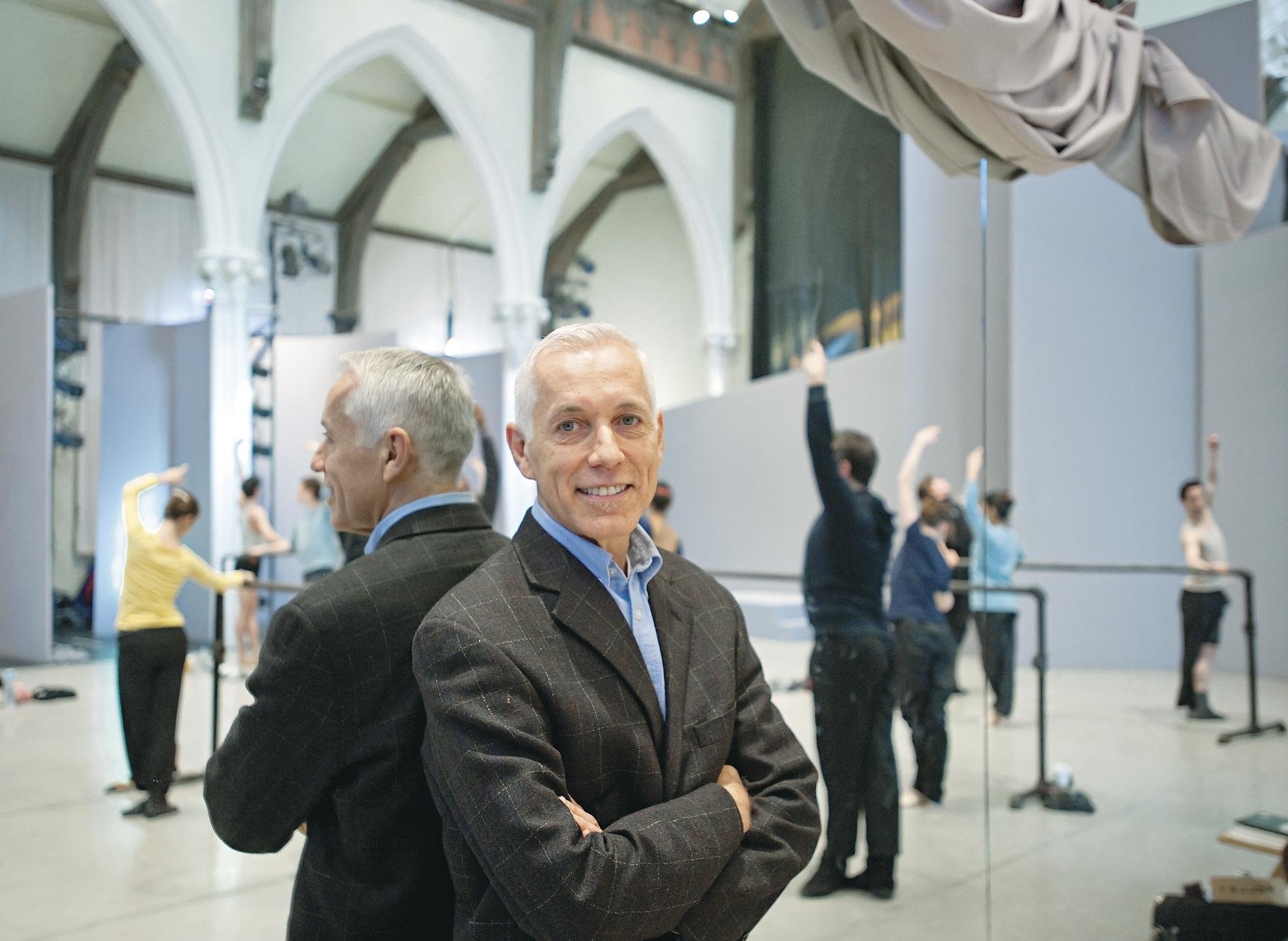
Jose Mateo, the ballet’s founder, teaches visitors a basic ballet movement at the barre, while other staff members describe what makes the dance company special: contemporary performances in an intimate cabaret setting. A third part of the tour shows people how the ballet participates in community activities such as a festival showcasing nonprofit services.
The ballet, which raised $275,000 at its first fundraising event last year, has given tours of its facility to about 300 people and says ticket sales are rising as a result.
Silencing the Critics
While Benevon’s clients are mostly small groups, the company works with some large charities that have annual budgets as high as $125-million.
Among them is the Los Angeles Gay & Lesbian Center, now completing its second year with Benevon.
“I went into it with a certain degree of skepticism, and we also had board resistance,” says Lorri Jean, the center’s chief executive.
After all, the center had used tours to get people interested in its work for years, she says. “But Benevon does it on a whole new scale.”
After a year of using Benevon’s methods, “the critics were silenced when our first ask event raised $460,000,” and the second secured more than $525,000, says Ms. Jean.
“Now we have incorporated this system as the key point of entry” for donors.
Other charities using the company’s approach say the focus on multiyear pledges enables them to build a steady stream of contributions. That frees up fundraisers to concentrate on building closer ties to donors and finding new ones.
“It’s hard to chase the annual gift every year, but now I see a way off the treadmill,” says Kelly Ellison, director of development at the Arts Council of Metropolitan Kansas City, now in its third year with Benevon.
The arts council has recruited 200 new donors in the past two years.
Its first fundraising event using Benevon’s approach set a goal of $80,000 but generated more than double that amount, while the second annual event raised $195,000 against a goal of $125,000.
Like many Benevon clients, the arts council got foundation aid to help offset the company’s fees.
With a grant from the Kresge Foundation, it paid for itself and six other groups to adopt the Benevon approach.
The difficulty of raising money after the recession hit has put Benevon methods to an especially big test.
Generations Group Home, a Simpsonville, S.C., residential program for troubled boys, most of whom have been physically or sexually abused, went through Benevon’s five-year plan before the economy crashed in 2008. After that, it could no longer afford the company’s fees. Still, those five years paid off.
The charity has gone from raising less than $25,000 a year to as much as $500,000. Its first annual fundraising breakfast with Benevon drew 104 people, and the event now attracts 500 or more guests.
Generations now has 76 multiyear donors, some of whom have made second five-year pledges.
“We are in a little bitty town with a down economy,” says Roseanne Brown, the charity’s director of development, “but we have been able to grow, thanks to Benevon.”