What to Consider Before Raising Money at a Checkout Counter

By Timothy Sandoval
Contributor
February 16, 2016 | Read Time: 5 minutes
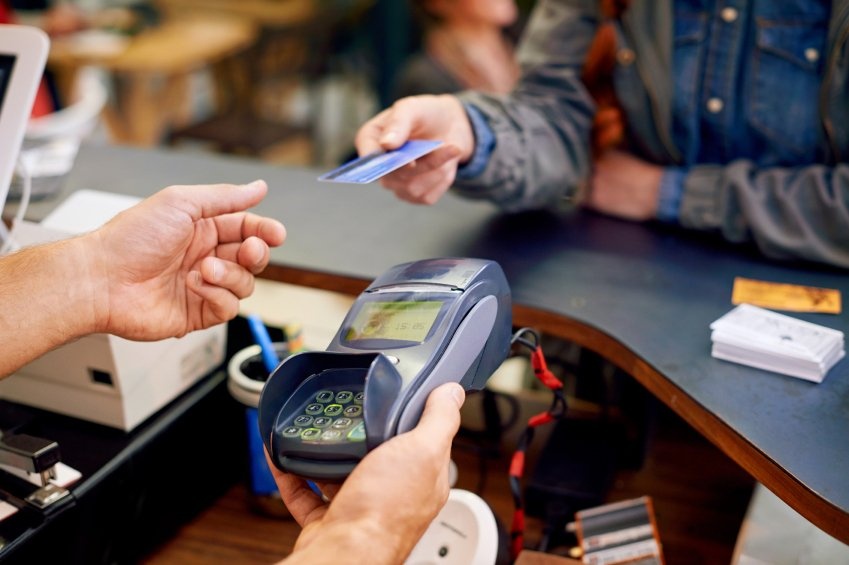
Raising money at the checkout counter of a retailer or restaurant can be lucrative for nonprofits, as when a clerk asks customers if they want to donate money to feed a hungry child, rescue animals, or fight a disease.
Recent successes have fueled interest among charities in so-called point-of-sale drives (which also go by “register campaigns” or “checkout campaigns”). In its most recent tally, the Cause Marketing Forum found 77 checkout campaigns that raised more than $1 million in 2014 — totaling more than $390 million that year. That adds to the $3.88 billion raised by large register drives during the past three decades, the forum reports. So it’s clear why these campaigns are appealing.
Some think there’s still plenty of room for more nonprofits to get involved, as many businesses want to benefit from the “halo effect” of being associated with organizations that do good deeds.
The Chronicle spoke with consultants and officials at nonprofits who are involved in register campaigns to get their take on what nonprofits need to consider if they’re interested in finding point-of-sale partners. Here’s what they had to say.
1. Build on relationships with people you know. Determine whether someone in your organization has an relationship with a potential partner company, said Joe Waters, a consultant who has worked with many companies and charities on point-of-sale deals.
This might be a board member who is associated with a retailer, a staff member who works closely with a vendor, or some other connection that helps the organization get its foot in the door, Mr. Waters said.
“I often tell people: ‘New partners are not discovered, they are detected,’” Mr. Waters said.
You never know who could be affiliated with a potential partner. For instance, the head of a conservation organization Mr. Waters worked with was unaware that one of the nonprofit’s board members owned a large retail chain in New England.
“I told her, ‘You should start here,’” Mr. Waters said. “And she said, “Oh, I knew he was rich, but I never asked him how he made his money.”
2. If you don’t have a relationship, make one. Still, Mr. Waters said, it’s possible to forge an agreement even if there’s no prior relationship with a company. To find companies to approach, he recommends checking local business journals’ lists of the largest retailers, coffee shops, restaurants, and other stores in your area.
Pitch your organization as having a large group of loyal followers who are potential customers, Mr. Waters said, as many companies are interested in getting good exposure to an organization’s members.
Peter Morton, vice president of corporate development for Autism Speaks, said he and his colleagues do a lot of research to find potential corporate partners. The nonprofit has a few large companies it partners with on point-of-sale campaigns, including national department store T.J. Maxx and the burger chain White Castle.
Most recently, Autism Speaks formed a partnership with GameStop, a video-game retailer with thousands of stores across the nation, which will run a checkout campaign for the organization during the month of April. A key factor in making that connection: One of Mr. Morton’s colleagues connected with an employee at GameStop who had worked at Easter Seals, a nonprofit that helps people with developmental disabilities. Although Autism Speaks had no prior relationship with GameStop, the employee understood the nonprofit’s mission immediately, Mr. Morton said, which helped in getting conversations started.
“These programs are incredibly challenging to secure,” Mr. Morton said. “It’s just the result of strategic outreach, hard work, and a little bit of luck.”
3. Look for companies with a great deal of foot traffic. Finding a company with lots of customers and locations is important, too. It comes down to simple math: The more people who see the message, the more money the charity can raise, said Megan Strand, director of communications for the Cause Marketing Forum. If the company is too small, it might not be worth the effort and time to draw up a partnership and promote it, she said.
“It really turns into a mathematical equation,” Ms. Strand said. If your group is a small, local nonprofit, you might be able to make a nice partnership with a local bakery, “but are you really going to get enough foot traffic there to make any sort of measurable difference?”
Mr. Waters agreed, adding that the more locations a company has, the better: “You’re going to raise a little bit of money from each of those locations, but if you’re only working with four locations, you’re going to raise little money. But if you spread that over 6,000, that adds up to a lot.”
4. Find a company that serves a similar demographic or has a similar mission. Ensuring that your nonprofit’s brand and audience align with the company’s also can help, said Marey Wagner, director of cause and retail at the National 4-H Council, which supports national and state 4-H programs.
The council has maintained a six-year point-of-sale partnership with the national farm and rural-lifestyle retailer Tractor Supply Co., with semiannual 12-day campaigns bringing in $6.7 million from consumers at the register to date, Ms. Wagner said. The “Paper Clover” campaigns, as they are called, run in fall and spring. Upon donating, customers receive paper clovers, which are often displayed on store walls, offering a visual show of support for the charity.
The tie-in is obvious: Youth who participate in 4-H programs often raise farm animals, so many of the company’s customers are likely 4-H’ers or their family members. “That is how the partnership came to be: recognizing that our two brands served the same audiences,” Ms. Wagner said.
5. Make sure that the company’s employees understand the nonprofit’s mission. Once you get a deal with a company, it’s important to ensure that its employees understand how to make a pitch for your organization, said Mr. Morton of Autism Speaks. He said the charity provides its partners with plenty of materials to educate their employees about the nonprofit.
“I think it’s really important that our partners’ employees are aware of our mission and how they can communicate the campaign,” Mr. Morton said. “We want to make sure that when employees ask [customers to donate] that they understand why they are asking.”