Why One College Placed Its Fundraising and Technology Efforts Under One Leader

By NICOLE WALLACE
Features Editor
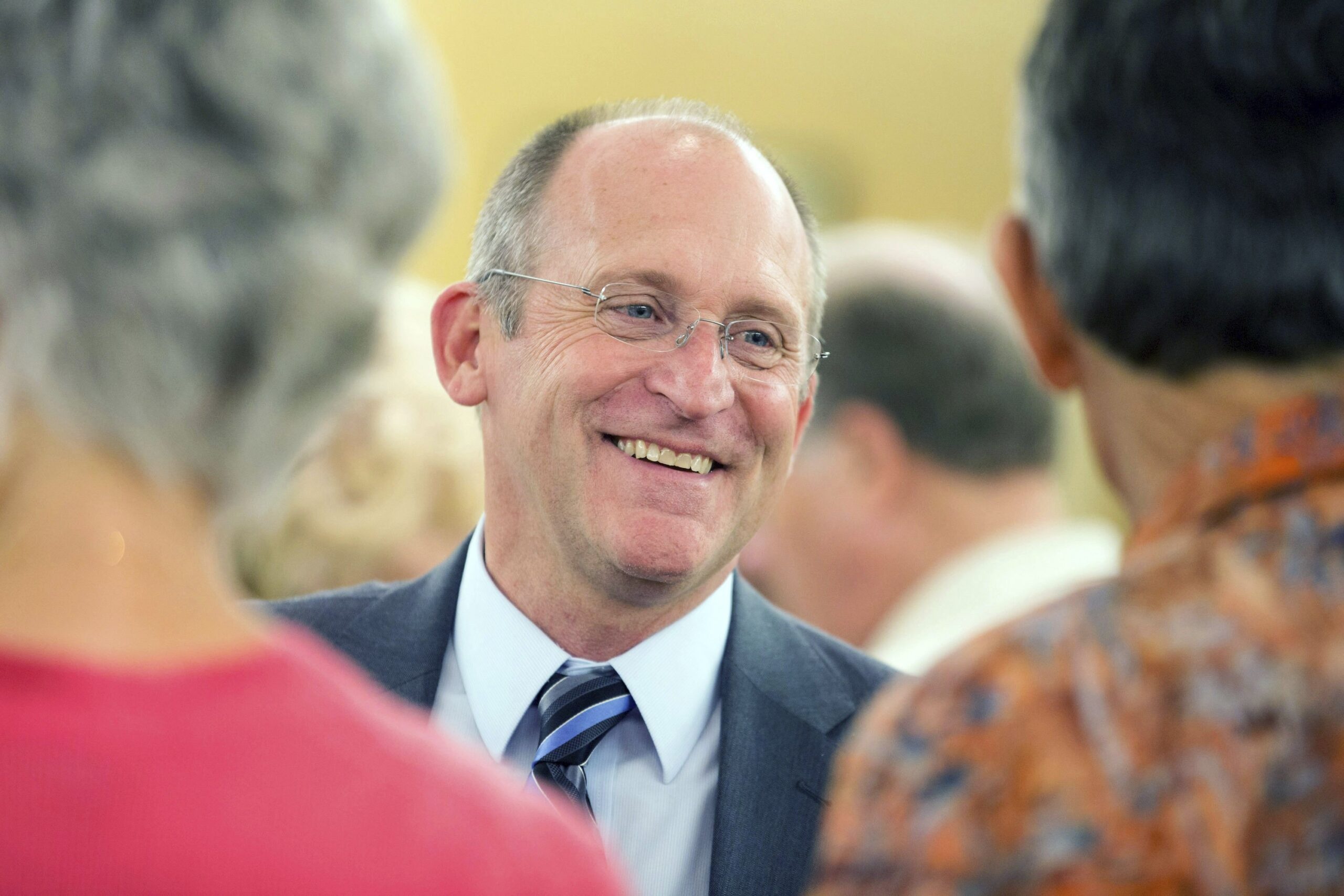
April 4, 2019 | Read Time: 4 minutes
Reed Sheard has an unusual combination of responsibilities.
In October 2008, he came to Westmont College, a small liberal-arts institution in Santa Barbara, Calif., to serve as chief information officer. A little more than a year later, the college’s president asked him to take on the additional job of vice president for college advancement.
Sheard said yes — even though he didn’t have any experience as a fundraiser. He had spent part of his career in another role that required similar skills, such as persuasion and relationship building, as a sales executive at technology companies, including Apple.
The gamble paid off. Together with the college’s president, he led the largest capital campaign in Westmont’s history. The drive brought in more than $153 million, more than doubling its original goal of $75 million.
His background in technology shapes the way Sheard approaches advancement. But he says anyone who leads a fundraising department needs to be thinking about technology.
“You’ve got to have that twofold approach of a real joy for fundraising and an understanding of the importance of data and tools to undergird it and serve those larger priorities,” Sheard says.
Gauging ‘Intangibles’
Looking back on the decision to expand Sheard’s responsibilities, Gayle Beebe, Westmont’s president, says he wasn’t concerned about Sheard’s lack of fundraising experience.
“I knew he could learn the mechanics of fundraising,” Beebe says. What stood out were “the intangibles” that Sheard brought to the job: people skills, follow-through, attention to detail, and a willingness to manage a complex team.
Beebe knew Sheard possessed those qualities, in part, because the two men had worked together at Spring Arbor University. But Beebe also has a history of hiring nontraditional fundraisers. When Beebe was president of Spring Arbor, he recruited a stock broker who hadn’t gone to college to serve as vice president for advancement.
“People thought that was a very unorthodox hire, which it was in one respect because you’re hiring a person who’s never gone to college into a college setting,” Beebe says. “But the bigger reality to me was: Does the person know how to do this part of the work?”
I needed to become more interested and curious about their story than in them hearing mine.
He says one of the most important things to consider with nontraditional candidates is their ability to excel in jobs that hinge on building strong relationships. “If they’re mission-minded and human-focused, I think they can make great fundraisers.”
Other key traits that are often overlooked, Beebe says, are open-mindedness and comfort interacting with people who have accrued significant wealth.
“You really can’t have a judgmental spirit,” he says. “You can’t be, ‘Well, we’ll only take [money] from this kind of person.’ ”
Cultivating Curiosity
Sheard has succeeded at Westmont — but getting the knack of fundraising took some time.
In early visits with donors, he was so excited about the college that he did a lot of the talking, trying to convince donors of the importance of Westmont’s mission and encouraging them to get involved. Over time, he learned that it was more important to ask questions of donors to find out what inspires them. When he started to do that, he says, the connections between the donors’ passions and the college became clear. He could just make a suggestion, and the gifts came together much more naturally.
“I needed to become more interested and curious about their story than in them hearing mine,” Sheard says.
The college helped him make the transition to fundraising, he says, by giving him access to consultants so he could ask questions as he exhausted what was transferrable from his sales career and bumped up against the new things he needed to master to be a fundraising leader.
Over time, as Westmont started to raise more money, the weakness in its technology systems and data management became clear. Sheard’s dual roles came together as he led the college’s transition to Salesforce.com, which has made it easier for staff members to work with its data and generate reports. The advancement, alumni-relations, and admissions departments now all use the new system.
“One of the boring things that is essential to our success is having really good, clean data that’s accessible and meaningful and accurate,” he says. “We have worked so hard on that.”