Why Team Rubicon Relies on the Brains and Brawn of Military Veterans

By Ken Harbaugh and Team Rubicon
November 11, 2015 | Read Time: 4 minutes
Just under six years ago, two Marines watched the aftermath of the earthquake in Haiti unfold on television and refused to be bystanders. Jake Wood and William McNulty recruited a handful of veterans and medics to join them in providing relief, and with the help of some financial supporters, they traveled to Haiti to help on the ground.
That’s how Team Rubicon began. Today, the nonprofit disaster-relief organization unites volunteer military veterans and first responders to deploy emergency-response teams when disaster strikes. The group has its headquarters in El Segundo, Calif., where we work as part of a 50-person full-time staff, supporting the efforts of volunteers around the country.
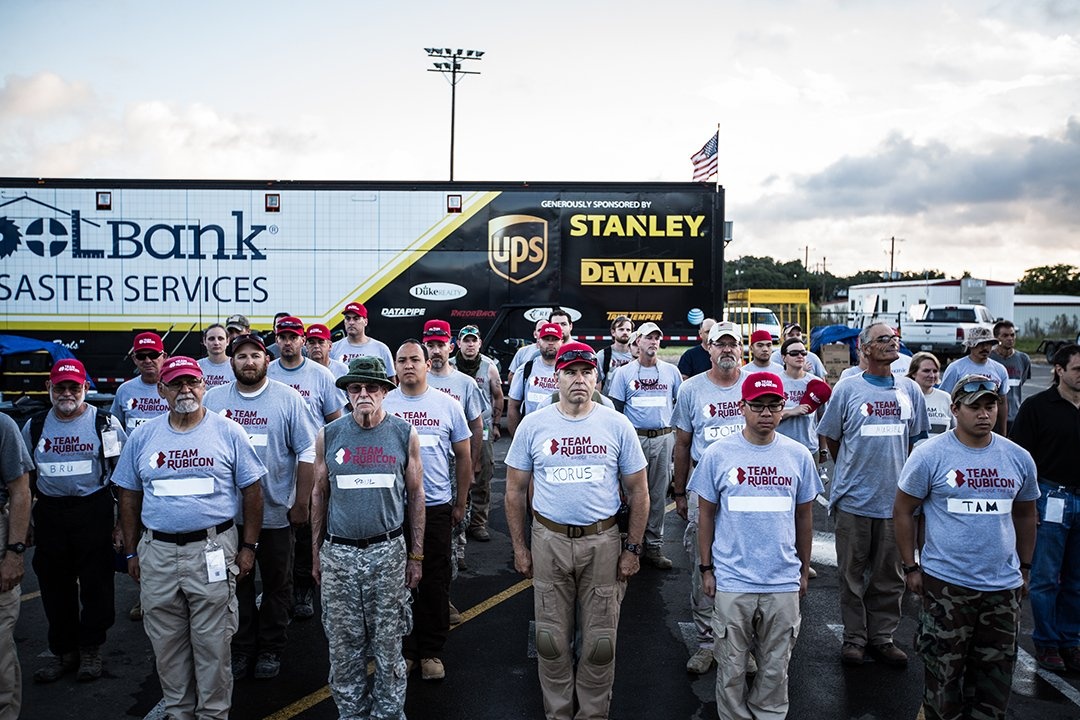
We have more than 30,000 members across the country, 80 percent of whom served in the military. These volunteers are also mothers, professors, EMTs, artists, engineers, gym rats, chefs, and marketers. In their free time, they train and prepare to deploy when disaster strikes.
In October 2015, dozens of Team Rubicon veterans from around the country logged more than 10,000 volunteer hours in South Carolina, cleaning up after catastrophic flooding.
Traits That Translate
At Team Rubicon, we have learned that veterans typically bring special qualities and ideal skills for volunteer work in the civilian world.
Veterans have service in their DNA. The vast majority joined the military out of a desire to serve. That desire does not evaporate just because they’ve set aside their uniforms.
On his first mission with Team Rubicon last spring, Army veteran John Holloway deployed to Wimberley, Texas, in the wake of severe flooding. During his time there, he observed that the experience filled a need for him as well as the community he was serving. “I left the military after 25 years and lost that brotherhood,” he said. “But since I arrived here in Wimberley, I also found many things: namely, my self-respect, my drive and desire to succeed, my sense of self-worth, my desire to give all to help my fellow man. I found my purpose.”
Veterans are able to solve problems with a minimum of resources, in the most difficult circumstances imaginable. America is emerging from the longest wars in our history, and is “redeploying” millions of veterans in communities across the country. These veterans are problem solvers and leaders. They are assets, not liabilities.
Earlier this year, when snowfall refused to slow in New England, Team Rubicon’s volunteer leaders swept into action, asking fellow members to grab a shovel, find a fire hydrant or a driveway that needed clearing in their community, and post on social media about their job well done. Operation: Big Dig was a major success, as volunteers responded to requests from emergency management agencies to clear paths and help reach low-income, elderly, and handicapped residents. Their resources? Shovels, muscle, and a can-do attitude.
Veterans who volunteer can reconnect with communities and foster understanding between civilians and veterans. The country is experiencing a wave of good will toward veterans, all of it well-intentioned but some of it misinformed. Most vets are neither heroes nor victims. They are Americans wanting to be of service to their nation. By serving as volunteers, they can help dispel some of the myths about veterans.
How to Attract Veterans as Volunteers
A recent survey revealed that about half of Team Rubicon’s members learn about the group through online communications or traditional media, and many hear about us through their friends and colleagues. Based on our experience, here are some tips on how to attract volunteers from this important population.
-
Recruit veterans like you would other passionate, committed individuals who want the chance to make a difference. If you offer a unique opportunity to learn, lead, and get results, you will attract valuable volunteers, including veterans. At Team Rubicon, we happen to offer a chance to get dirty, break stuff, and use expensive cutting-edge technology while serving those affected by disasters on the worst days of their lives.
-
If your organization does not have a strong military presence within the staff or among your volunteers, ask veterans about their service and spark a dialogue about how those skills can translate to improving your operations. Consider creating an option for veterans to self-identify upon signing up through your website. Reach out to local or known VSOs (Veteran Service Organizations) or veteran-led organizations to learn if there may be a way to partner on volunteer or fellowship opportunities already being offered.
-
Last, be wary of pitching veterans as “heroes” in your recruitment efforts. If they’re signing up to serve their community, special treatment is unnecessary. Offer a mission with a plan, and ask them to help you reach your goal.
Bobbi Snethen is digital engagement associate and Ken Harbaugh is chief operating officer at Team Rubicon.