
A New Age for Golf Fundraisers
How the Need for Virtual & Touch-Free Options Led Event Organizers to Adapt & Optimize
Paid for and created by

September 29, 2020 | Read Time: 6 minutes

Certainly 2020 has presented challenges for fundraisers, especially those relying on major events to drive donor dollars. While some have gone virtual, many major events have been canceled altogether. Meanwhile, golf rounds are on the rise; an outdoor, individual activity, the sport is attracting competitive, casual, and first-time players alike. Nonprofits have quickly adapted to respond, leveraging technology to modify existing golf events, hold virtual tournaments, and launch first-time outings. Through these challenges, event organizers have drawn some important conclusions about the value of the golf event, the processes and resources that typically go into planning it, and the technology that can maximize its impact.
The Value of the Golf Event
Golf is particularly unique in that its demographic is comprised of high-capacity donors that have connections to small businesses and major corporations alike. Players and sponsors combine business and leisure—forging and furthering important relationships on the course that simultaneously advance key business objectives, making the golf event an opportunity to steward existing donors while also tapping into their influential networks in a meaningful way. Nonprofits activate their most generous donors by encouraging them to invite members of their personal and professional networks to field a team for an activity they genuinely enjoy.
In the age of social distancing, organizations have aimed to conserve resources and also remove touchpoints wherever possible in order to keep staff and supporters safe. That has meant transitioning from checks and mail-in forms to online registration. In addition to time and resource savings (no paper printouts, postage, and processing labor), organizations reap the benefits of being able to market the event through digital channels like email, social media, and text messaging. Players and sponsors sign up and submit payment on the spot, ensuring a monetary commitment from supporters ahead of the outing. Perhaps most importantly, online registration allows nonprofits to passively collect not only registration and sponsor dollars, but to securely collect and manage donor data to ensure appropriate management within the context of the outing and beyond for stewardship and additional fundraising efforts.

Organizations with strong peer-to-peer networks that are the beneficiary of an event or multiple events executed by third-party organizers also stand to benefit from knowing more about the supporters behind the golf events tied to their cause. Whether corporate outings or memorial tournaments, these are crucial donor and partner touchpoints. Broad in size, scope, and notoriety, these events maintain an annual following and grow in both size and dollars raised, sometimes over the course of decades.
The golf event’s value is clearly substantial, but that value compounds when the processes behind it are more efficient and the donor, sponsor, and fundraising data associated with the event can be captured and leveraged to grow the success of the outing as well as the organization as a whole.
Planning a Successful Outing
Whether events are run by your organization or a third party, the ability to plan and execute a well-run, professional outing is critical and often difficult (even before factoring the current challenges). These events have a number of logistics and moving pieces that often require the help of board members, committees, and volunteers who must collaborate to market the outing, recruit players and sponsors, and manage sponsor relationships and exposure down to the nitty gritty details of ensuring high-quality image files are submitted and handled correctly. Then, of course, there’s the collaboration with the golf facility and the management of team and sponsor logistics in the days leading up to the event. This includes technicalities specific to the golf outing such as team pairings, hole assignments or tee times, handicaps, flighting, and more. If the event organizer doesn’t have extensive golf knowledge, these important details can easily be overlooked. When golfers don’t know what team they’re on, their starting hole, how the event is being flighted or scored, and how they placed—they can become frustrated and distracted from the good cause they’re playing for.
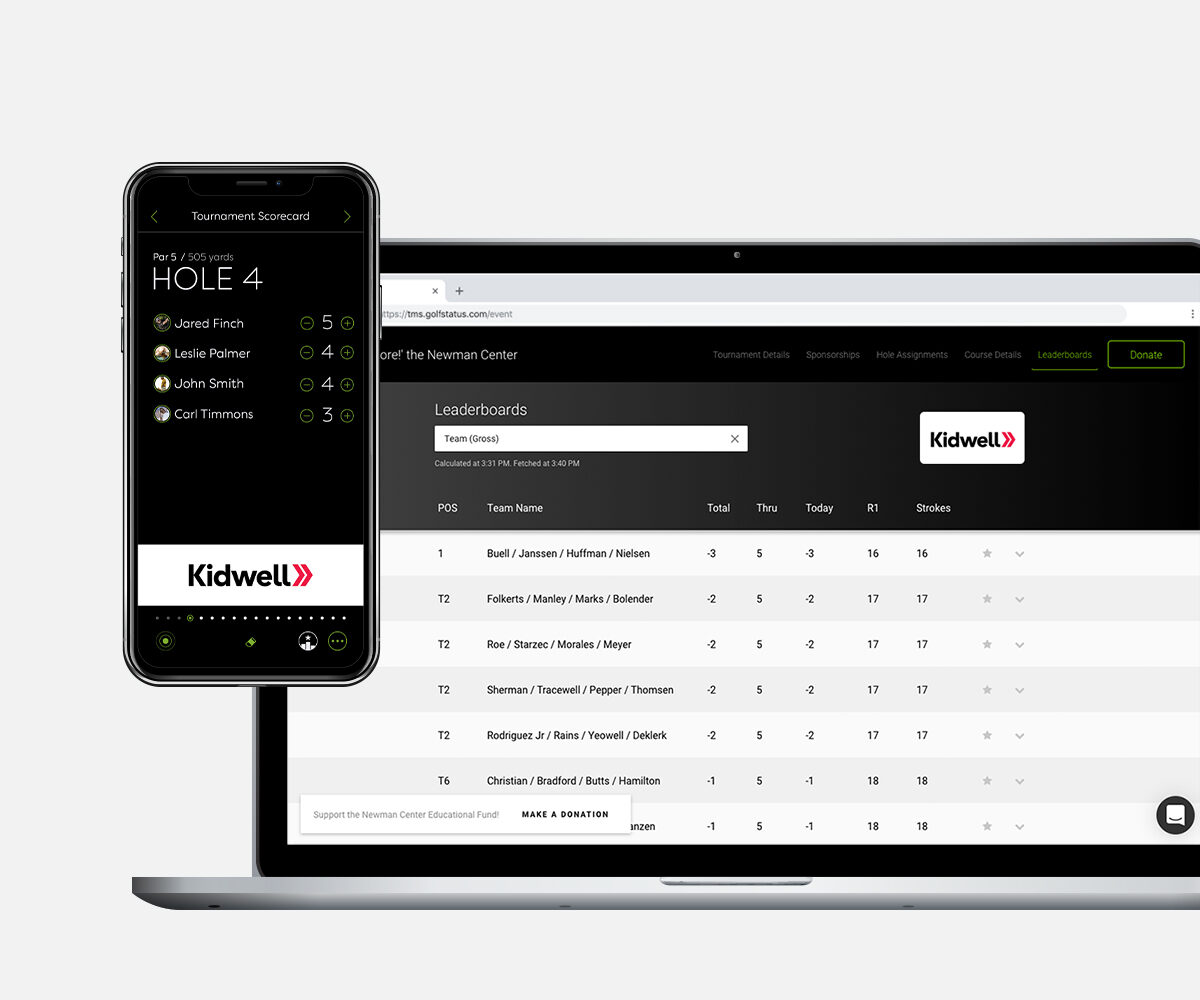
At some point, information also has to be passed to the golf staff so they can prepare to welcome a large group of golfers. They need to know how many people to expect, assign players to teams and teams to holes or tee times, create cart signs and post them, prepare leaderboards, and otherwise get the facility ready to host a large group with top-tier service. With many facilities forced to cap the field size for their events due to limited carts amid social distancing protocols such as one-person-per-cart, accurate, timely event and participant information is more important than ever. Contact-free scoring technology has also accelerated the phaseout of traditional paper scorecards as players welcome the innovation of live leaderboards (and sponsors welcome the high-end exposure they provide). With today’s golf event management technology, players can enter scores in real time from a mobile device and view the event’s leaderboards instantly. Organizations can also leverage live-scoring and leaderboards to connect disparate participants across multiple days and even multiple courses to hold golf outings in a virtual capacity—similar to the participate-wherever-you-are approach organizations have taken with COVID-era walk-a-thons. The flexibility to participate at their convenience is also a selling point for players.
As events grow to include higher-caliber golfers at increasingly prestigious courses, the stakes become higher for organizations hosting events. When an organization becomes known for holding a well-run, high-caliber outing, higher-end facilities are eager to attract and retain these events, which means higher price points for teams and sponsorships and the resulting ability to raise more dollars for your cause.
The Future of Golf Fundraisers
The ability to modify outings has empowered nonprofits to adapt their golf outings based on the unique needs of their players and sponsors—whether that’s a shorter, nine-hole wine-and-dine event; an extended play outing held over a weekend, week, or even month; or a multi-course play-when-and-where-you-can event that brings participants together virtually. The ability to adapt has brought convenience to an event that previously required a four-hour commitment from busy executives, opening the door for broader, more frequent participation. With golf event management technology easing logistical pain points, outings are easier to plan and execute for both seasoned and novice event organizers. Players and sponsors can expect conveniences like online registration and mobile scoring to stick around. And with secure data collection more important than ever, organizations have access to the donors and sponsors stewarded and onboarded through the golf event in a way that positions them to maximize relationships.
When golf events are easier to plan and execute, offer more flexible scheduling and options, and are run more smoothly, organizations large and small can hold them with fewer overhead costs, more frequency, and ultimately more success.
Learn more about the latest golf event management technology and best practices for implementing it to maximize results on the Golf for Good blog powered by GolfStatus.org. GolfStatus.org is a proud partner of the Association of Fundraising Professionals (AFP) and is honored to offer its technology to qualifying nonprofit organizations at no cost through its Golf for Good program.