
Co-Creating for Good
February 26, 2019 | Read Time: 2 minutes
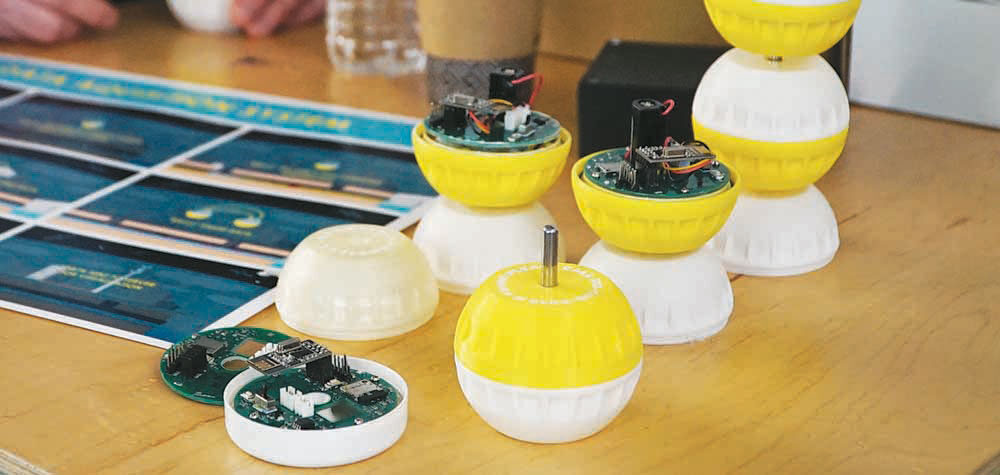
Launched in 2017, IoT for Good Lab is an action tank providing opportunities, resources, seed funding, and support for students to explore how to create social impact by using the Internet of Things (IoT). The Lab, supported through a three-year commitment by The Verizon Foundation, facilitates interdisciplinary teams of entrepreneurial, engineering, design, art, and liberal arts students to experiment with technology and ideas.
Verizon and Babson have been thinking and acting partners in the space of social innovation for many years. Both have been on a journey to understand how to create economic and social value simultaneously. Both have assets that can be deployed to innovate around IoT and address many, if not most, of the UN Global Goals. Students’ access to Verizon’s Innovation Center outside Boston enables them to experience and leverage Verizon’s technology to create and scale solutions that can address societal challenges.
So why would Verizon choose to partner with a small business school? As Chris Lloyd, director of corporate responsibility at Verizon, explains, “At Verizon, we believe there’s a tech component attached to each of the UN Goals. The reason we’ve engaged with Babson is that we don’t have all the answers about how technology could be applied to address social issues. IoT for Good gives us the opportunity to share how IoT technology works, which then becomes powerful in the hands of these entrepreneurial students. This generation of students is made of digital natives who understand tech and are inclined to focus on improving people’s lives. We need entrepreneurial thinkers and actors to explore all the ways this technology can be used. That benefits us; that benefits society.”
In addition to writing micro cases on IoT for Good, the Lab designed and produced the 2017 HUBweek program at our Boston campus, featuring thought leaders from the Mayor’s Office of New Urban Mechanics, Perkins School for the Blind, the MBTA, Verizon, and IoT-enabled social ventures.
Through the Integrated Product Design course, students from three colleges — Babson, Olin College of Engineering, and the Massachusetts College of Art and Design — worked on product development for inclusive communities. “One of the tenets of the Lab is that new ideas come at the intersection of different points of view. Designers often think about the user, engineers about the technology, and business people about how to make this economically sustainable,” says Babson professor Jennifer Bailey.[[relatedcontent align=”right” size=”half-width”]]
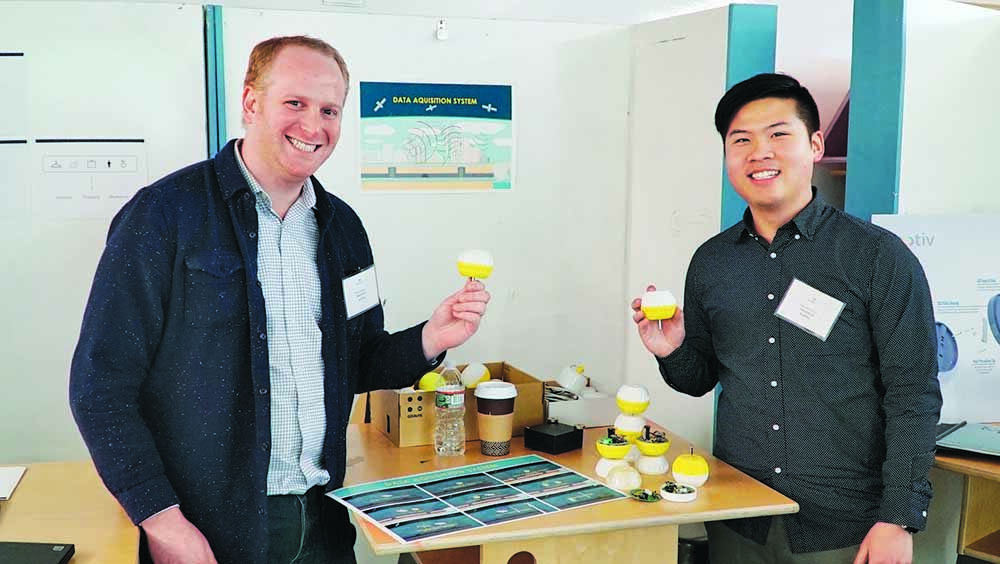
Last April, the IoT for Good Lab hosted a pitch competition open to all Babson community members and had eight final pitches to a panel of judges. Pictured below is the competition winner, Nautilus, which received $1,000 in seed funding. The venture, created by two Babson alumni and a MassArt alumnus, continues to run today. Nautilus is working with the City of Cambridge to create a prototype that will ultimately help municipalities keep their storm drains safe and protect against water contamination.
Learn more: www.babson.edu/IoTforGood