
Bridging Technology and Opportunity to Create Equity for Black Pittsburgh
Paid for and created by

November 30, 2022 | Read Time: 5 minutes
Independent Sector’s Bridging Fellows program, supported by Walmart, offers community leaders space, skills, and resources needed to socialize and embed bridge building as a core competency in their organizations and communities. Intended for leaders whose work places local communities at the core, the program focuses on bridging specific areas of division, including ideological, racial, socioeconomic, and geographical.
With more than 400 bridges, the city of Pittsburgh has long been known for its connective structures, which allow inhabitants and travelers in the region to traverse multiple landscapes — connecting communities, critical services, and amenities. While “The City of Bridges,” as Pittsburgh is affectionately known, seemingly leverages these connectors to provide pathways to opportunity for all, the city is also known for its historical legacies of deep fissures in the quality of life and opportunities afforded to Black residents.
For decades, the bridges that permeate the riverbeds and skylines connecting neighborhoods throughout the city have stood in stark contrast to the divisions across the boundaries of race, class, and gender. As a result, the Pittsburgh metropolitan area has ranked among the worst in the nation in relation to economics, education, and health outcomes for Black residents. Now, as the city continues to usher in new waves of a tech boom that is permanently supplanting older industry, it is more critical than ever to work together to provide equitable access to opportunities for those who have historically been underrepresented and left behind. We must be committed to working together, across sectors and interests, to find pathways to equity and economic opportunity for Black residents in the city and beyond.
My foray into bridge-building work came by way of the nonprofit sector — working with youth from Pittsburgh’s historical Black community, the Hill District — in an after-school setting over 20 years ago. Drawing upon lived experiences, it was evident that one of the preeminent protective factors in a young person’s ability to actualize their full potential — and in doing so, the vitality of healthy communities — was disrupting what we now commonly refer to as the “cradle to prison” pipeline. Over time, my perspectives of the importance of education in Black Pittsburgh and beyond have grown, not only regarding the inclusion of third grade literacy and graduation rates, but also in ensuring that young students are exposed to core skills that may enable and facilitate entry into the growing economies in the region.
Like many other cities across the globe, Pittsburgh is experiencing an economic resurgence rooted in technology, with an estimated annual payroll of $25.2 billion in 2019 representing 34.8% of the region’s total wages. Yet, in the same year, a report by the Pittsburgh Neighborhood Project detailed that, while only 22% of the population, “…an overwhelming 76% of majority Black neighborhoods are in high or extreme poverty.” Clearly, there is misalignment in where economic prosperity can be found in Pittsburgh and the participation of the region’s black community.
Further, because of the historical legacy of population segregation in the Pittsburgh region, despite its number of bridges, inequities within school systems in the region are also exacerbated. A recent report by A+ Schools, an educational advocacy group based in Pittsburgh, reported that “… In 2020-21, approximately 22% of Black students attended public schools (district and charter) with student populations that were 90% Black or Brown.” This is important for a number of reasons, especially when looking at the intersections of race and poverty in the Pittsburgh region. A 2020 report, ”The State of Black Milwaukee in National Perspective: Racial Inequality in the Nation’s 50 Largest Metropolitan Areas,” uncovered that the Pittsburgh metropolitan area is among the worst for Black poverty rates (30%), and Black children living in poverty (45%), among other economic indicators.
The implications of the chronic segregation of schools, even those within the same school system, mean that Black students in Pittsburgh attend schools that often have inherent inequities in access to resources, advanced learning opportunities, and curricular content, such as computer science and other STEM-based instruction. This means that many Black Pittsburghers will continue to be kept out of traditional avenues to access the largest, most profitable industry in our region and beyond. This reality shifted my bridge-building work from not only advocating for equitable education systems to better prepare Black youth for the future, but also in building bridges into the local, regional, and global tech industry to ensure sustainability for the future of Black families in the region.
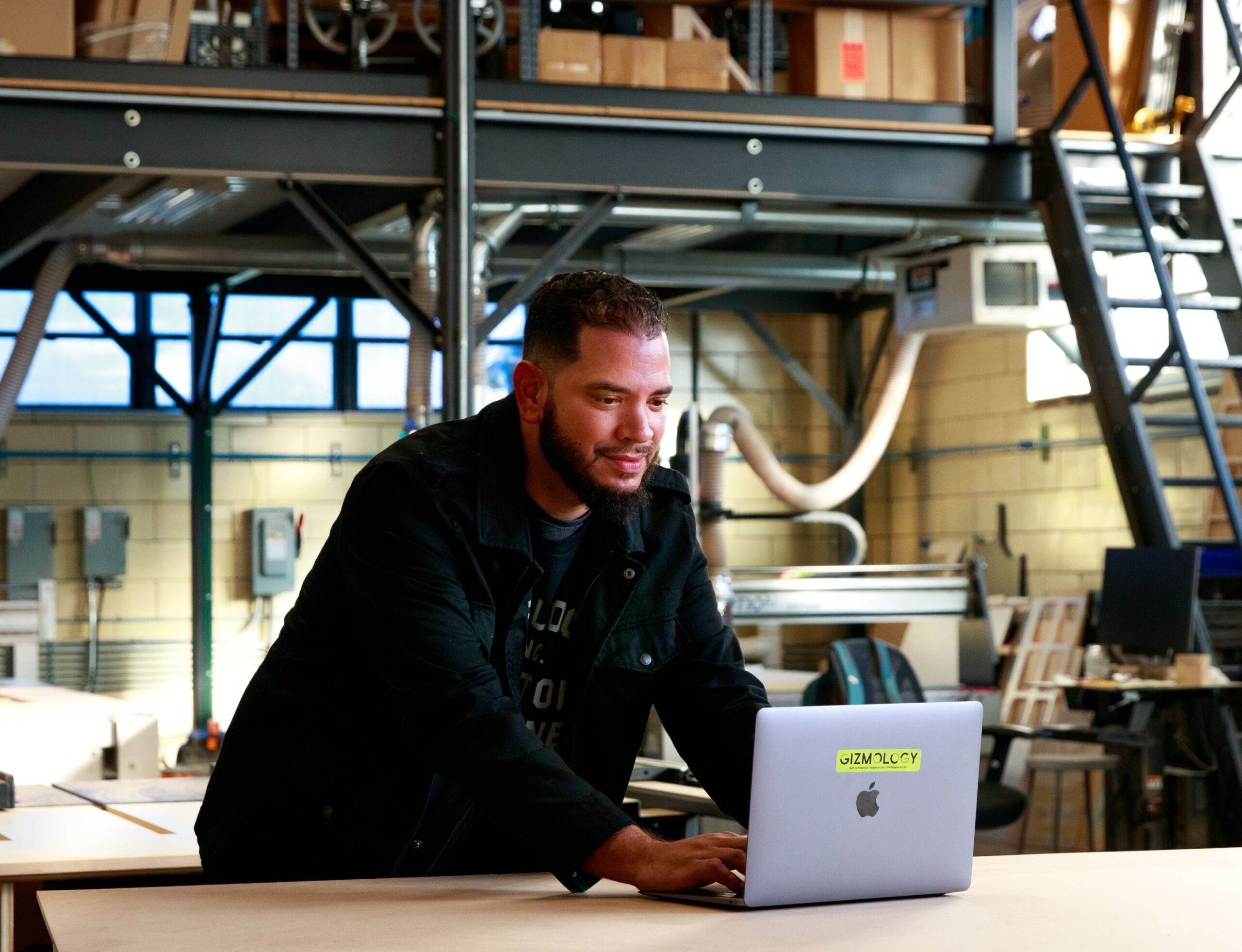
As Program Director of Gizmology, a racial equity initiative embedded within Deeplocal, a global creative technology company based in Pittsburgh, there is a real opportunity to open doors for Black Pittsburgh in technology and build bridges to the regional economy. Gizmology is a one-year creative technology apprenticeship program for high school graduates and underemployed adults in Pittsburgh’s Black and historically marginalized communities. The program offers compensation, benefits, and training in mechanical and electrical engineering, software development, technical assembly, and exhibit fabrication — with no advanced education required. Through the program, apprentices will gain industry-recognized certifications and a portfolio of experience working on real-world, interactive projects for global brand clients.
But my interest in providing pathways and bridges and disrupting the “cradle to prison” pipeline for many Black communities in Pittsburgh extends far beyond my position and professional work. A big part of my “why” is rooted in my own experience – having not finished high school after being pushed out at 17, and becoming involved in the criminal justice system as a juvenile and adult as a result. I know firsthand the importance and life-changing impact of providing viable alternatives for youth who are historically underrepresented and left behind, and how these positive avenues can help them avoid the circumstances I found myself in earlier in my life.
Blending technology and equity to connect Black Pittsburgh to the region’s multi-billion dollar economy can be an equalizer for many adults and families throughout the city. It can be a catalyst for financial prosperity for many who historically haven’t shared in the region’s economic success. I firmly believe that the doors we work to collectively open in technology today can be a portal to economic justice for generations to come. So often, the determining factor in cultivating change begins with simply creating an opportunity.