
September 27, 2018 | Read Time: 5 minutes

No one can argue that the financial-aid process is frustrating. From complicated federal forms to conflicting university policies, the financial-aid process has created invisible barriers for our nation’s most vulnerable families. The student-loan debt market is a $902 billion industry, according to the Federal Reserve, and one that often discourages “average students” from pursuing post-secondary education.
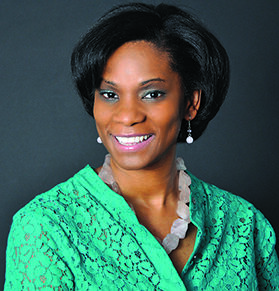
As the founder of The Scholarship Academy and a recipient of over $200,000 in scholarships myself, I designed a curriculum that helps low-income and first-generation students develop strategies to navigate the private scholarship market using their leadership and civic-engagement skills.
At The Scholarship Academy, our message is simple: It’s time to get rid of the cookies. Yes, cookies. What do “cookies” have to do with the financial-aid process? We know that the average counselor spends 38 minutes per student exploring college options. This necessitates a cookie-cutter approach to financial aid, which largely consists of one-off financial-aid nights and a one-size-fits-all “scholarship drawer.” While many students can get into college, it is no surprise that 61 percent take out loans and that for many, shortages as small as $1,500 send them home.
The Scholarship Academy trains counselors to move beyond this approach. Our online tool, The Virtual Scholarship Center, helps students create individualized four-year college-funding plans that anticipate common financial obstacles, such as one-time awards or tuition increases that prevent students from maintaining matriculation.
Over the years, our work with students, counselors, and universities has evolved into more than an opportunity to help students close financial-aid gaps. It has become a call to action to tackle financial-aid policies at their core.
My Own Journey
As I look back on what The Scholarship Academy has accomplished since we started, I am grateful for support that came at a pivotal time: the 2016 American Express Leadership Academy Emerging Innovators Bootcamp with Ashoka. The weeklong training for social-purpose innovators gave me a reflection period to grapple with some of our organizational challenges and consider my own leadership abilities.
I went into the Ashoka program hoping to refine our business model. Through conversations with other innovators around the country, I left with a resounding commitment to think beyond The Scholarship Academy and explore ways to have a direct impact on financial-aid policies.
At a recent event in Atlanta, Cheryl Dorsey, president of Echoing Green, a global organization that invests in social entrepreneurs, asked a room full of social entrepreneurs and philanthropists: “What is the ‘hill’ that you’re willing to die on?” She challenged us to be not just leaders of our organizations but leaders in our fields. It can be tempting to get caught up in innovative changes to our own business models while the sustainability of our work may lie in our willingness to take risks that will disrupt entire industries.
This past year has taught me that pushing back against a field that has historically allowed the financial-aid process to “happen” to low-income families takes more than guts. It takes collaboration.
Our blended model connects three groups of primary stakeholders — students, counselors, and local scholarship providers — in a way that flips the financial-aid model upside down. We bring these communities together to:
- Learn by equipping counselors with the appropriate technology to help students build scholarship portfolios and create four-year college-funding plans;
- Do by directly empowering disconnected youth with leadership, civic-engagement, and entrepreneurial skills that will position them for scholarship success; and
- Connect local scholarship providers directly to our applicant pool to identify students and bridge critical funding gaps.
Ours is a curriculum and an approach that counselors can use, but there is nothing cookie-cutter about it.
What Are We Willing to Do?
I know there are hundreds of entrepreneurs who are like me: motivated by the ability to identify a need in their communities that could be met through innovation and collaboration.
But increasingly, I suspect that the greatest pathway to impact will require us to get rid of some pretty big cookies — including one-size-fits-all funding cycles that often don’t fit the infrastructure of community organizing and social-justice movements. It will require standing up against pressure from city/state and even industry officials who seek to maintain the status quo. And perhaps most significantly, it will require organizational leadership to be bold enough to risk it all.
I believe that we all have the potential to “get rid of the cookies” in our industries. We all possess the tools to engage community stakeholders, program participants, and policy makers in new or more collaborative ways that can ultimately attack societal issues at their core. Social entrepreneurs are uniquely positioned to “do business differently.” And now, more than ever, we must answer the call to create change in our communities.
I may not have all of the answers yet, but for the sake of the 7 million low-income students who enroll in college every year, I’m determined to do my part and demystify the financial-aid process so they can pursue their college degrees without the overwhelming burden of student-loan debt.
To learn more, visit LeaderStories.org