
In Kenya, a Voice for Young Leaders and Artists
An Interview with Chris Mukasa of Fatuma’s Voice
September 27, 2018 | Read Time: 9 minutes
This is a part of our #LeadYoung series. In partnership with the International Youth Foundation’s YouthActionNet, we’re sharing leadership journeys and conversations with Global Laureate Fellowship Alumni.
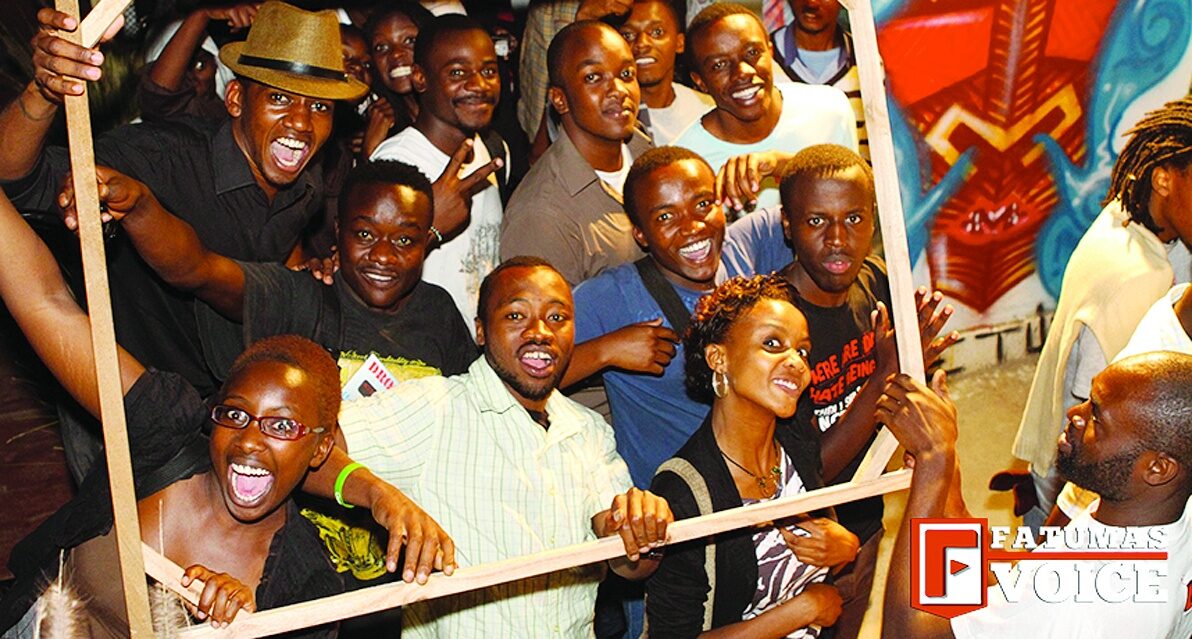
Fatuma’s Voice, a Kenya-based youth-empowerment forum, started in 2013 as a small poetry club on a university campus. Now, five years later, it is an organization that hosts forums where young people from different ethnic groups come together to express themselves through art, poetry, and music while creating bottom-up solutions to social issues.
Founders Chris Mukasa and Eric Otieno hope to take Fatuma’s Voice on the road, traveling across the continent hosting conversations about pressing societal challenges. They envision a more inclusive and politically conscious Africa “where people are equipped to dismantle false narratives and unafraid to speak out for social change.”
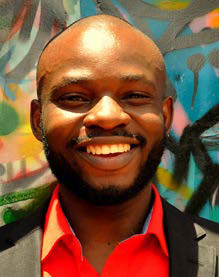
We spoke with Chris Mukasa, an alumnus of the International Youth Foundation’s YouthActionNet Fellowship, to learn more about how he got started, what drives him, and how he and his colleagues feel about their impact.
First, the obvious question: Who is Fatuma?
The name itself is a draw. At first, many people came to our events to find out, who is Fatuma? What is this voice? Can I come to meet her? They learn that Fatuma is a metaphor representing Kenya and other African countries that gained independence more than 50 years ago but are still not free. Fatuma also symbolizes people who don’t raise their voices against social issues affecting them as well as others. Fatuma is all of us.
How did you start the organization?
In 2013, I started a club called the Kenyan Poets Lounge to bring together young people interested in poetry at the University of Nairobi. Our numbers grew and it became too hard to meet in the university halls, so we created an online platform where we addressed social issues using poetry. One of the members of the poetry club [had the idea] to do a book of poetry about leadership and social justice. I facilitated the self-publishing of an anthology of poems and short stories, which we called The Power of Words. When we launched the book, a few people came and wanted to learn more. That’s when we decided to hold an event — a dialogue. We had some media coverage, and the event was very well received. There was great need for a regular, structured forum. We decided to do a series of events, and Fatuma’s Voice was born.

We didn’t have any sort of training. At that time, we were driven almost solely by passion. We managed to tackle complex topics like societal inequality, gender bias, drug abuse, and systemic oppression, working in partnership with other organizations that were subject-matter specialists.
Looking back, I realize my upbringing played a huge role in the making of Fatuma’s Voice. When I was growing up, my four siblings and I spent cold nights crowding around my mother in a one-room house where sometimes all we had for dinner was music and each other’s company. My parents had fled the war in Uganda and had a hard time [finding work]. My dad ended up drinking, which led to domestic violence.
One night I confronted him and asked, “Why are you beating up mom? You should be working together to provide for us.” I could see the anger in his eyes. He let go of my mom and stormed out of the house.
That moment is vivid in my mind because several months afterwards, my mom decided to separate from my dad. When my mother saw me speaking up on her behalf, it sparked her to make a decision and step out of an abusive relationship.
In many ways, my mother was Fatuma at that point. Fatuma could be anyone. Even African youth who have self-censored their voices and feel apathy toward the political ecosystem can be referred to as Fatuma. We need to reclaim our voices. Only then can we experience true freedom. I envision Fatuma’s Voice as an African movement that drives social change. What if the millions of youth in Africa stand up against injustices in the social, political, and justice systems? We could have real change.
What has your leadership journey been like as a young person?
I think the biggest problem we have in most African countries is that youth, who make up a significant portion of the population, have developed a sense of apathy and indifference towards politics and social issues. A recent survey by Afrobarometer found that since the early 2000s, youth interest in public affairs dropped from 81 percent in 2002 to 58 percent in 2015.
I think our education system, politics, and mass media have a lot to do with that. In many ways, our education system is designed to keep you quiet, so it becomes very hard to speak out. There are restrictive cultural practices, patriarchy … there are so many things that hold you back. People feel their voices do not count, and they lose trust in systems and the government.
The first step is to start speaking up and show that this sort of change can happen.
What impact are you proudest of so far?
One of our biggest successes is that we have reached out to 2,500 young creatives — artists, poets, and writers — and given them a space where they can use their art to talk about social issues in a way that will land on ears that are ready to listen. Art was eliminated in our education curriculum about a decade ago, and we are pushing back against that. Artists need to find ways to grow their talent.
Another success is the fact that we’ve come this far without any formal training or experience. We set up effective teams and trained them, held forums, and all learned a lot. Young people seeking to hone their skills attend training sessions and are paired with mentors.
We started our forums in Nairobi, and have replicated the programs around the country. Uganda and Tanzania have requested we hold forums there. We don’t have funding yet, but we want to have inter-country conversations and literally break down borders with this art exchange.
What are three skills you think every young leader or young social-changemaker needs to learn to be successful?
As I think about it, there are different things that make different people whole.
Leadership is not something that’s handed to you, it’s something you need to learn and invest in building in yourself.
Self-awareness is one of the first things. Many people are out in the world doing stuff when they have no idea who they are. It’s all about identity and finding your voice — not deriving that from your position or title but making it intrinsic. Most challenges we face as leaders, if we have nothing inside, it’s easy for other people to manipulate you. If you look at the political system in Africa, it’s failing because people derive their identities from things that don’t really mean much. Intrinsic motivation helps you to go out and tackle challenges.
Secondly, communication. It’s something that I am working on. Eric, my co-founder, told me I am “only occasionally” a good communicator. I know it is key, I’m working on it, reading about it and [trying to learn].
Integrity is also essential. This is complicated, it’s a decision we make every day through our actions and choices. It’s the internal things that no one ever gets to hear. I’ll call it a journey that I’m still trying to understand.
What are some supports that have helped you learn and grow as a leader?
One of the biggest ones was the International Youth Foundation’s (IYF) YouthActionNet program. It was a yearlong program, and I had a great mentor assigned to me. My mentor helped me think about our organizational and financial models. Having the support to think critically about future plans with someone who cared about the work I was doing really made a difference.
Leadership is not something that’s handed to you, it’s something you need to learn and invest in building in yourself. IYF gave me the space to meet people who helped build my skills and to hold myself accountable. I now have a network of people who understand social-enterprise work.
What are some challenges you face?
One of the biggest challenges for any social-enterprise leader is to find balance between work and life. There have been points where it’s been really crazy; you know there are people who are there for you, but there’s so much going on that you ignore that. You have deadlines and projects to run and fundraising to do. It can be overwhelming. I’ve gone through several moments like that when even having support systems, you feel like, “Why am I doing this and will it amount to tangible change?” But you look back and see all of the things you’ve gone through and see all the things you’ve managed to achieve, and it helps you keep going.
What is one mantra or reflection that gives you the confidence to lead?
Okay, so this is what I do. I don’t have a mantra, but I have a vision: I want you to picture a truck traveling from one African country to another. Visualize it with community units where African philosophies like Ubuntu are shared with people along the way. This truck for social change will also be visiting schools to address questions not tackled by the educational systems, which can be done through drama, dance, or art. Imagine people becoming so inspired by those things that they feel the need to do something.
When I need strength, I think about this vision and how it’s creating social change. It keeps me driving, as it were.
To learn more, visit LeaderStories.org