
Lives Changed Through Philanthropy – ‘Philanthropy funding is a really smart model’
Paid for and created by

February 21, 2024 | Read Time: 6 minutes
In October, we featured an outstanding philanthropy-funded program for Indigenous people in Australia, Ganbina’s Jobs4U2 program. Jobs4U2 is a school-to-work transition program for Indigenous children and youth aged from 5-25. Similar to North America, Australia’s Indigenous population, the Aboriginal and Torres Strait Islander people, suffer from the ongoing impacts of colonization and lower socio-economic outcomes compared to the non-Indigenous population.
However there are glimmers of hope that show with the right long-term support, Indigenous people are breaking the cycle of socio-economic disadvantage. The youth who have gone through the Jobs4U2 program are often the first in their families to graduate from high school, go onto college education, buy homes and remain in careers of their choice.
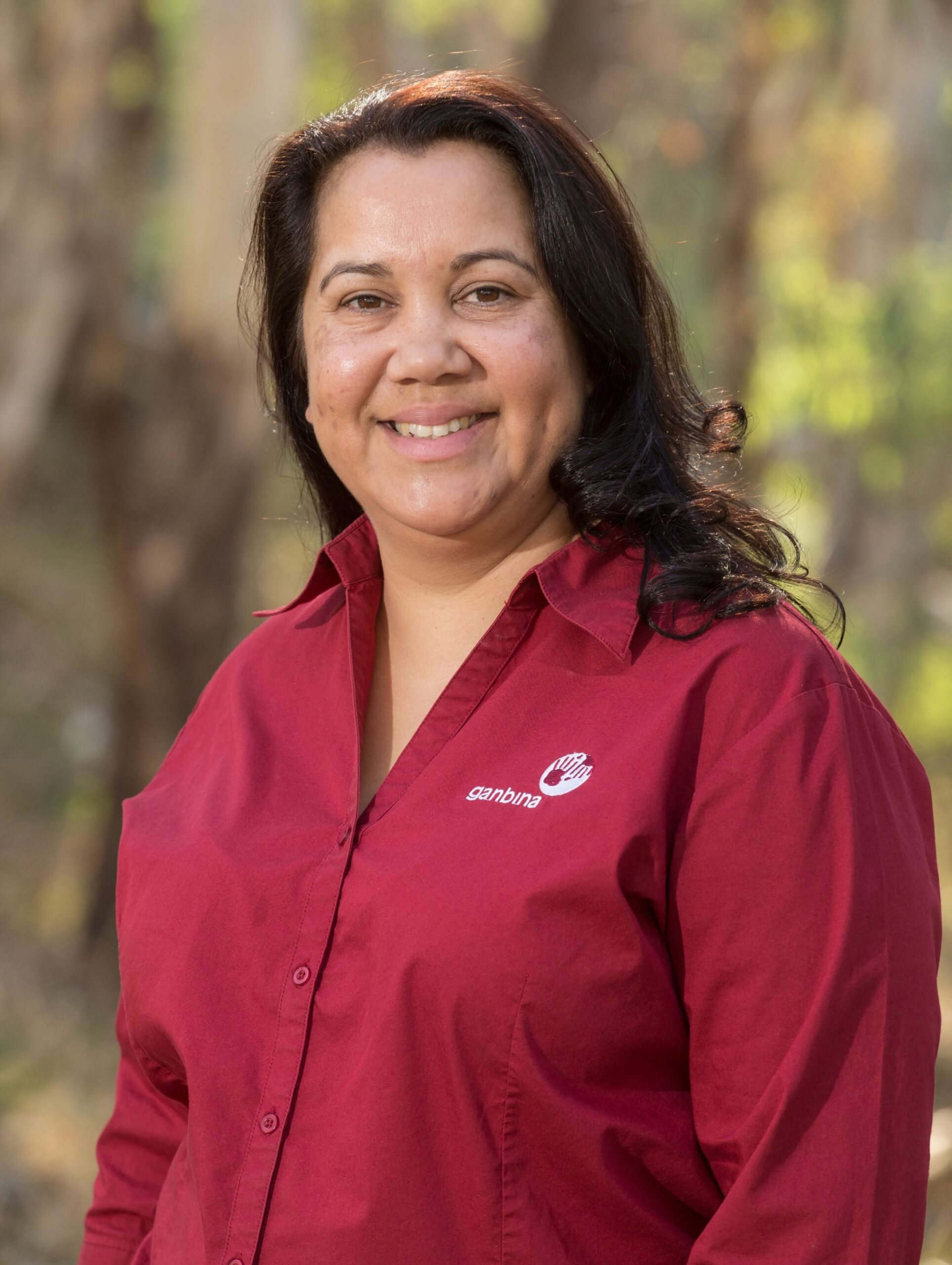
Today, we are sharing the story of Aboriginal woman Larissa Falla, who had her life path changed thanks to the Jobs4U2 program. Larissa became the first in her family to have a career job, which led to her working her way up to senior management roles and she currently works for the Australian state government. Now she is a mother to three children, who are also enrolled in the Jobs4U2 program. She shared her story with the Chronicle of Philanthropy and why she passionately believes in Ganbina’s education-first approach and motto that a hand up, not a hand out, is the key to overcoming Indigenous socio-economic disadvantage all over the world.
When you were growing up, what were the expectations around education and career?
I grew up in a Christian family so we had strict values around honesty and putting in hard work, but there wasn’t really an expectation to finish high school, go onto university or choose a career.
There was never any question that I wouldn’t have a job (post high school). Unemployment was never an option. But I didn’t really have a clear vision for a career as such.
How did you find out about Ganbina? I heard you were initially offered a business administration traineeship through them?
I used to work with a lady who was always looking at different pathways for young Aboriginal people. She approached me and asked if I’d be interested in exploring another opportunity. I thought, why not? Let’s give it a try…. I started in administration and then worked my up through different departments until I reached a senior leadership role. I now realize I wouldn’t have had the opportunities I’ve had if it wasn’t for that interaction with Ganbina… I probably would still be working in retail, maybe working part-time, probably renting. I’d have a low-paying job, I’d still be paying my bills but I don’t think I’d have a house. The traineeship really opened my eyes to the different opportunities out there.
Once you were an adult you decided to join Ganbina as its General Manager for two years. What made you want to take on that role?
I wanted to join because Ganbina always stood out as being different. You know, Ganbina’s motto and approach of a hand up, rather than a hand out, really aligned with my own personal values.
The fact Ganbina’s programs are funded through ongoing philanthropic funding is a really smart model.
A lot of programs I’ve seen in the past have been government funded. Obviously, governments know there are issues (in Indigenous communities) that need to be addressed. However often government fund programs for a set period of time, but then the funding dries up or there may be a change in government. That’s normal and understandable, because priorities change… but where does that leave the kids now, you know?
Ganbina’s program also focuses on self-determination, which I think is the only way to truly empower people to become self-sufficient. Often when someone has come from a position of disadvantage, it’s human nature to want to help. But sometimes by helping too much, we hinder the growth of that person. I have seen very well meaning programs and organizations help, but what they do is arrange for transport or meals to be supplied every day, they arrange for… absolutely everything and it doesn’t allow any room for empowerment. When they are nurtured too much, it almost becomes an expectation that everything’s done for them and it just hinders their growth. So I think the good thing about Ganbina’s programs is that they’ve been able to find the balance between yes, we understand there are some barriers and let’s provide assistance, but there has to be accountability and responsibility on the part of the people receiving that assistance as well.
I’ve also seen firsthand the benefits (of the program). I mean, if I look at my own journey… Ganbina has impacted my life and now my children are benefiting from the support Ganbina provides. By extension it also impacted the generation before me, my parents. Even though they didn’t necessarily set goals for me, I feel like I’m doing them proud.
Indigenous disadvantage is a global issue and the Ganbina model has worked very well at breaking the cycle of disadvantage for Australia’s Indigenous people. Ganbina’s model has started to gain international interest from North American Indigenous communities, which face similar socio-economic challenges. Do you believe the model can work internationally?
Absolutely. There is a universal connection among First Peoples, regardless of where they come from in the world. I attended an Indigenous Peoples convention on education last year and we were all there for the same purpose, looking at ways we could engage and empower First Nations youth in education. When I saw it firsthand, I couldn’t believe how similar the stories were. Speaking to Indigenous people from Canada and the United States and seeing how similar the impact of multi-generational trauma feed the cycle of disadvantage in their communities was incredibly insightful.
There were so many synergies around the need to empower our young people to learn to walk in two worlds. To still have that connection to culture, but to also understand the opportunities the Western World has brought. It was really eye-opening to see how everybody saw education was the key to empowering First Nations youth and creating better futures for them. So yes, I absolutely believe the Ganbina model can work in Indigenous communities outside of Australia.
What would you say to a philanthropist who may be reading this and is considering finding out if the Ganbina model can be applied to their local Indigenous population?
If you’re looking for an initiative that would actually make meaningful change to people’s lives and will have a ripple effect on communities for the better, then yes, I would definitely encourage them to think about donating and contributing to Ganbina’s expansion into international communities. It would be something that you could be really proud of.
If you are interested in learning more about Ganbina’s model for empowering Indigenous youth, contact Ganbina’s CEO Anthony Cavanagh on anthony@ganbina.com.au or phone +61 428 217 332. Alternatively, you can find out more information at ganbina.com.au