
Making Room for ‘Folding Chairs’
September 30, 2019 | Read Time: 11 minutes
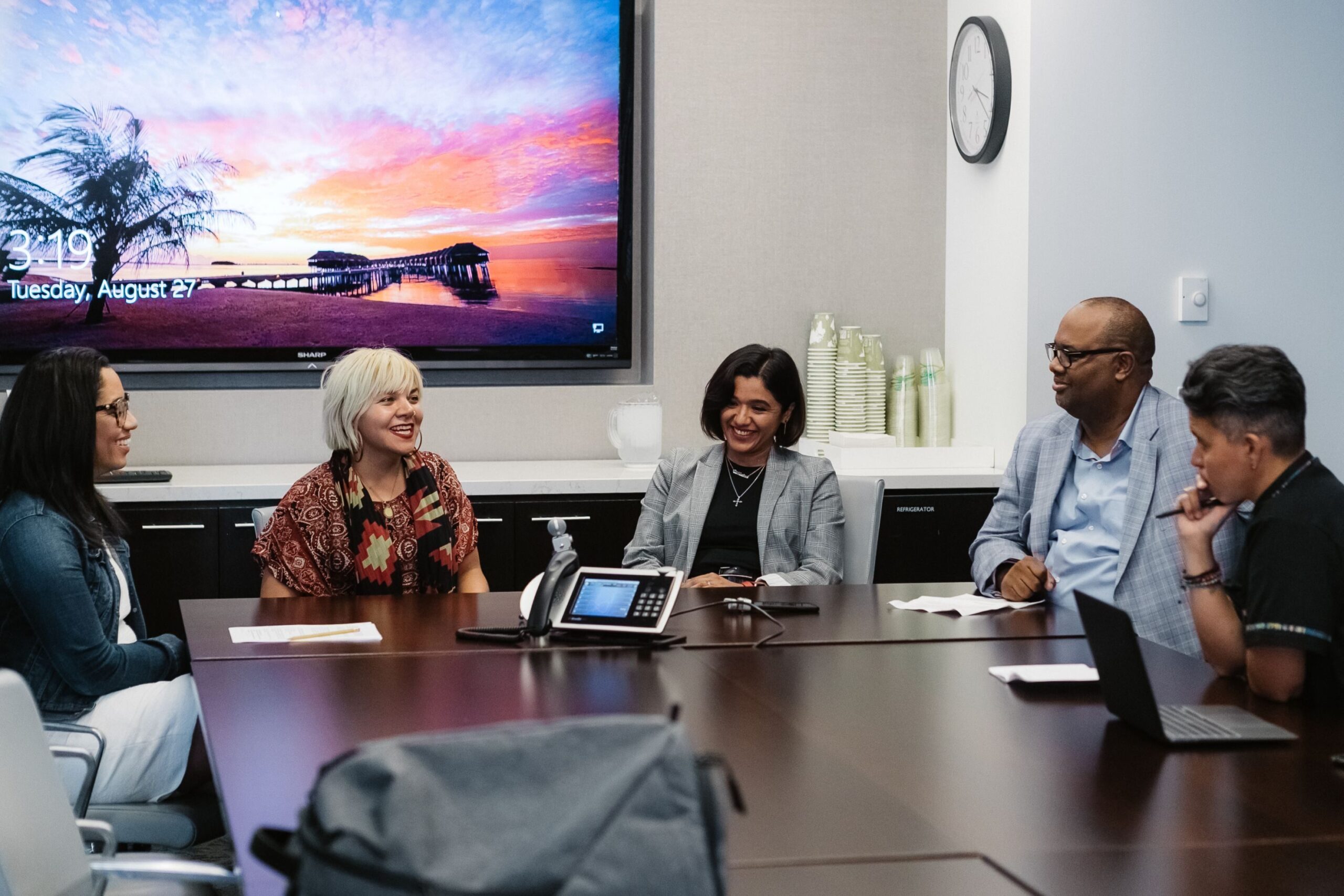
What ideas might emerge if old power used its platforms to amplify the voice of new power? With a little help from the Chicago Community Trust and moderator Emilia Chico, we convened four diverse Chicago community leaders to find out. This is their conversation, edited for length and clarity.
Emilia Chico, Chico Consulting Group: New power is about new ways of making change, so I wonder: What is inspiring people to become changemakers? What is exciting to them about this transfer of power from old to new?
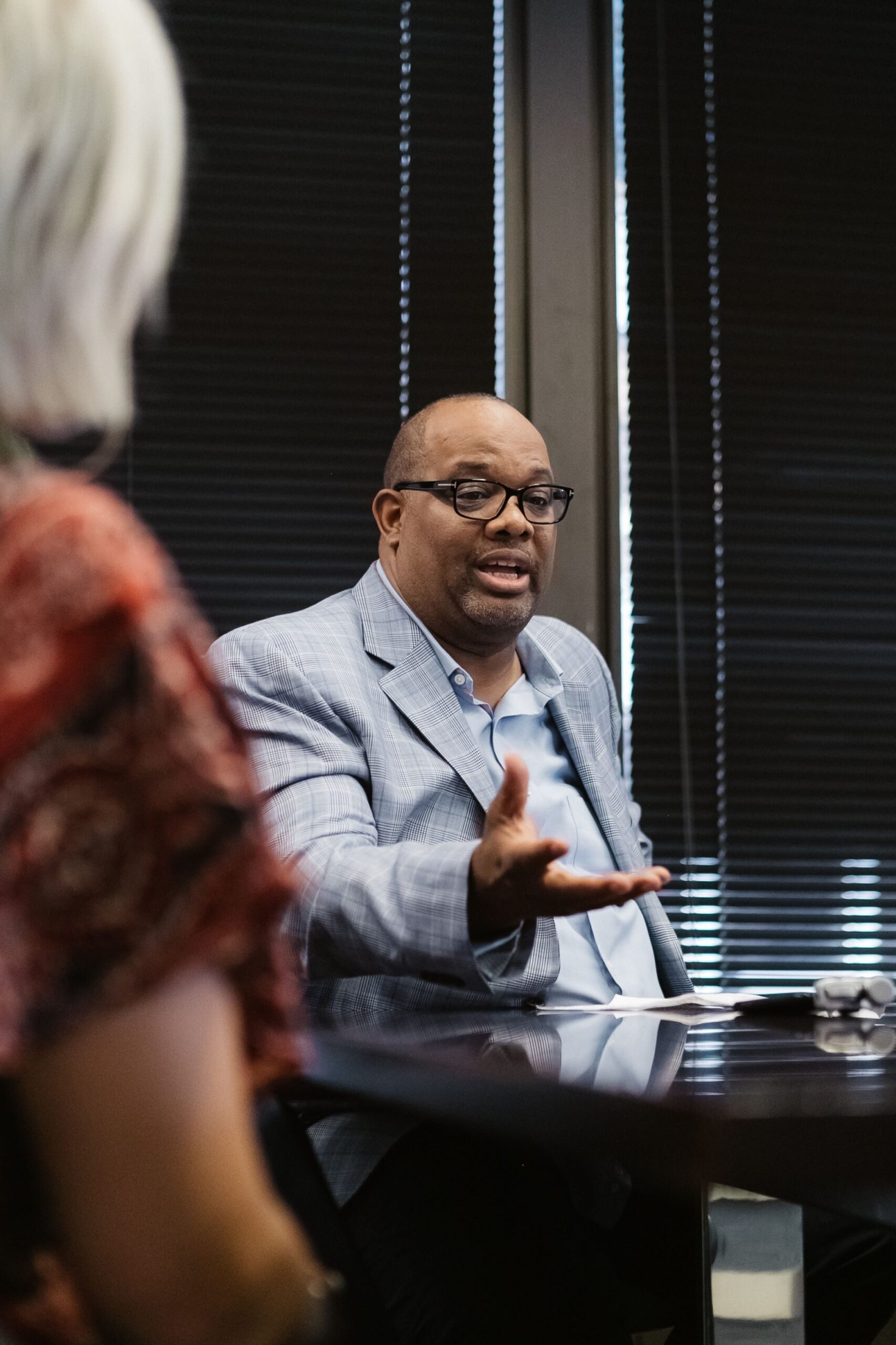
Liz Dozier, founder & CEO of Chicago Beyond: I truly believe the power is already with the people, but we’ve been sold a lie. How do we set the stage that allows people to act on their power? That’s the fundamental shift.
Andrea Faye Hart, co-founder and director of community engagement at City Bureau: Right, it’s about giving people space to express the power they already have. We’re training people in libraries to document public meetings and holding weekly convenings where people can discuss neighborhood concerns. So, one of the things that has felt really inspiring to people is having a dedicated space that allows them to claim the power they already have. It’s about allowing people to come together who wouldn’t otherwise have the space to do so — that’s where they’ve gotten inspired to do other things.
Corey Brooks, founder and senior pastor of New Beginnings Church of Chicago and founder and CEO of Project H.O.O.D. Communities Development Corporation: A lot of people feel powerless, and when you infuse them with hope and give them the tools that they need, they somehow tap into the power that’s been dormant for all their lives. When people get tools and encouragement and affirmation, we see them do things that they never thought they could do.
Silvia Rivera, managing director of Vocalo: Participation is empowering. Seeing the reward of results is empowering. When you give folks the space to create something new without the contamination of the old, it’s exciting to see what unfolds from that.
Emilia Chico: When you talk about “giving space,” is that physical space? In our connected world, do meetings still matter?

Liz Dozier: I think relationships matter. We’ve all seen one meeting after another and nothing comes out of it. But when people are meeting and building trust and defining common goals, that’s when you begin to see progress.
Silvia Rivera: Yeah, we’re so interconnected, and there are so many ways to engage online, but you still have to have that “in real life” relationship. It’s such an important part of movement building — knowing who you can trust and how you can move things along. We need to continue to create spaces to build these types of relationships.
Corey Brooks: Meetings absolutely matter. The opportunity to engage ideas, that’s where creativity happens, ingenuity happens. How we meet has changed over the years. There are so many different ways to have meetings, but I think when people gather together in a physical space, there’s an energy that happens that could not happen over the phone or in a text message. Even this little conversation today, for me it’s tremendous because I get to hear different thoughts and ideas. It’s bringing capital to the table. I think that’s what it’s all about.
Andrea Faye Hart: In media and journalism, there are so many ways to tally a number digitally — just to count heads — instead of actually having meaningful relationships with your audience. There are so many times that people will parachute into Chicago to do these national stories, but who in Chicago actually saw those stories and knew what to do next? Steadily building relationships in the community is superimportant. That’s what’s going to save local news, not this faux connectedness online.
Emilia Chico: Let’s shift gears and talk about social capital. Why do some communities lack social capital, and what difference could convening make to help build capital?
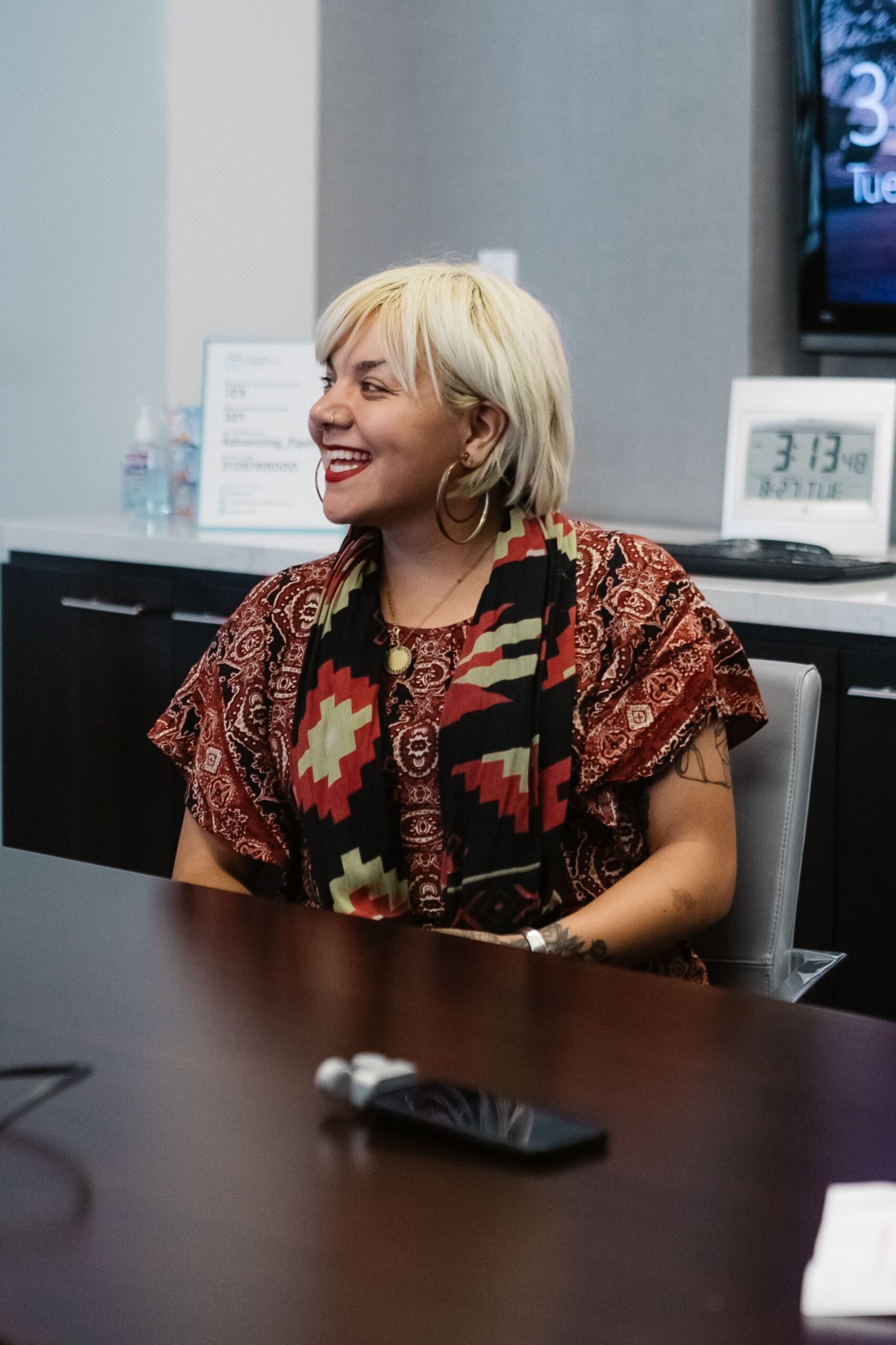
Andrea Faye Hart: I wasn’t familiar with the origin of that term. It’s very corporate, isn’t it? If you’ve gone to certain schools and have money and are white and have access to certain spaces — I think that’s the traditional definition of the term. I came to understand it as kind of the opposite — capital that lives in communities but isn’t acknowledged because we apply a deficit lens. It’s social and cultural capital combined. We try to understand that people have a lot of capital and that the larger systems don’t want to acknowledge that. People in the community are realizing, “We don’t have to wait to engage. We have a lot that we can organize around and build wealth around, and then maybe advocate with other systems as it makes sense to. We’re going to do what we know is the right thing to do, and we’ll wait for other people to catch up.”
Silvia Rivera: “Social capital” is a new buzz term, isn’t it? From a “capital” perspective, even the way we think about philanthropy — time, talent, treasure — it’s about people sitting in a big office, writing big checks. Those of us who work in communities, we know that philanthropy looks different in different spaces. How you contribute and how you give look different in different places. Sometimes it’s more valuable and more meaningful than those big checks because it’s about holding together the fabric of communities. So, I think people are becoming aware of their power, how that manifests itself: “I have access to capital in ways that are defined outside the traditional sense.”
Corey Brooks: When we talk about social capital, we start with the question, “What’s the problem we’re trying to tackle as an organization?” We’re trying to tackle poverty and violence. So, then we ask, “What capital do we have? What do we have that can help us solve this issue?” Oftentimes we find that we do have some capital — we’re not powerless, we have some things that we can bring to the table. But a lot of times we don’t have all the capital we need in our community, and when we go out and try to get the capital, we don’t have access to the individuals who are in a position to help us — especially the philanthropic organizations. It’s very tough to get to those organizations that can make a difference in your community. That’s one of the reasons I’m grateful for Upswell, because it gives us an opportunity to tell our story and have our voices heard — not only by old power, but also by our peers. If we can’t get old power to help us, at least we can build social capital with each other and help one another.
Liz Dozier: Right, I think it’s complicated. There’s definitely this narrative that we perpetuate around all the deficits when we do have some incredible assets in our communities. But at the same time, there’s also the reality of the larger table and who has access to that larger table — not just in crafting conversations, but ultimately in moving resources, whether those are government resources, civic resources, business resources, or whatever. As I think about Chicago Beyond, we’ve essentially pulled up our folding chairs even though nobody invited us to the table. We decided to pull up our chairs, sit at the table, and insert our voice as necessary.
Emilia Chico: Any final thoughts on reimagining how we convene old power and new power? Any encouraging signs? Anything that’s working for you?
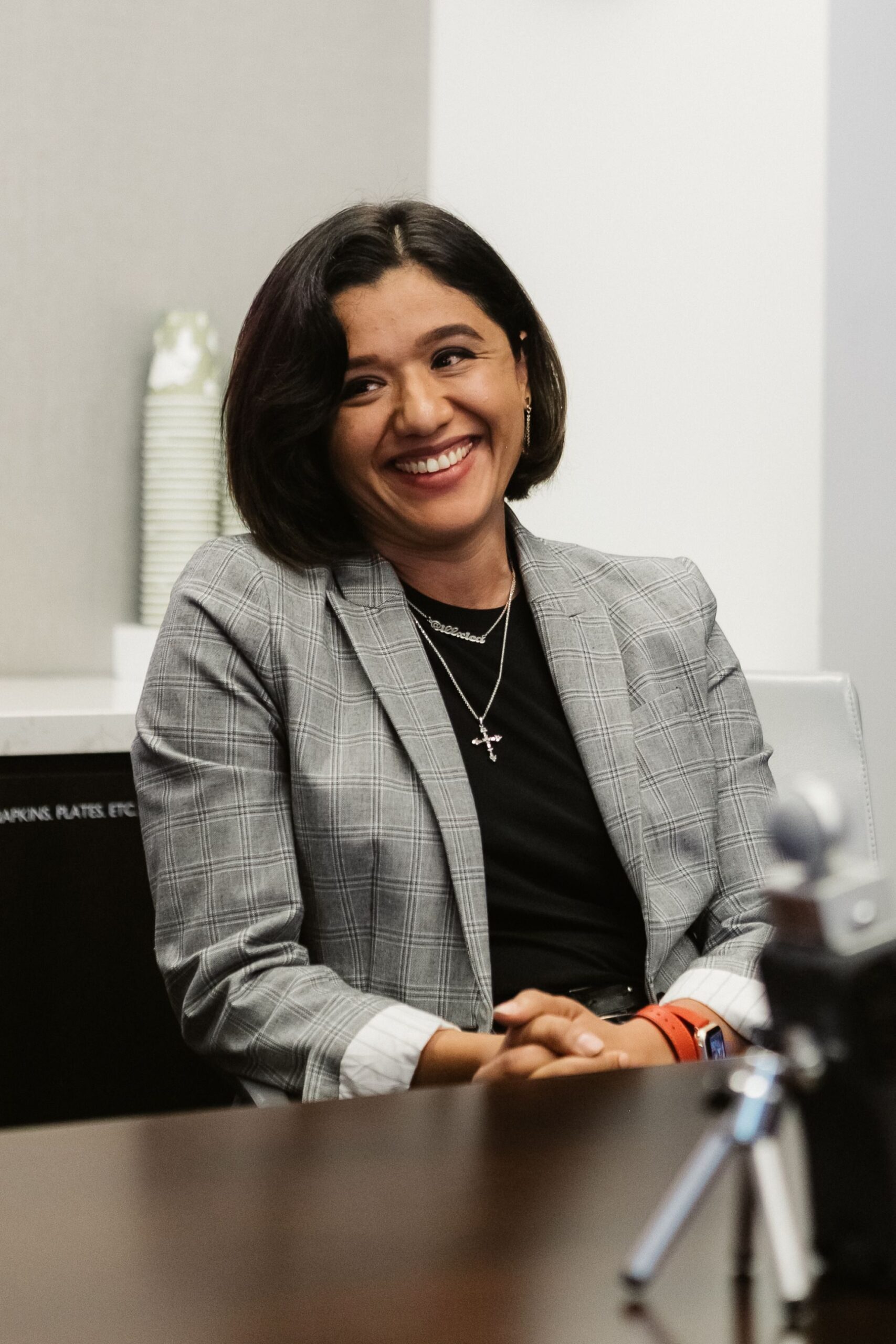
Liz Dozier: We’re trying to think at Chicago Beyond about “How do we bring unlikely folks together?” There’s a herd mentality — this propensity for nonprofits to be over here in this herd, and then civic people over here, and government, and artists, and so forth. But really, if we’re going to move something forward, we all have to be together. And so, Chicago Beyond just opened a new space, and the whole idea of this space is to encourage unlikely interactions so that groups can build more connective tissue among one another to help move efforts forward. It’s not about us and the power that we have as an organization, but ultimately are we unleashing the power and the voices of the people whom we have the privilege to serve?
Silvia Rivera: In my work, I think about what happens when you create a space that more accurately reflects the type of community that you want to be a part of. Media and culture can foster connectivity. I’m trying to create this space and this vehicle for inspiration that can fuel different kinds of movements. Maybe it’s not a space in the physical sense, but rather in the way that radio and other media can bring together a diverse but segregated city through the power of music and stories.
Andrea Faye Hart: I’ll give you a tangible example: We train and pay people to monitor local government at libraries around town. At one recent training, we had longtime residents who have a lot of cultural and community understanding, and then these new folks who have come to Chicago to study or whatever. They’re sitting together, and the students are learning from the elders about the history of that ward, and then the younger person is live tweeting. I see the power in that kind of exchange. Those two people wouldn’t ordinarily meet, but they have a shared interest in their neighborhood. They are saying, “I’m here, and I care about where I live, and I want to do something about it.”
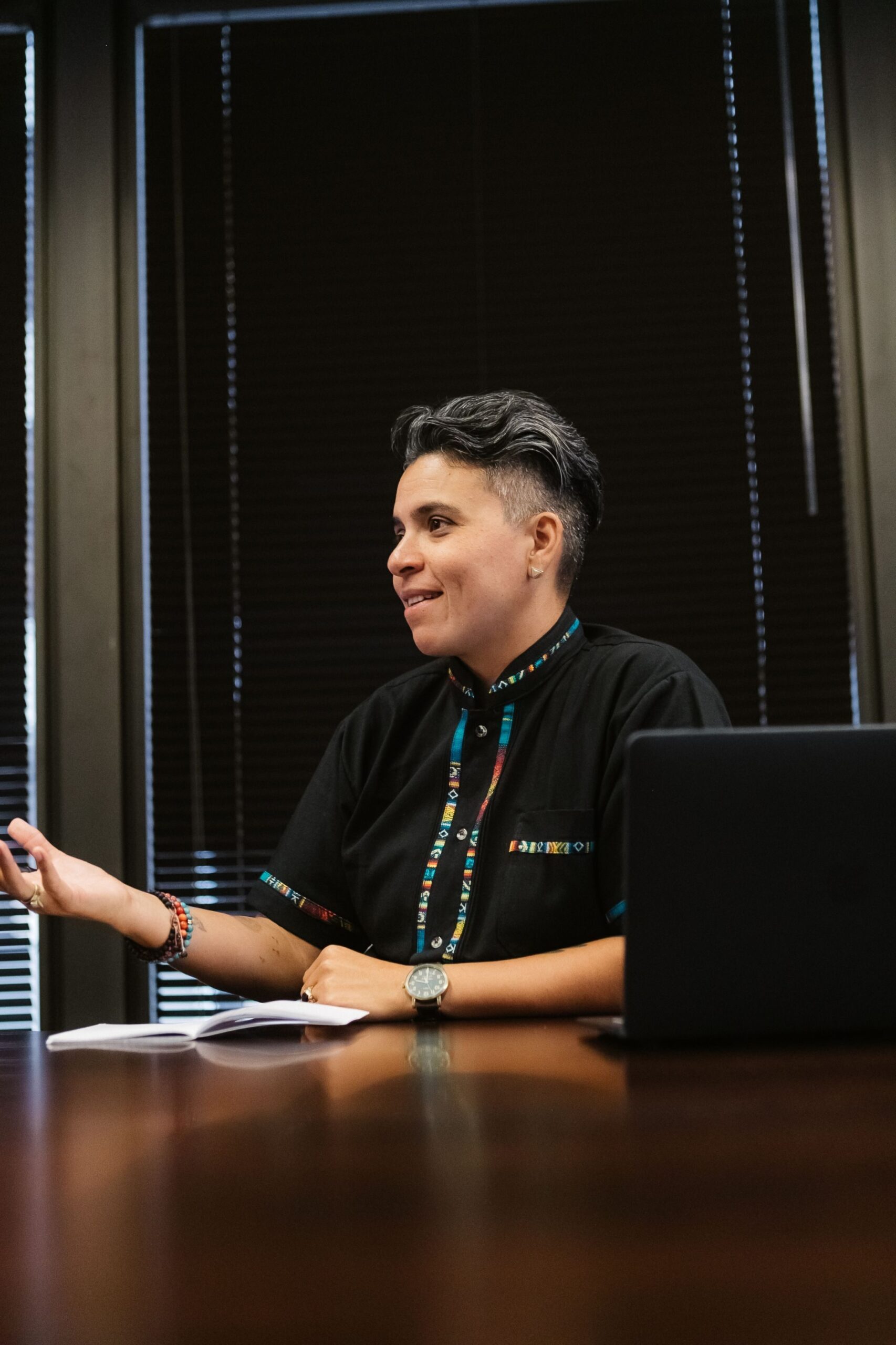
Corey Brooks: I look at where we are right now — businesses are leaving our neighborhood, we have housing projects with over 80 percent single parents — but I’m always thinking about what we can do to make this community better. And I think it starts with us as an organization. We’ve been operating in kind of a silo on purpose because we wanted to learn what we do and why do it. But now in this reimagining phase, we’re seeking out individuals with a lot more social capital than us, influencers who can come alongside us and partner with us. That isn’t easy, so having events like Upswell is tremendous because it gives us an opportunity to engage with individuals that normally we wouldn’t have access to. If we can be a better organization, then we can help make life better for a lot of people — these individuals who have been marginalized but have somehow turned their lives around and turn their community around.