
More than a game
NAQT’s quiz bowl tournaments encourage teamwork and broad-based learning among participating students
May 18, 2018 | Read Time: 5 minutes
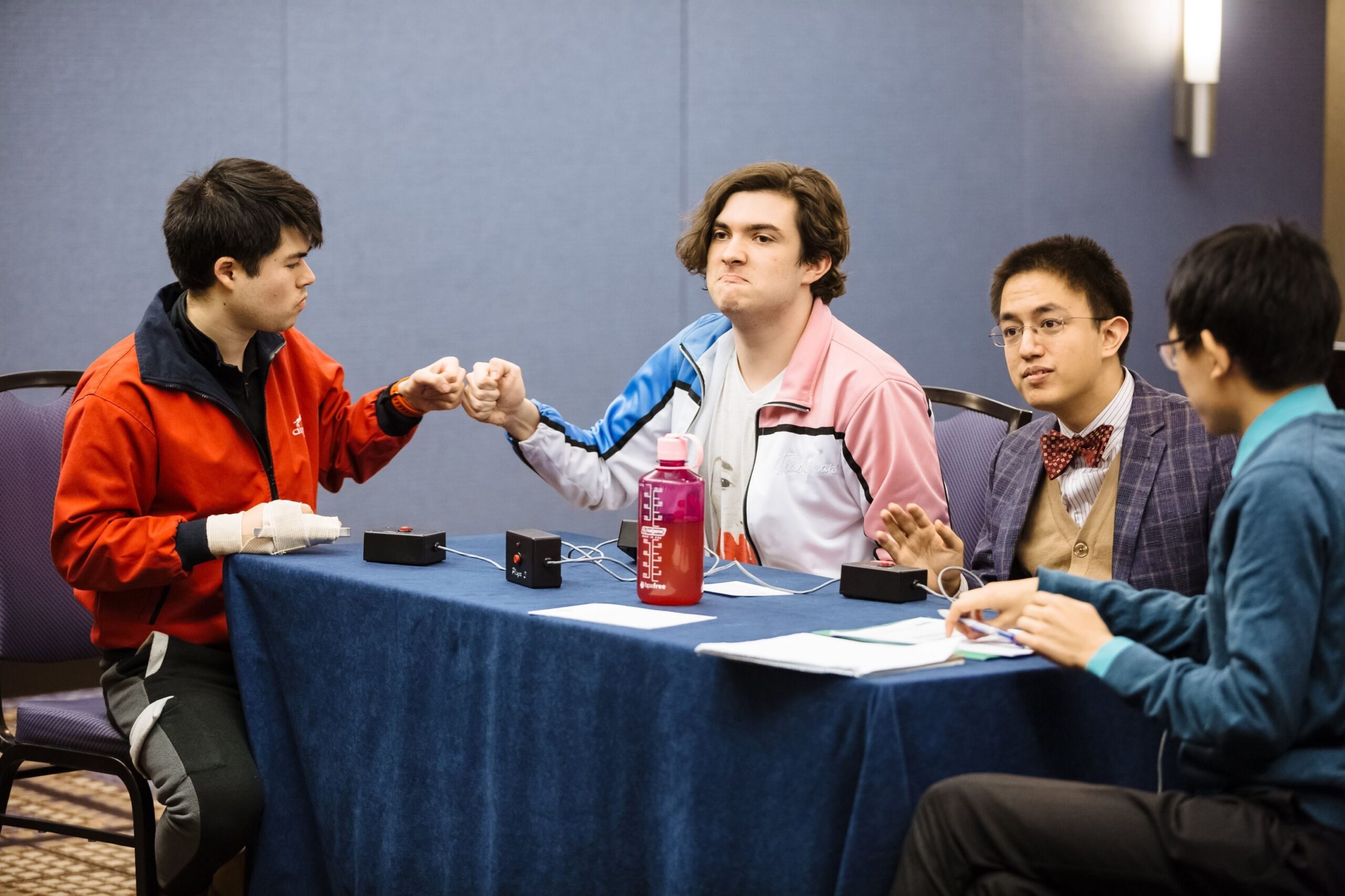
Let’s set the scene: A fast-talking emcee peppers teams of four students with complex questions about authors and politicians, solenoids and space missions, as the composed young scholars pool their knowledge to reel off answers with speed and confidence.
Welcome to quiz bowl, a spirited interscholastic contest pitting two teams head to head to answer questions from all disciplines, including history, geography, philosophy, literature, science, fine arts, current events and popular culture. Quiz bowl tournaments are not only an athletics-style team competition for the mind, they also promote a rich environment of broad-based learning that students carry with them for a lifetime, proponents say.
“We see this as more than a game, although it’s structured as something fun and competitive,” says Robert Hentzel, president and chief technical officer of National Academic Quiz Tournaments (NAQT), which has been organizing quiz bowl championships in North America since 1996. “The material we’re asking about gives players a wide base of knowledge and will help ensure a commonality of interests with their fellow students and future colleagues.”
Quiz bowl tournaments blend individual competition and teamwork, as no single player is likely to be an expert in all subject areas. During a game, players press a buzzer when they have an answer to a question, earning points for correct responses along with an opportunity to answer a bonus question in collaboration with their teammates. If a quick-witted player knows the answer after merely hearing a few words, they can buzz in before the question is even completed.
While some tournaments cover a small amount of general trivia, most questions are rooted in academic subjects encountered by students in the classroom, whether in middle school, high school or college. Questions are composed by subject matter experts from NAQT’s staff, with a single tournament often including questions written and edited by over 100 people. The competition is designed to span a standard curriculum while cultivating an academic acumen that goes beyond basic high-school and college requirements.
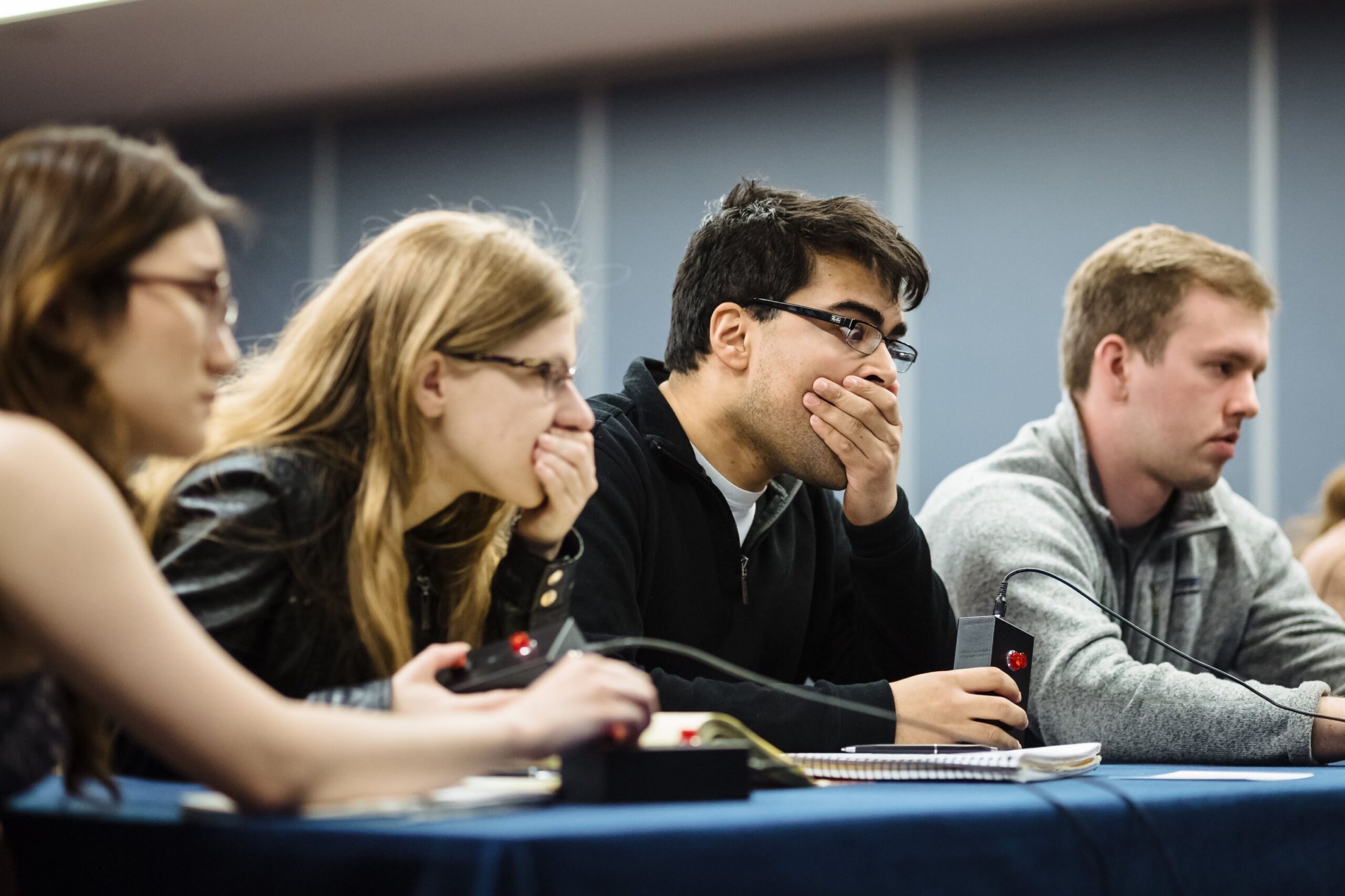
“The goal is to have questions that reward real or deep knowledge before superficial knowledge,” Hentzel says. “We try to avoid questions like, ‘In what year was William Shakespeare born?’ that have nothing to do with the reason that anybody cares about Shakespeare 400 years later.”
Most school curricula cover large swathes of knowledge but sometimes important topics are left out. Quiz bowl helps fill in the gaps when students are motivated by a question to read more deeply into a topic.
“By playing quiz bowl, you draw connections between subjects you may not have normally thought of together,” says Hentzel. “It’s an alternative motivation to do independent reading that hopefully helps players discover why these subjects are important.”
NAQT, founded by a group of former quiz bowl players and coaches, is the largest and most widespread quiz bowl organizer in the world, bringing tournaments to eight countries on three continents during the 2017-18 season. In addition to its national championships, NAQT hosts and provides competition questions to invitational tournaments, league championships and television programs throughout the year.
In NAQT’s 2016-17 season, approximately 1,000 middle schools, 3,500 high schools and 250 colleges played quiz bowl tournaments. Quiz bowl tournaments are aimed at learners from elementary school to graduate school, gathering students from private institutions, rural, suburban, and inner-city public schools and home-school collectives. Intellectual curiosity and a love of competition are the threads drawing students together, says Hentzel, fostering tightly-knit communities where friendships often form.
Participation in quiz bowl tournaments also provides participants with the “soft skills” sought after by employers, which is not surprising considering the competition’s emphasis on teamwork, cooperation and excelling under pressure.
“Students are working together to prepare the best possible team, in a situation where they need to think about what their teammates know and in which they need to rapidly evaluate answers and pick one,” says Hentzel. “While answering a bonus question isn’t exactly a real-life business situation, the underlying skills of knowing your teammates’ capabilities and recognizing when somebody might have a better idea are all there.”
3 LetterOne, an international investment company based in Luxembourg with offices in New York and London, sponsors NAQT’s national championships for high school and college students to raise awareness of quiz bowl and make the game accessible to more teams. Educating future leaders to succeed in a rapidly changing digital economy is an indirect but critical byproduct of quiz bowl tournaments, company officials note.
“Today’s job candidates must be able to collaborate, communicate and solve problems — skills developed mainly through social and emotional learning,” said Stuart Bruseth, LetterOne director of communications. “Extracurricular activities like quiz bowl are an important tool as we seek to equip children and young adults for careers that are taking shape today and will continue to evolve for the rest of their lives.”
Companies in a cutting-edge global marketplace recognize the value of ideas generated in a team-friendly structure, says Bruseth. In quiz bowl tournaments, students must specialize in specific topics while also bringing broad knowledge of other subjects to carry their weight for the team.
According to Bruseth, “Interdependence among teammates engenders the ability to collaborate, and because the game is so fast-paced, students must also learn to think on their feet.”
In the first year of LetterOne’s sponsorship, NAQT was able to invite more deserving players to compete at its collegiate and high school championships. It has also laid the groundwork for promoting the competition to new audiences. Hentzel looks forward to getting more students involved in this high-energy academic endeavor with long-term benefits.
“Quiz bowl is significant in that it brings together kids with different backgrounds who already share an interest in learning,” says Hentzel. “It’s much easier to learn about another person when you can start with your preferred style of question, favorite author or most interesting historical mystery.”