
Relationships that Build Power
Joel Rodriguez, Bridging Fellow, Community Organizer
Paid for and created by
April 19, 2023 | Read Time: 5 minutes
Independent Sector’s Bridging Fellows program, supported by Walmart, offers community leaders space, skills, and resources needed to socialize and embed bridge building as a core competency in their organizations and communities. Intended for leaders whose work places local communities at the core, the program focuses on bridging specific areas of division, including ideological, racial, socioeconomic, and geographical.
The ability to act is how we define power. The small, but powerful truth that we all can move to action has been transforming communities and families on the Southwest side of Chicago for decades. I began organizing with the Southwest Organizing Project (SWOP) in 2011 on a campaign to end the school-to-prison pipeline in Chicago Public Schools. Although I had been working with youth and families for many years, I was new to organizing. It was through organizing that I experienced the impact of relational meetings, or as we call them “1 to 1’s.” At the direction of my executive director Jeff Bartow, my first six months at SWOP focused exclusively on having as many “1 to 1’s” as I could.
![Joel 5 pic[75].jpg](/wp-content/uploads/2025/10/joel-5-pic75.jpg)
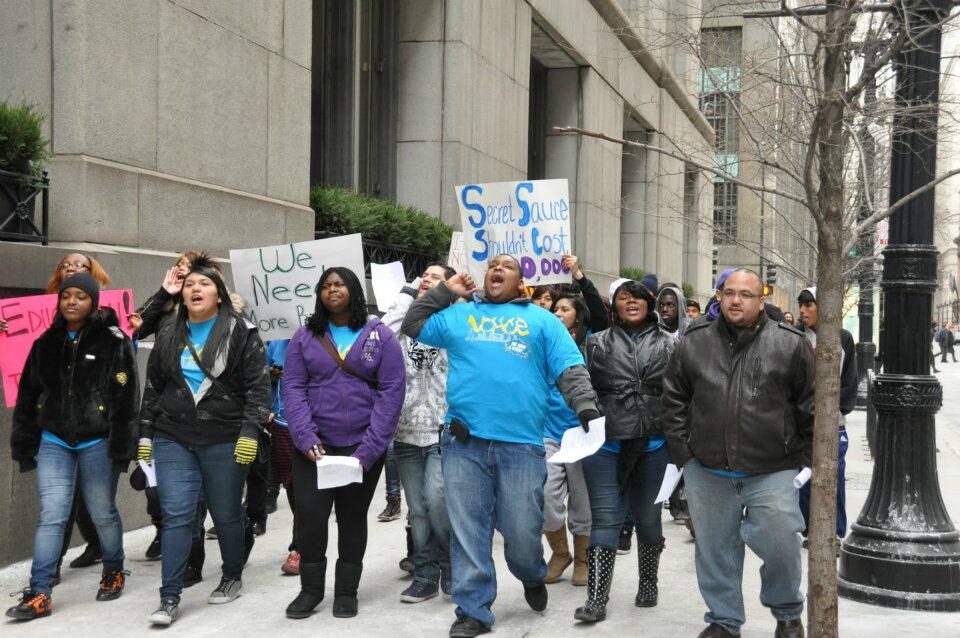
These 45-minute conversations with parents, students, administrators, teachers, and staff painted a grim picture of the chaos in our school system, but I also discovered some incredible young people and adults with immense passion and skills. At our weekly check-ins, themes were emerging in the questions that Jeff would ask me. “Joel what are you hearing and feeling? What is the appetite of your leaders? How does this build our power?” Over the course of four years, I had over 800 relational meetings within two of the 44 member institutions of SWOP — Gage Park High School and Morrill Elementary. My aim was to discover people’s stories and self-interests, share mine, and find commonality to move to action on issues that were important to us. Horrific stories began to emerge of young Black and brown students being suspended, expelled, arrested, and pushed out of school for minor infractions. In fact, in SWOP’s research, we found that Chicago Public Schools averaged a staggering 386 out of school suspensions per day.
Our work resulted in developing powerful youth leaders who are passionate about their community with an imagination for what is possible, and an iron will to bring that possibility into fruition. Student leaders like Devonta Boston, Carlil Pittman, Amina Henderson, Julio Contreras, Stephany Alvarado, brother and sister Timothy and Tiara Anderson, Ahkeem Wright, Dantay Williams, Quabeeny Daniels, Omphile Franklin, and so many more. Bringing the community together, we created much needed supports for freshmen students at Gage Park High School, implemented a restorative justice program, created a Dreamer’s club, and developed a pipeline of high school students who mentored middle schoolers at Morrill school.
Through a citywide coalition of youth leaders and organizers, these same middle- and high school youth leaders challenged the status quo and changed the student code of conduct in Chicago Public Schools to include more student supports and restorative justice practices. Our fight did not end in Chicago, as we diverted our energy to a statewide campaign. Over the span of three years, countless youth leaders and parents fought for the passage of legislation that would put an end to zero tolerance policies in all publicly funded schools in Illinois and inflict a major blow to the school-to-prison pipeline. In 2015, SB100 (Public Act 99-456) passed the Illinois Senate that to date, has had a profound impact in reducing suspensions, arrests, and expulsions across the state.
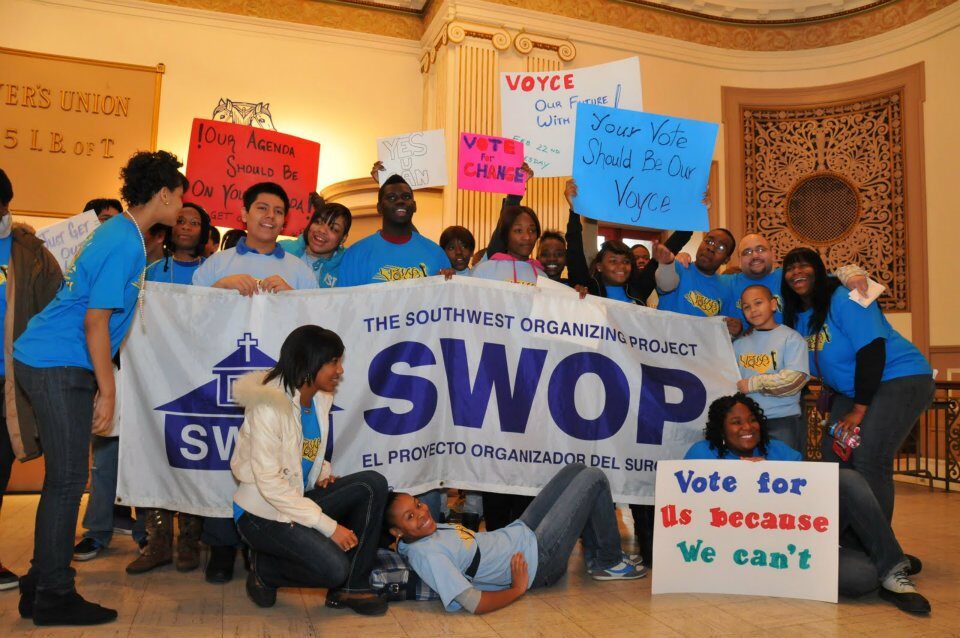
The outcomes of our efforts were not only institutional changes and legislative wins, but also outcomes that helped shape key community leaders. Carlil Pittman is now the Executive Director of Good Kids Mad City Englewood; Devonta Boston is the Executive Director of TGI Movement; Dantay Williams is an organizer and leader at SWOP; Quabeeny Daniels is the Employment Organizer at SWOP; Leslie Carrillo is a Parent Mentor Organizer at SWOP; and Jasmine Serrano is an organizer at SWOP. In a little more than a decade, these young leaders evolved from ambitious determined students to now leading the charge in building relational power across the Southwest Side of Chicago.
Today the issues may be a bit different, but the formula to build power and use it remains the same. After hundreds of relational meetings and a hard-fought four-year battle in Chicago, a coalition of community, labor, and faith-based organizations that includes SWOP is working to hold police accountable and create safe neighborhoods across Chicago — and has had a monumental win in passing the Empowering Communities for Public Safety ordinance. It is the strongest, most progressive system of community oversight of the police in the United States.
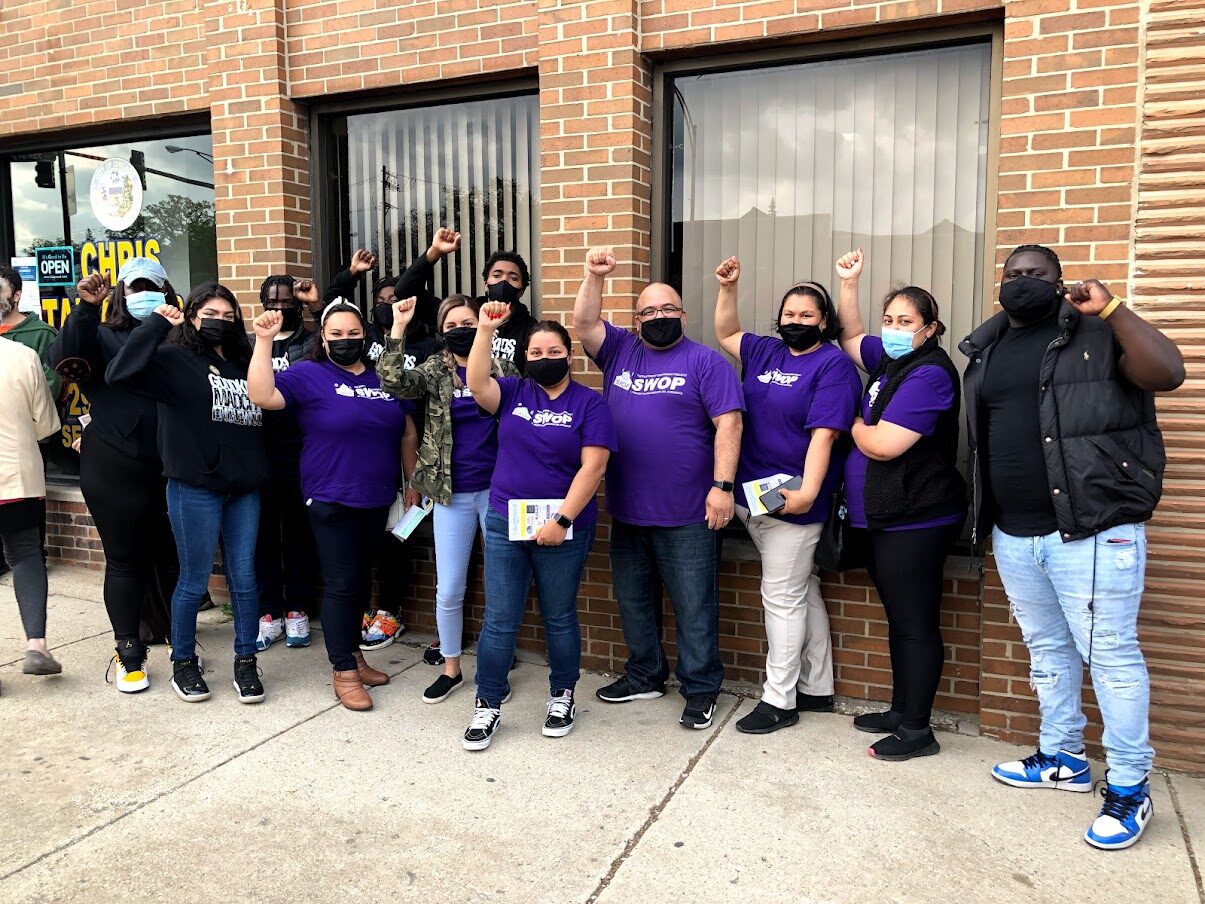
On another front, our team of organizers and leaders have been engaging young people and families with a goal of recruiting 100 young people per year into career pathway training programs that lead to employment in high in-demand careers that pay a livable wage. I could go on about the incredible work that I and countless leaders are involved in through SWOP, but you get the point: relationships build power. It is why being accepted as an Independent Sector Bridging Fellow means so much to me. It allows me to further connect with powerful like-minded leaders from different cities who learn from each other and are willing to move to action together.
In his booklet, The Power of Relational Action, Ed Chambers asked a very important question: “Can we learn how to mix our human spirit with that of others in Public Life?” Chambers goes on and states, “Relational meetings allow two people to expose each other to the deepest level of what they really care about and are willing to act upon. This offers them the opportunity to mix their spirits and there is nothing more powerful in the world than this.”
Mixing of spirits, organizing, relational meetings, bridging — call it what you may — is the heartbeat of our communities and at the center of building the type of power that brings about the change that we all desire and deserve.