
Supporting Girls Through Education and Love
A Conversation with Christen Brandt, co-founder of She’s the First
September 27, 2018 | Read Time: 8 minutes
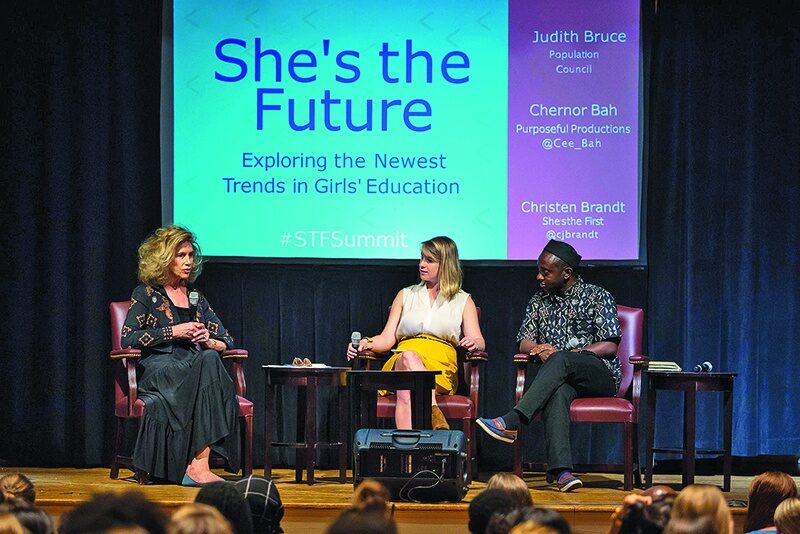
This is a part of our #LeadYoung series. In partnership with the International Youth Foundation’s YouthActionNet, we’re sharing leadership journeys and conversations with Global Laureate Fellowship Alumni.
What started in 2009 as a small media campaign to support educational opportunities for girls soon became the nonprofit organization known as She’s the First. Today, She’s the First fights gender inequality through education and supports girls around the world who will be the first in their families to finish high school. The initiative works in 21 countries, helping students become global citizens and leaders on issues that affect their lives.
When the campaign began, the co-founders Tammy Tibbetts and Christen Brandt were in college. Inspired by research showing that educating girls was a powerful lever to alleviate poverty, they felt they needed to do something that could bring young people together from around the world.
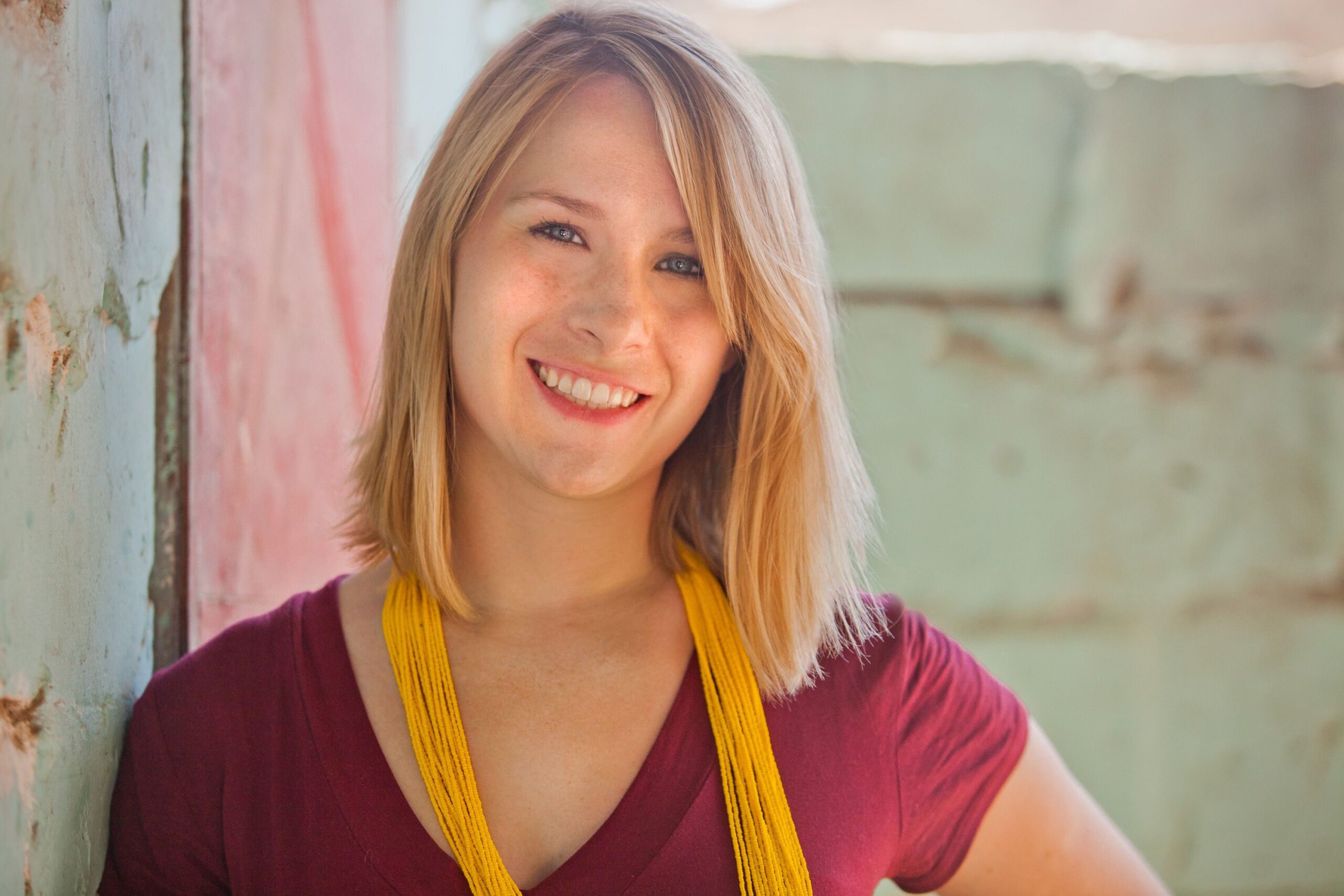
“She’s the First was born of the idea that if young people came together and used their networks, they could create an impact,” says Brandt, who now serves as chief program officer with She’s the First. “This was before crowdfunding. As part of a social-media generation, we realized how much power is in a network.”
In 2012, she and Tibbets left their full-time jobs to start the organization. She’s the First now has six full-time staff members, a $1.5 million budget, and 225 campus chapters around the world.
You said that you started She’s the First when you and Tammy were in college. What has your leadership journey been like as a young person?
Because we have campus chapters and work with students all over the world, it’s a constant cycle of young leaders coming into their own. One of the things that we learned early on is that we weren’t always going to have all the best ideas. Luckily for us, we have this network of incredible students who have their own ideas and solutions that often make more sense than ours do. We learned how to listen more carefully to understand students’ needs and their ideas for helping their communities.
Our global-awareness program is an example. It’s a centerpiece of our programing, through which young people learn about issues that affect women and girls around the world. It was started because students wanted a more in-depth understanding of the issues. They didn’t want to just raise money; they wanted to figure out what their own role was going to be.
I think a lot of my own leadership journey has been about learning to listen harder, better, and smarter.
What impact or success are you most proud of?
This past year we launched our first fellowship program, inspired in part by my own experience as a global fellow through the International Youth Foundation (IYF). We wanted to help students and the public at large understand that the kind of linear nature of charity that we’ve been using for a long time now, particularly in the U.S., isn’t really working. If it were, we wouldn’t still need to solve all of these problems.
We and the young people in our programs look at this work as more of a movement, and we want to show that everyone has a part to play. For example, we can have all of these tiny groups that are fundraising, but if they don’t really understand the issues or where to put that funding, they’re not going to be effective. On the other hand, if they raise all of this money for girls’ education but the girls they raise it for are not ready to pick up that mantle or tackle the barriers to school, that money is pretty useless. In the models we typically use for charity, those students would be looked at as “beneficiaries” instead of as partners. She’s the First is working on figuring out how we can help our students and the general public understand that we all have a role to play.
The fellowship is designed to pull together students from all over who have solutions to problems in their own communities that are affecting girls and women. This past year, we had students come together in Guatemala and work for a week on personal and organizational leadership strategies. Now they have one year to go home and implement their individual community projects. That’s something I’m proud of because I think it really embodies the philosophies of She’s the First and creates a more equal playing field for girls regardless of where they were born.
How have your personal experiences and identity influenced your approach as a young leader?
I think I’ve always been a feminist, and I have always believed really strongly in equality for women, and in fighting for the rights of women and girls. Over the last five years or so, I’ve learned a lot more about the nuances of what that means and the grey spaces where the right answers aren’t always clear, as well as how to be more intersectional and thoughtful in my approach.
And as I’ve had those realizations, I’ve had learning moments where it’s been really cool to have conversations with the rest of the team and for us as an organization to update our philosophies as we grow, change, and adapt and improve. I think that for all of us, as our thoughts change and we learn more, She’s the First grows too. That’s the benefit of having a nimble and flexible small team.
What are three skills you think every young leader or young social-change maker needs to learn to be successful?
One thing that allowed me to move to bigger heights as a leader was an openness and willingness to grow. I spent a lot of my college years of leadership often thinking that I had all of the answers. Learning that I didn’t was one of the biggest and most important, life-changing leadership experiences. It’s also been the best one. Openness to learn is such a good skill.
Flexibility is really important, and so is boldness. You can’t be afraid of your goals or the decisions you’re making. There are always personal, professional, and sometimes organizational risks involved; at some point you need to be open to risks and just follow things through. The number one thing I’ve learned is that there’s always new things to learn. You can always hit a new level of leadership and think, “Oh, now I have this figured that out,” but you never do and that keeps it interesting.
What kinds of support, training, and guidance have you had that’s helped you learn and grow as a leader? How did you find what you needed?
IYF’s Laureate Global Fellowship was an absolute game changer for me. I think prior to that, I definitely paid a lot of lip service to the fact that leadership is a skill, but thought it was one that I had. Going through a coaching experience helped me learn that leadership is something you always need to be working on.
I really love going to workshops of research organizations. When it comes to content knowledge, I love going to workshops of the Population Council. And the other thing I’ve found to be most useful is peer mentoring — being able to talk to other people who are in this space and doing similar jobs, and hearing about the things they’re working on, the struggles they’re having, and how they approach them. More often than not, it’s that sharing of life knowledge and experience that helps me to grow.
What is one mantra that gives you the confidence to lead?
I often get overwhelmed with the amount of things that are on my list. The thing that helps me the most is to look at one thing and say, “This is the thing I’m going to finish today,” and giving myself the grace to not worry about anything else until I have that one thing finished.
When I do that, I feel like everything is much more manageable. So maybe, “One thing at a time” is a better phrase. When I’m feeling stressed or like I can’t get it all done, taking a deep breath and focusing on one thing that needs to get done first is the way to get through it.
If there’s anything else you’d want to tell people about leadership, what is it?
The goal post is always moving, and that’s not a bad thing. I think the word “aspiring” can be a bit misleading because it indicates that there’s a goal you’re looking to reach or become, but all of the best leaders I know are reflective and always thinking about how to be better. I think that one of the biggest things to keep in mind is that leadership is a process. And if you want to get better at that process, help to make the people around you be the best that they can be. If you’re doing that, then you’re already on your way to continually becoming a good leader.
To learn more, visit LeaderStories.org