How 2 Tennis Pals Helped Save Detroit, and Other Untold Stories

By Drew Lindsay
Senior Editor, Special Projects
May 6, 2016 | Read Time: 3 minutes
A critical part of the story of how private foundations famously came to Detroit’s rescue in 2014 is rooted not in the beleaguered city but in a friendship born on the tennis courts of Washington, D.C., some 40 years earlier.
That’s one of the new insights into that controversial philanthropic deal offered by the new book Detroit Resurrected: To Bankruptcy and Back, by USA Today reporter Nathan Bomey.
Mr. Bomey delivers a rich account of the city’s more than 15 months in municipal bankruptcy, before the November 2014 judicial approval of its financial reorganization plan. Among his narrative threads: a detailed reconstruction of the “grand bargain” in which 10 foundations and the Detroit Institute of Arts put up nearly a half-billion dollars to shore up the city’s pension system and forestall a fire sale of the museum’s world-class collection.
The book’s account follows familiar lines, including the now-famous “hundred-million-dollar taxi ride,” when the heads of the Ford Foundation and the John S. and James L. Knight Foundation agreed to the deal. But Mr. Bomey brings to light key points missing from the original storyline:
- Though Ford’s Darren Walker and Knight’s Alberto Ibargüen were key players, Mr. Bomey points to the pivotal role played by Rip Rapson, head of the Kresge Foundation. In the 1970s, Mr. Rapson and U.S. District Judge Gerald Rosen, the bankruptcy court’s chief mediator, played tennis together when they both worked on Capitol Hill. Mr. Rosen, architect of the “grand bargain,” sought out his friend’s advice before courting other foundation heads.
- Though Mr. Walker had been leading Ford for only a few months, he assumed a leadership role when Mr. Rosen presented his plan to foundation chiefs. “Darren had been president of the Ford Foundation for about 37 minutes at that point,” the Mr. Ibargüen told Mr. Bomey.
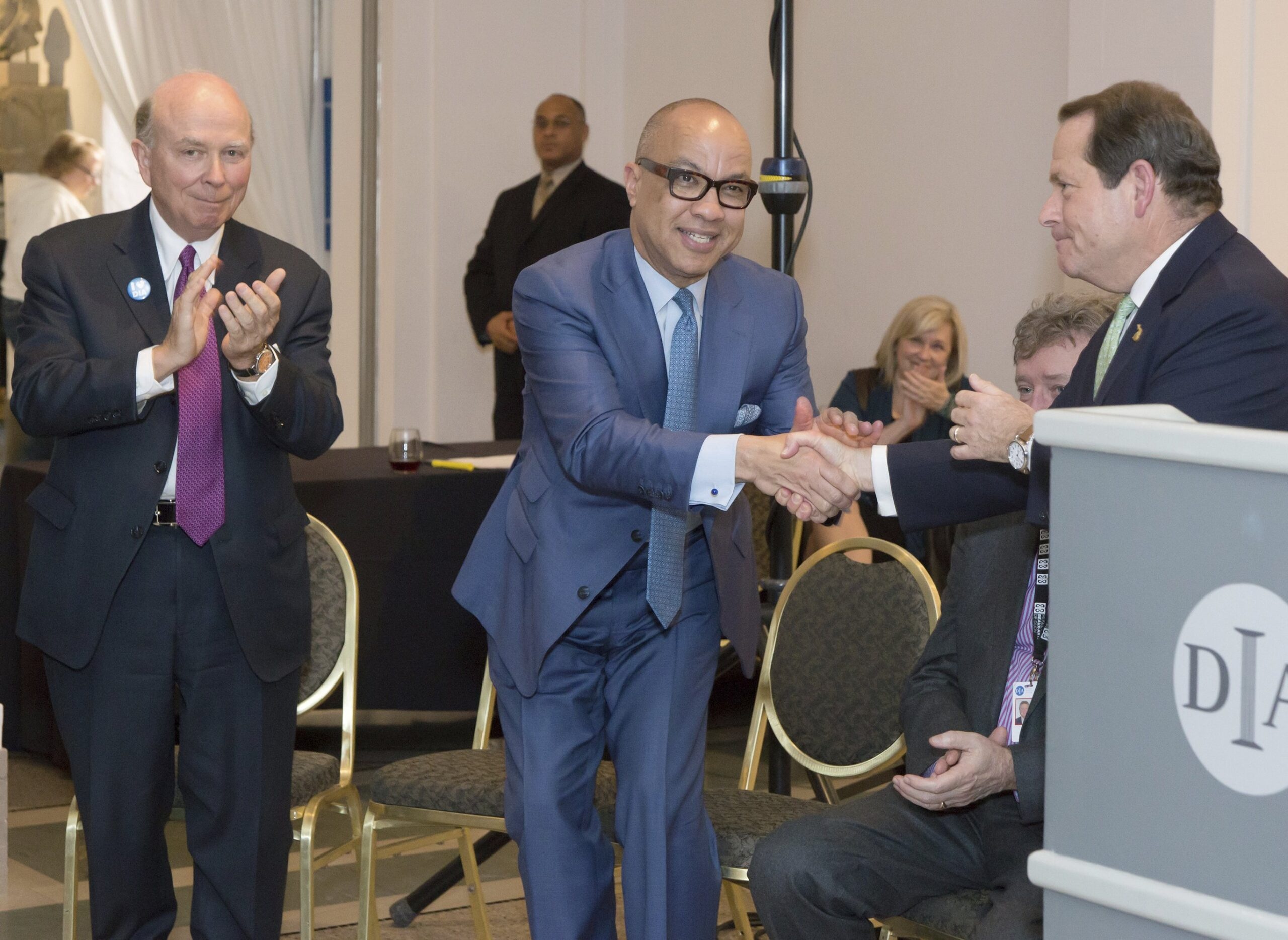
- The art museum initially agreed to add $50 million to the deal, but Gov. Rick Snyder pressured the museum to do more. The governor, a venture-fund executive and former accountant, studied the museum’s financials on his own and concluded it could do more. Eventually, he and museum chairman Gene Gargaro shook hands on an agreement that the museum would kick in $100 million — about the size of its endowment.
The Michigan-based Kresge eventually committed $100 million to the deal, just shy of Ford’s $125 million pledge, even though it had about a third of Ford’s $10 billion in assets. Mr. Rapson told Mr. Bomey: “We had spent the previous four or five years investing in the kind of civic scaffolding that we believed would be necessary for Detroit’s recovery over time. … The bankruptcy clearly had the potential to undo years and years of careful investment and buildout of the kinds of building blocks that a community needs to be successful.”
Part of Mr. Walker’s motivation, according to Mr. Bomey: Since taking the top job at Ford, he had set out to reconnect the foundation with Detroit, where it had been headquartered until its move to New York City in the 1950s. In a private meeting, Mr. Rosen told the Ford chief: “If you want to reconnect Ford with Detroit, you should do it in a meaningful way.
Mr. Gargaro then led a lightning-fast fundraising campaign that pulled in commitments from the three big automakers as well as major Detroit businesses such as Penske Corporation.