The Tech Philanthropists Who Love Art
With new arrivals from Silicon Valley threatening San Francisco’s culture, this couple mounts an unconventional rescue.

By Drew Lindsay
Senior Editor, Special Projects
July 31, 2018 | Read Time: 12 minutes
San Francisco
The painting would eventually sell for $450 million. Before then, Christie’s auction house dispatched it on a world tour to drum up interest among buyers.
“Salvator Mundi,” Leonardo da Vinci’s depiction of Christ, was exhibited in New York’s Rockefeller Center and other grand settings. At its last stop, however, it hung in a rehabbed warehouse here on Minnesota Street, a stub of road in a neighborhood crammed between Interstate 280 and empty shipyards. The Grateful Dead once built its stage sets in the nearly century-old building. More recently, it housed a family-owned furniture restorer.
That the venerable and prestigious Christie’s chose to showcase its prize in this humble venue was a coup for the Minnesota Street Project, an arts venture that doubles as philanthropy experiment. Its mission, writ large, is to become an arts hub for the city and save a piece of San Francisco’s soul from the invasion by Silicon Valley.
Droves of tech companies and their employees have moved here in recent years, driving up property and rental prices, displacing the middle class, and threatening the city’s famously eclectic personality. In shorthand caricature, the battle pits Tim Cook against Jimi Hendrix, Google hangouts against Mission District music clubs.
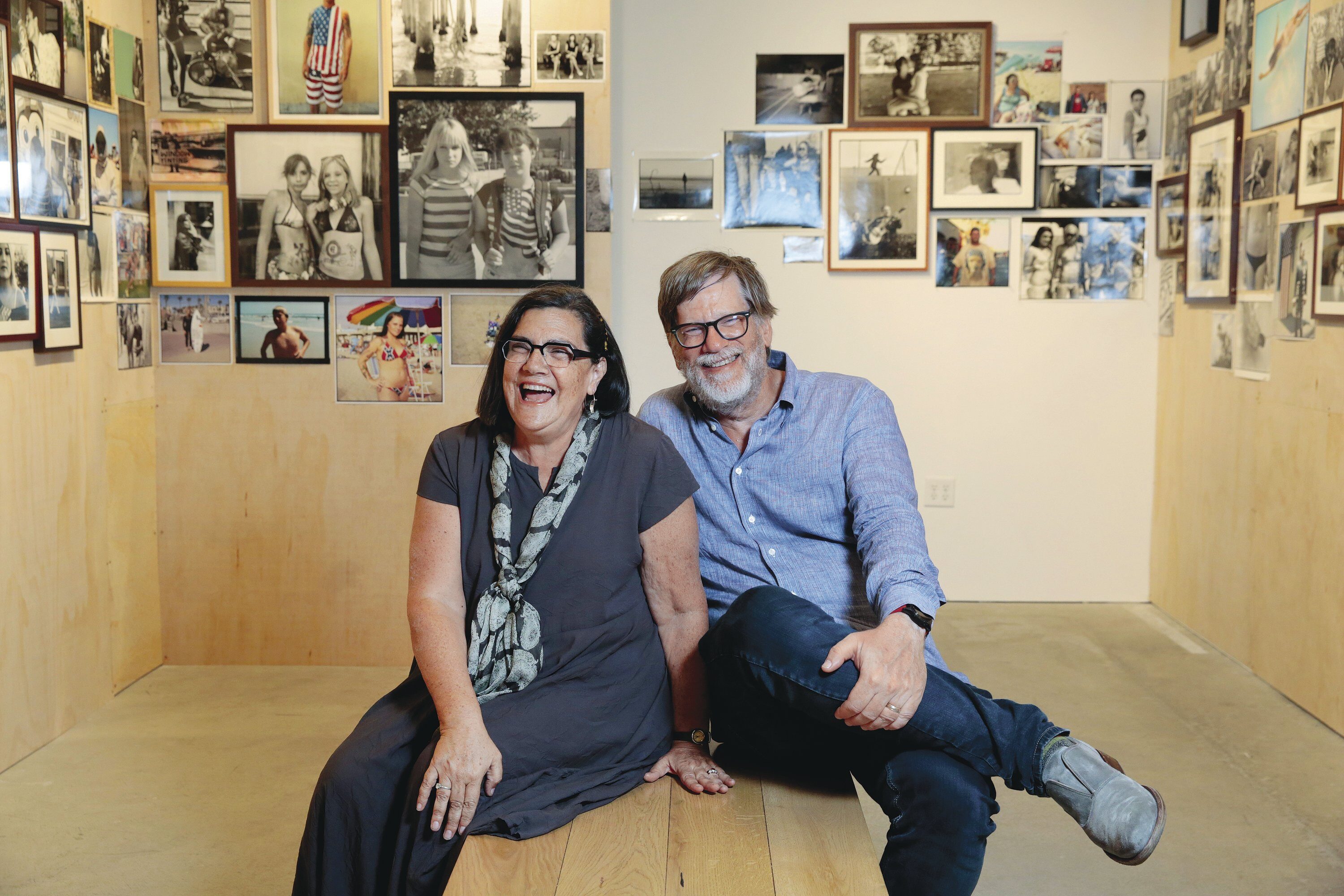
Yet a couple of tech philanthropists have emerged as arts champions. Andy Rappaport, a former Silicon Valley venture capitalist, and his wife, Deborah, a veteran nonprofit board leader, opened Minnesota Street in 2016, having reconfigured three industrial buildings as spaces where artists, art galleries, and arts-related nonprofits can escape high rents. The couple’s investment — tens of millions so far, they say — is not typical arts patronage. They run Minnesota Street as a for-profit business.
This is the Rappaports’ latest unorthodox enterprise in the name of doing good. Once big-money political donors, they now bankroll whatever they think will make change happen, dipping into a family foundation, their family venture-capital fund, and their personal checkbooks.
“We want to do the things nobody else is doing,” Andy says. “What we bring to the table is our willingness to do crazy stuff. Our risk tolerance is very, very high.”
Embarrassment of Riches
The Rappaports say they accidentally came into the wealth that allows them to flex such philanthropic muscle. In the mid-1990s, Andy, a Princeton dropout and self-taught engineer, was earning plenty at a Boston tech-consulting firm even before his move to Silicon Valley venture capital. Yet a chance personal investment in a tech company’s initial public offering landed him an eye-popping gain in a single day.
The Rappaports say they weren’t comfortable with the windfall, nor the one that followed in 2001 when President George W. Bush pushed through Congress a measure that slashed taxes. The two grew up in the ’60s and protested the Vietnam War. Deborah’s father was a medic for Martin Luther King’s March on Washington; she was editor of her high school’s alternative newspaper. Andy, as a high-schooler, volunteered for the New York Civil Liberties Union.
“I occasionally call ourselves the world’s richest socialists,” Deborah says. After the Bush tax cuts, she told Andy, “I don’t want that money. I don’t want it ever to touch our checking account or our savings.”
Up to that time, the two focused their philanthropy on charitable giving. But in the years before President George W. Bush’s re-election in 2004, they threw themselves into politics, joining such liberal philanthropists as George Soros and Peter Lewis to try to build a grass-roots progressive movement. The couple gave $4.2 million to political-related organizations — more than all but six other Democratic donors in the election cycle, according to the Center for Responsive Politics.
Like Andy in his venture-capital work, the Rappaports together sought out small start-ups to support, most of them efforts to involve young people and minorities in politics. They also helped relaunch Rock the Vote, which was struggling after a high-profile run in the 1990s.
Party leaders, who sought the Rappaports’ cash for their projects, argued that chasing the youth vote was a fool’s errand. “You are ruining the Democratic Party,” Deborah recalls one elder statesman saying. “And I said, ‘Well, thank God somebody is.’ It was the proudest moment of my life.”
In the Democratic presidential primary, the Rappaports backed Howard Dean, whose campaign pioneered many digitally driven voter-engagement strategies commonplace today. After Dean lost, they helped many of his aides start businesses to put these technology strategies to use for progressive causes and candidates. The couple was also among the initial investors in the 2005 launch of Huffington Post.
Such investments, the Rappaports say, changed their definition of philanthropy. After years of supporting nonprofits and political work, they decided they would also pursue change through for-profit businesses — businesses that would eventually include the Minnesota Street Project.
A Hub for the Arts
One day this spring, while Mark Zuckerberg was across the country preparing to appear before Congress and explain Facebook’s latest misstep, the Rappaports showed off Minnesota Street to a visitor.
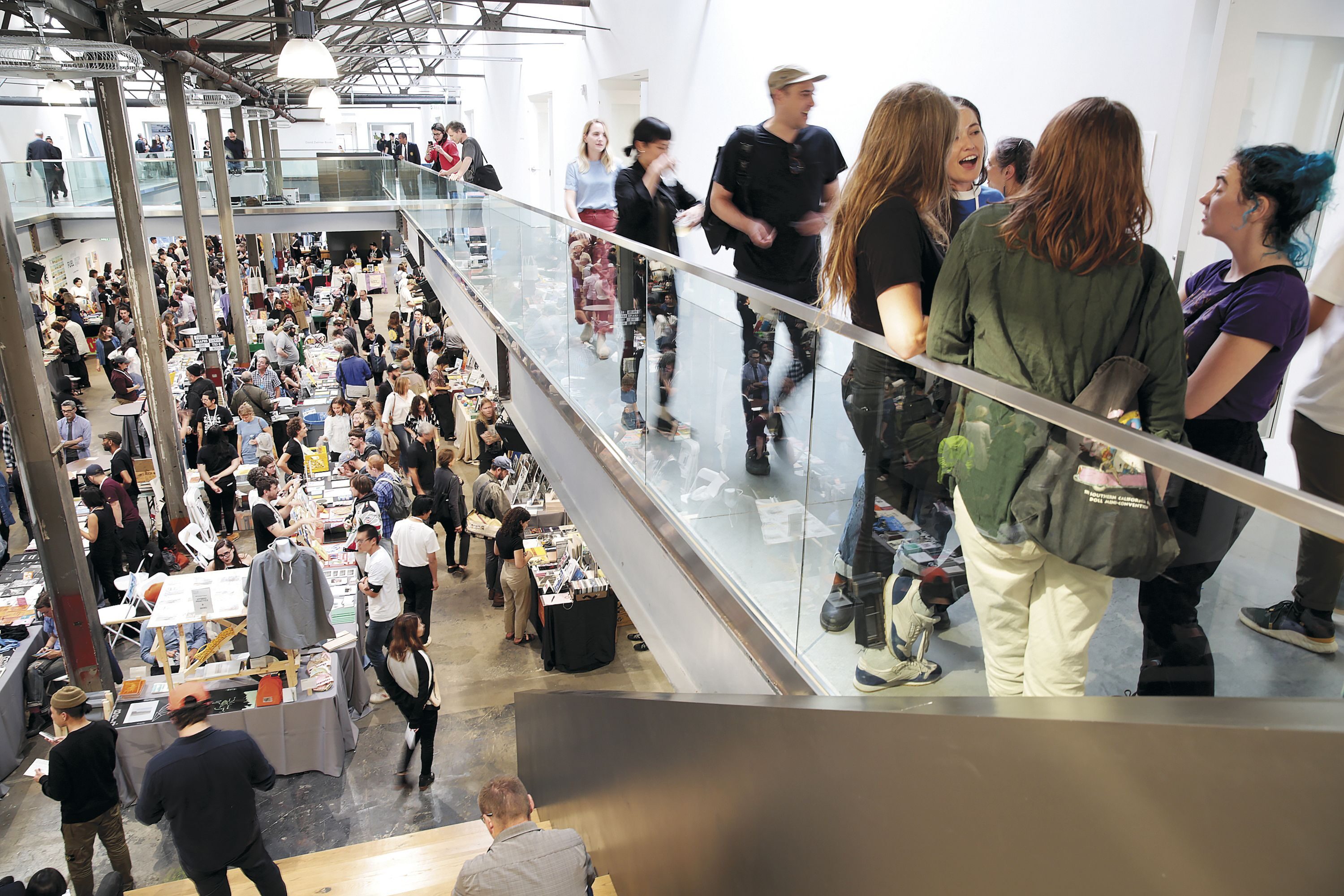
Their flagship building, where the Grateful Dead’s crew once worked, houses 10 permanent galleries for modern art. The entrance — a large roll-up garage door — opens to a two-story atrium that features steel columns, wood-plank ceilings, and other industrial features.
This open space, which is designed to function as a quasi-public square, hosts lectures, demonstrations, workshops, and other programming. An arts book fair draws thousands from around the city. Local colleges and art schools host events there.
“It’s an absolute winner in terms of providing a focus for people who care about contemporary art, and I quite love going there,” says Charles Desmarais, art critic for the San Francisco Chronicle and former president of the San Francisco Art Institute. Museums might offer similar programming, he notes, but the Minnesota Street vibe can be less intimidating for newcomers to art. “It just feels like a fun place to be.”
As an arts hub, Minnesota Street aims to introduce San Franciscans to a passion the Rappaports share. As children, each had a family member who led them by the hand through museums. When they were dating, they had little money and went to art galleries because they were free.
Today, Deborah is a jewelry designer; Andy, who once tried to make it in a rock band, plays a host of instruments, including piano, guitar, mandolin, and organ. Their house — a Queen Anne with a view of the Golden Gate Bridge — is stocked with more than 100 pieces of art, much of it modern works with a social theme.
The Rappaports remain involved in politics, and their foundation recently made grants to mobilize young people against gun violence and to fight the Trump administration’s border policy separating families. But Minnesota Street is now the couple’s dominant philanthropy, reflecting a priority on the arts that is not common among tech philanthropists.
Deborah, who has served on the boards of the San Jose Museum of Art and other arts institutions, says nonprofits too often try to shame tech titans into giving. “Nobody ever did anything because they were insulted into doing it,” she says.

The Rappaports, who are both in their early 60s, say Facebook co-founder Mark Zuckerberg and other young tech philanthropists are products of a society and education system hyperfocused on science and technology. Deborah points out that Zuckerberg and his physician wife, Priscilla Chan, donated $75 million in 2015 to San Francisco General Hospital. “Health is important to them. Nobody has ever told them that art should be an important part of their life.”
Andy notes that the dominant tech companies before the arrival of the internet — businesses like Intel and Hewlett Packard — invested in local philanthropy because they started as local or regional companies and drew their work forces from surrounding communities. Today, thanks to technology advances and the growth of developing-world markets, tech businesses launch as global enterprises and aim to dominate worldwide.
Such large ambitions carry over to the philanthropy of the company leaders. “There’s a little bit of a denigration of local philanthropy,” Andy says. “These CEOs say, ‘Why would I bother with local philanthropy?’ ”
Nonprofit or For-Profit?
In response to an exodus of art from San Francisco, the Rappaports considered creating a nonprofit or giving to an established organization. But neither option promised the speed and flexibility they believed was needed. Nonprofits, as the fiduciaries of tax-deductible donations, are rightly obligated to go slow and collect input from all sides, they say. Andy foresaw issues with a nonprofit that supported commercial art dealers.
“I was trying to imagine the IRS audit where I would explain, ‘Well, yeah, our charitable purpose is to give stuff away to for-profit businesses.’ ”
Eventually, they developed a business plan with two tiers of services. Galleries, artists, and nonprofits rent at discounts — as much as two-thirds off market rates, Andy says. Recognizing economies of scale, the Rappaports designed the complex with shared spaces and services. Galleries, for instance, have a common packing and shipping room. The artists have a communal wood shop, kiln, and digital-printing lab.
To offset the discounted rents and costs of shared facilities, Minnesota Street has created several profit-generating lines of business. It rents the atrium and other spaces for events and charges market rates to Christie’s and others who lease temporary exhibition spaces. The restaurant, which is just off the atrium, draws from the neighborhood. The complex also includes a sophisticated art-storage facility leased by museums and art collectors.
‘We Needed a Savior’
Not long after the Rappaports began thinking about creating the Minnesota Street Project, a 2015 survey by the San Francisco Arts Commission found that market forces were pushing 70 percent of artists out of their workplace, home, or both. Galleries were shuttering, and some of the city’s major arts institutions were suffering financially.
“We needed a savior,” says Catharine Clark, who’s owned a major gallery of contemporary art in the city since 1991.
Among those who benefited are Rena Bransten and her daughter, Trish, owners of a highly respected 44-year-old gallery. Rising rents had already forced them to downsize and move from a prime downtown spot. They considered winding down the business altogether. “I think we’d be out of business if we didn’t have this space,” Trish says.
Desmarais, the art critic, says some art dealers balk at going to Minnesota Street, saying the rents are still too high. Some believe they fare better as stand-alone operations.
Of those that have come, many are small or midtier operations. They showcase a variety of artists, but many, like the Branstens, feature emerging and mid-career artists. The programming is often diverse, the work unorthodox.
If businesses like hers wither away, Trish contends, San Francisco will lose important cultural voices. The Minnesota Street Project, she says, forces the city to reckon with that loss, she says. Ultimately, urban America has to decide whether it values a strong and diverse arts scene. “What does the visual-arts culture mean to a city, and how do we keep that going? How does any city keep it going?”
The Cops and da Vinci
The Rappaports say they opened Minnesota Street as a demonstration project. They hope to develop an “instruction manual” for others, Andy says. Officials from other cities have inquired about the model, including a London vice mayor who toured the complex.
Last year, some 100,000 visitors stepped through the roll-up door. The da Vinci exhibition attracted roughly 4,000 people, with lines sometimes stretching around the block. One day, firefighters and police officers drifted in. Deborah later saw a photograph of these men and women in blue crowded around the 500-year-old painting. That, she says, was proof of Minnesota Street Project’s early success.
“It made my heart sing,” she says.
Correction: A previous version of this article incorrectly identified where Andy Rappaport was working at the time he invested in an initial public offering. He was at the Boston tech-consulting firm Technology Research Group, not August Capital in Silicon Valley.