How Puerto Rico’s Nonprofits Aim to Shape the Island’s Recovery
Nearly a year after Hurricane Maria, local groups and philanthropy aim to seize opportunities born of the tragedy.

By Drew Lindsay
Senior Editor, Special Projects
September 10, 2018 | Read Time: 12 minutes
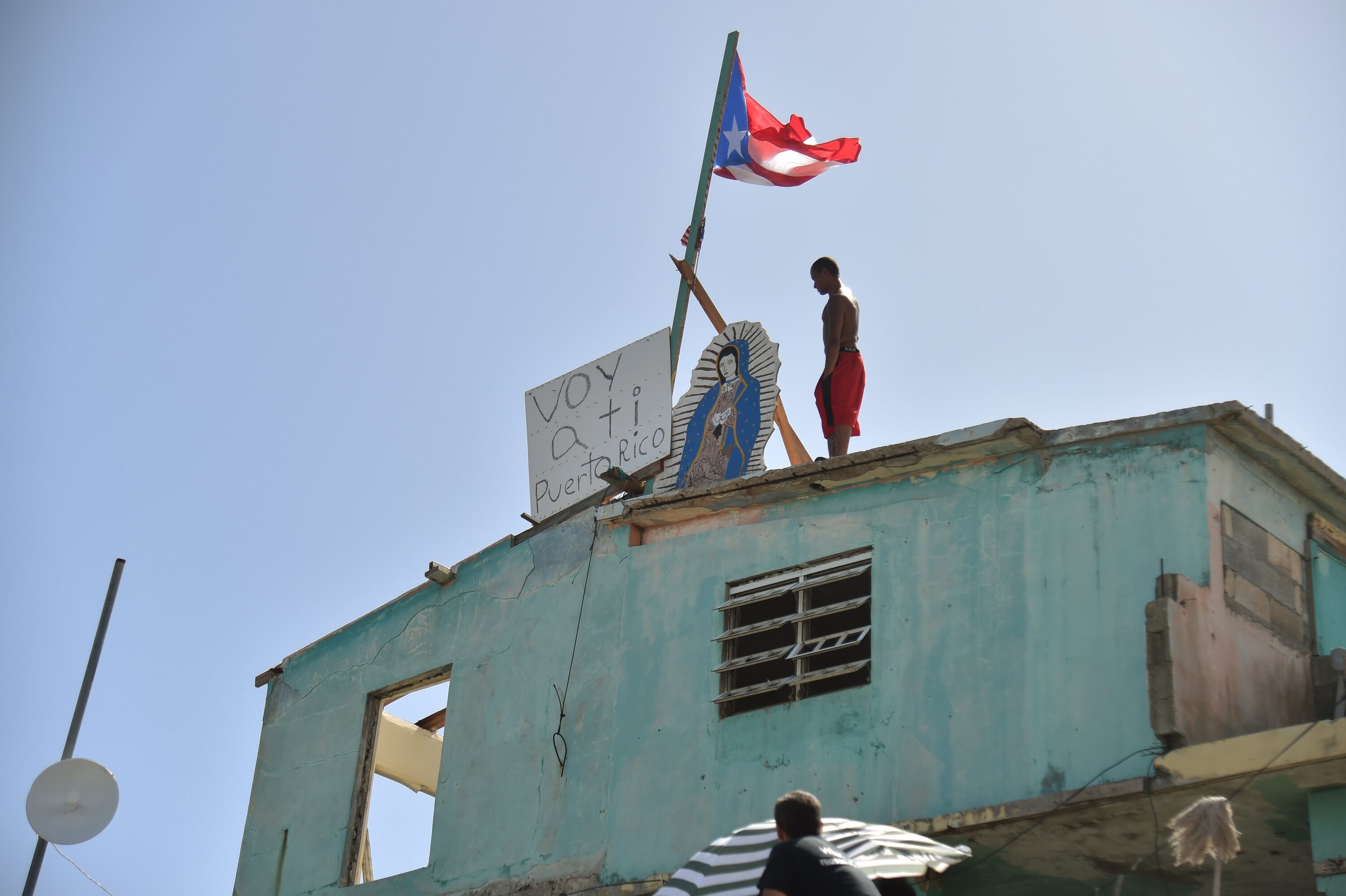
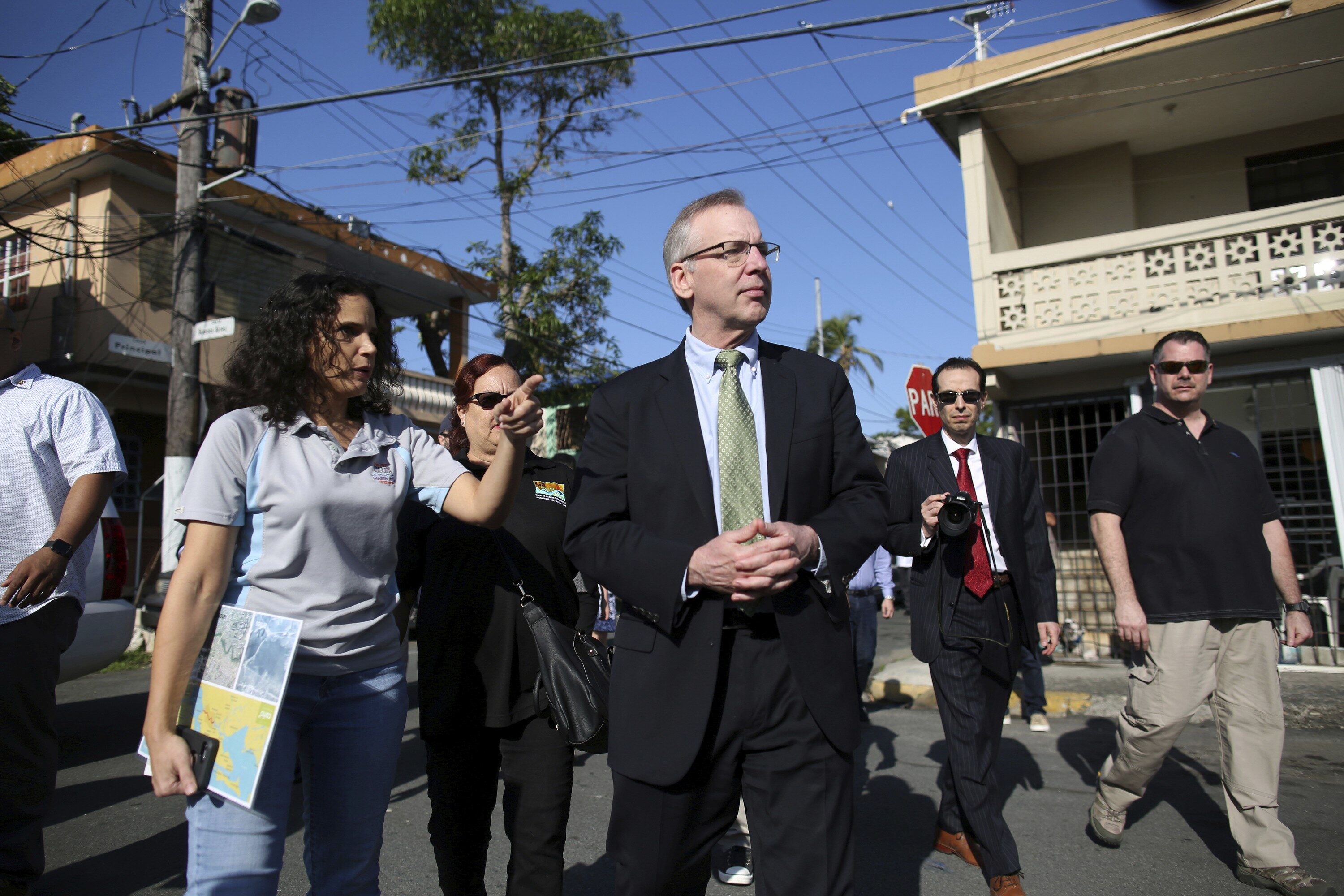
In the months after Hurricane Maria ripped across Puerto Rico last September, eight particularly hard-hit neighborhoods in the capital city of San Juan welcomed a steady stream of visitors. Politicians, reporters, aid workers, and foundation officials from the mainland United States found their way to these barrios clustered along the Caño Martín Peña, a nearly four-mile-long tidal channel.
There was plenty to see. The storm, along with Hurricane Irma days before, had destroyed about 100 homes and left 1,000 without roofs. Flooding from the channel — black, sewage-filled water — drove many of the 25,000 residents out of their homes. An infestation of rats followed.
Those touring the devastation were also introduced to disasters decades in the making. On an island where almost half of residents live in poverty, the Caño Martín neighborhoods are some of the poorest. Many of its families live in makeshift homes with metal roofs. Even before the hurricanes, the channel, which is choked with sediment and illegally dumped trash, overflowed during almost every rain.
To address the problems, the neighborhoods had worked with several local grass-roots organizations to develop a plan to dredge the canal and rebuild housing and infrastructure. The plan was hailed as a testament to the community’s resilience and drive — one of the groups won a United Nations award — but it languished, with little real chance of funding. Now, however, the post-hurricane parade of visitors, along with new interest from philanthropy, has raised hopes.
“We finally have a chance to make sure this is completed,” says Lyvia Rodríguez Del Valle, executive director of the Enlace Project, one of the groups.
‘Build Back Better’
Across Puerto Rico, nonprofit leaders see a rainbow of hope in the aftermath of the second-most devastating storm in U.S. history — and one whose death toll, a source of controversy in the past year, has now reached nearly 3,000, well over the 1,883 people who died after Hurricane Katrina hit the Gulf Coast in 2005. As happened after Katrina, “build back better” has become a rallying cry for recovery. Some nonprofits aim to introduce solar energy and liberate parts of the island from the antiquated and expensive national power grid. A coalition of organizations has emerged to help low-income communities fight to get funding for recovery efforts. Other groups aim to restructure the island’s economy to alleviate its longstanding poverty.
As they dream of the possibilities of recovery, nonprofits are reaching out to their counterparts in Louisiana and the Gulf Coast to learn what they did after Katrina. “There’s a blueprint now for how you recover and what role philanthropy can play,” says Flozell Daniels Jr., head of the Foundation for Louisiana, which was created after Katrina and which has been advising organizations in Puerto Rico. “It is a terrible disaster that presents an unfortunate opportunity to disrupt the inequity and oppression that have marked the island for generations.”
Earlier this summer, a commission of Puerto Rican civic, community, and business leaders released a report recommending how to use private and public recovery funds. It addresses public schools, the electrical grid, housing, economic development, health, and more.
Several mainland U.S. foundations — including Ford, Open Society, and Rockefeller — funded and guided the plan’s development, hoping to help Puerto Ricans build a Katrina-like recovery strategy. By laying out a marker for what the community needs and wants, such work can make the island stronger and more resilient in every way, says Xavier de Souza Briggs, an executive with the Ford Foundation. Without such a vision, however, he worries there will be “a very strong inertia to do anything but simply rebuild what was there before.”
Worse, perhaps, is the possibility that the island could be refashioned to help outside monied interests, not its people. Watchdogs on the island warn that “disaster capitalists” — a term author and activist Naomi Klein coined — are circling, hoping to scoop up devastated property that could be turned into golf courses and resorts. They also raise alarms about multinational private contractors skilled at winning lucrative government deals for rebuilding efforts.
“They come in and get this hefty contract, build some houses, bring in their people to do the work, and then leave with all of the money in their pockets,” says Janice Petrovich, executive director of Red de Fundaciones Puerto Rico (Network of Puerto Rico Foundations). Recovery money must instead go to create local jobs and help train residents, she adds.
Trusted Nonprofits
In the first days after the storm, local groups proved instrumental to answering emergencies., says Beatriz Polhamus, head of the philanthropic arm of Banco Popular, the island’s largest bank network. Many took charge of relief efforts as local and federal government agencies scrambled.
“We arrived with containers of food and water, and they had all the logistics figured out,” Polhamus says. “This was work they were not accustomed to doing, but they know their communities. People know and trust them.”
A recent survey suggests Puerto Ricans rate nonprofits’ post-hurricane work highly. Nearly 60 percent gave local groups an A or B grade; more than 80 percent, meanwhile, rated the island’s government response at C or worse.
Now, as relief work shifts to recovery, some philanthropic efforts aim to strengthen those nonprofits so they can influence how funds are spent and help residents obtain government money. Many residents, for instance, don’t have the formal land-ownership titles required to file for federal emergency relief.
The Red de Fundaciones Puerto Rico, which includes Banco Popular, has earmarked much of the $6.5 million it has raised for hurricane-related work to improve nonprofit leadership, advocacy, data analysis, and operations. “We have a strong sector in terms of program development and direct services,” says Polhamus. “What they need is more hands, and you need resources to pay for those hands.”
Foundations are also moving to bolster legal-aid groups and networks of lawyers who can mobilize residents to push for funding. These advocates are also helping residents prepare plans that can shape how local and federal government agencies distribute monies.
“We want to make sure folks are empowered to really influence the decision-making that’s going to impact the island for the long term,” says Karina Claudio Betancourt of the Open Society Foundations.
“We Hit Rock Bottom”
Individually, some groups are refashioning themselves to meet the demands of the crisis and capture some of the available funding opportunities. “We hit rock bottom,” Polhumas says. “We have been forced to rethink everything.”
Before the hurricane, human-rights attorney Ariadna Godreau-Aubert ran a small group that provided online legal education. Now she’s building a network of lawyers and legal-aid groups focused on post-hurricane funding and policy issues. The group has more than 600 members.
“Puerto Rico has a long tradition of civic participation and activism,” she says. The goal now, she says, is to build powerful coalitions that can endure for the long years of recovery.
San Juan’s Museo de Arte Contempráneo deepened its connection to low-income communities in the hurricane’s aftermath, says director Marianne Ramírez-Aponte. Employees and volunteers distributed food, water, medicine, and tarps, and the museum’s courtyard doubled as a community dining hall. With schools closed, staff organized artists and educators to run daylong classes.
Today, the museum is expanding arts, education, and social-justice programs it began several years ago with community-based artist residencies in low-income neighborhoods. It’s also stepping up political and social activism related to homelessness, the environment, and other issues.
Before the hurricane, some staff and board members weren’t persuaded that the museum had a role in community and political work. The impact of the museum’s post-Maria work erased those doubts, Ramírez-Aponte says. “We have made it very clear where we stand.”
Perhaps the best example of a nonprofit-led “build back better” effort comes from the mountain area of Toro Negro. José Figueroa, a cattle rancher and tree farmer, leads Comunidad Toro Negro, a 15-year-old group that does water, recreation, and education projects in the 100-year old community of some 60 residents.
The area has long suffered from frequent power outages and high energy costs; much of Puerto Rico’s electricity comes from fossil fuels shipped to power plants concentrated on the southern part of the island and connected to residents through an aging network of transmission lines. When the hurricanes caused widespread damage to that national grid, the town was left without power for eight months. “We realized that we are too vulnerable to energy loss,” said Figueroa in an email. “So, our community board established this vulnerability as a priority.”
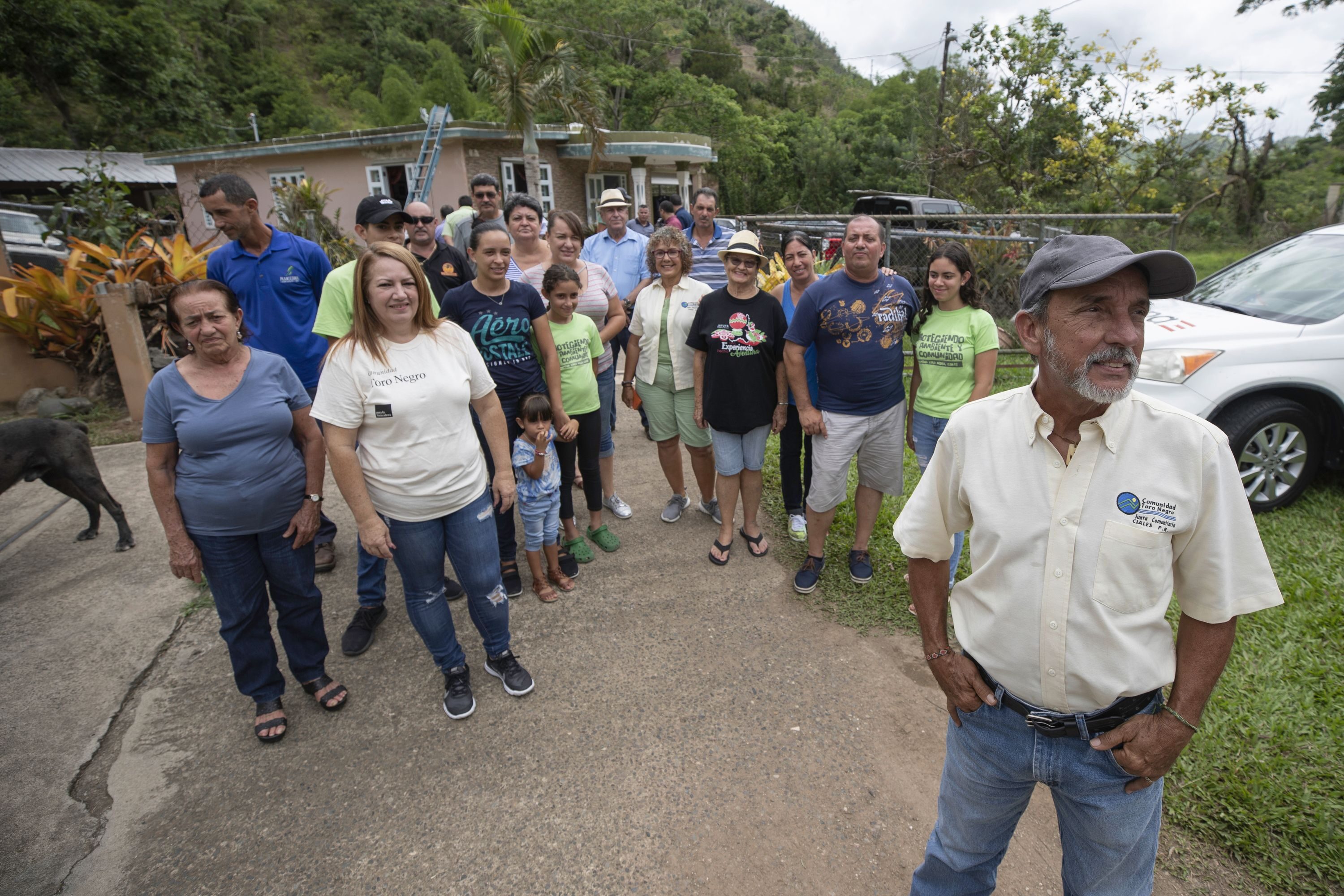
The group approached the Puerto Rico Community Foundation, which is helping build solar-energy microgrids to power communities on the island. With nearly $250,000 given to the foundation from its counterpart in San Francisco, along with help from a solar nonprofit, installation of solar panels and batteries is nearly complete for one part of the area. Comunidad Toro Negro will soon become what is perhaps Puerto Rico’s first community-based group to own and administer a solar-energy network. Figueroa estimates Toro Negro will save as much as 40 percent in electricity costs.
Fighting “Disaster Capitalists”
Is it realistic to think Puerto Rico’s nonprofits can battle well-financed “disaster capitalists” and influence government bureaucracies? Even before the hurricane, the island’s charity sector had been weakened by a decade’s worth of austerity measures brought on by the recession and compounded by the government’s filing for bankruptcy last year. The collective annual payroll for the island’s 11,000 charity groups topped just $2 billion in 2014; in San Diego, meanwhile, which has a similar number of charities, pay totals some $5.6 billion annually.
Another big question is whether philanthropy will invest in Puerto Rico for the long run. Some on the island believe the storm has brought problems into such stark relief that sustained help will follow. “Puerto Rico has been neglected for so many years that people have a right to be pessimistic and cynical,” says Amanda Rivera Flores, head of the Instituto del Desarrollo de la Juventud (Youth Development Institute). “But we are getting more attention than we were; that’s making a difference.”
In the Caño Martín neighborhoods, the attention brought by the hurricane has increased philanthropic support. Previously, many foundations declined to give because they considered the island an international entity, Rodríguez-Del Valle says. “A lot of large foundations told us, point blank: ‘We cannot fund in Puerto Rico because of our charter requirements.’ After the hurricane, some of them have been revisiting their rules.”
Still, even as philanthropy has stepped up, the early efforts by Caño Martín to win federal recovery funding for its redevelopment plan haven’t been successful. One recent bid was turned down on a technicality, says Rodríguez-Del Valle, her voice tight with frustration.
“We have been doing important work making sure decision-makers are informed. Perhaps, instead of looking for ways to justify why it can’t be done, they would find ways to make it feasible.”