Alarmed by Trend Among the Young to Think Guns Mean Safety, Nonprofit Turns to TikTok Stars

By Drew Lindsay
Senior Editor, Special Projects
January 24, 2022 | Read Time: 7 minutes
In the late 1990s and early 2000s, Nina Vinik, a University of Chicago-trained lawyer, worked as a plaintiff’s attorney in civil-rights cases related to housing matters in the city. Most of her clients lived in low-income neighborhoods, and Vinik quickly learned that violence — in the neighborhood, on their block, next door — was ever-present in their lives.
“At some point, I realized that there was only so much good I could do to solve a client’s housing problem if they were afraid to send their kids down the block to the park to play or if they felt they couldn’t sit out on the steps of their home,” she says.
Vinik eventually left civil-rights work and started what has become a 20-year career working to reduce gun violence. She mostly focused on policy, research, and advocacy at Chicago’s Joyce Foundation. But now, as gun-fueled homicide rates reach new highs in Chicago and many other cities, she’s trying a new tack.
Recently, Vinik launched Project Unloaded, a nonprofit that aims to address a little-noticed contributor to gun violence — young Americans’ embrace of gun ownership as protection.
In her work at Joyce, Vinik began to see unsettling numbers in surveys of teenagers and young adults. Three in four believe having a gun at home makes them safer — even though firearms are the leading cause of death for children and teens in the United States.
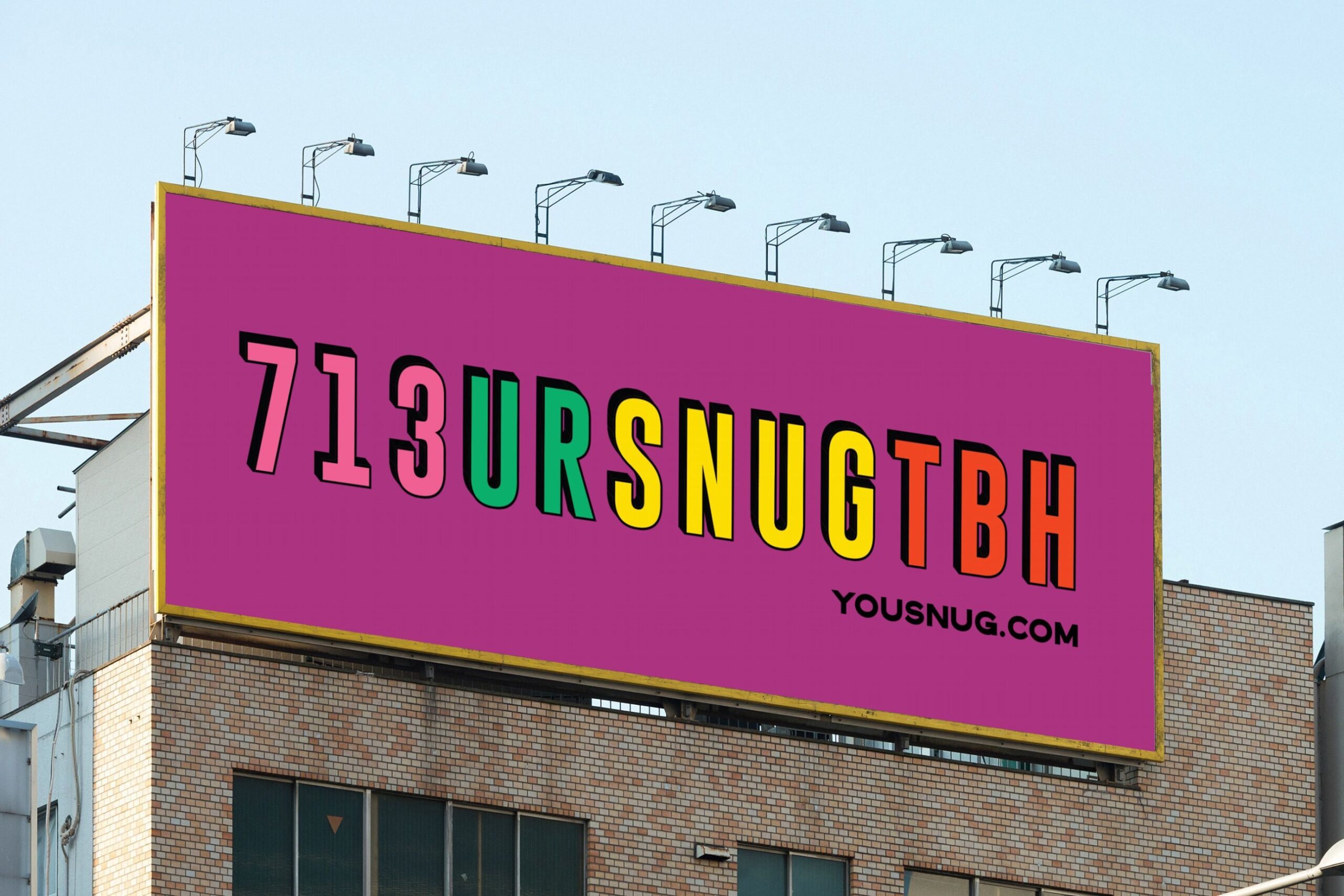
Project Unloaded has begun the first of what Vinik says will be many media campaigns to change the narrative. SNUG — Safer Not Using Guns — debuted last week in Houston, Milwaukee, and surrounding southeast Wisconsin, reaching into physical and digital spaces that teens and young adults frequent. In Houston, there are highway billboards and mobile electronic boards near places like schools, parks, and malls. Social-media influencers featured in both areas include Pete Herron, who has nearly 300,000 TikTok followers, and Heather Mari, a dancer, model, and comedian.
“Did you know if there’s a gun in the house, a homicide is three times more likely to occur?” Mari says in a video. “That’s wack, fam” (slang for “That stinks, you guys”).
Vinik talked to the Chronicle about how a lawyer and policy pro came to start a nonprofit hoping to become a trusted voice in Generation Z’s cultural zeitgeist.
How did you come to see a need for campaigns such as SNUG?
What I learned as a lawyer is to follow the evidence. At Joyce, I was noticing from the data some pretty powerful headwinds — a really significant shift over time in the public’s understanding of the risks of gun ownership.
Twenty years ago, in 2000, about two-thirds of Americans said that bringing a gun into the home would make it less safe rather than more safe. About a third said a gun made the home more safe. Today, that has completely flipped. Two-thirds or more say, “If I have a gun in my home, it’s going to make me more safe.” And the steepest curve in that shift is among younger people.
What led to that change in opinion, particularly among young people?
We don’t fully know. But I will say that pro-gun interests have been very consistent with messages like: “We need guns to be safe.” “We need guns for protection.” “Nothing stops a bad guy with a gun like a good guy with a gun.” Their message has been very consistent and very disciplined. And despite all of the research about the risks associated with guns, there just hasn’t been a similar consistent effort to communicate about the risks of gun ownership.
We do know that these attitudes and beliefs tend to form by early adulthood. So that’s really the critical time to get this information into the hands of people.
What is the evidence that guns make homes unsafe?
We’ve collected a lot of this research and evidence — data from the CDC, research from university scholars, and work by organizations like the Children’s Defense Fund. A gun in the home, for example, increases the chances that a domestic-violence incident will result in a homicide for a victim of domestic violence. A gun in the home also increases the risk of suicide to not just the gun owner but to all members of the household.
Why launch in Houston and southeastern Wisconsin?
There are big, diverse populations of young people in those regions with a diversity of views about guns. We think these communities are really representative of large swaths of the country. We’re going to start there, learn, and then expand to other parts of the country as we grow and roll out the campaign over the course of the year.
Describe the campaign in these first few days.
We want to generate curiosity and attention. We’re doing that through very creative, eye-catching installations on the ground in Houston. We won’t be on the ground in Wisconsin; we will be online there and in Houston with influencers and social-media posts and ads — all designed to bring SNUG to life for our young audience members.
How do you identify the influencers who can get the message across?
We’re working with a firm that helps with outreach to influencers. And they’ve done a really terrific job identifying a set of influencers. They’re all committed to SNUG and to the mission here.

- What to Do When the President Calls You ‘Corrupt’
- Why the Fight for DEI Should Take the Long View — Back to the Founding Fathers
- Billionaire Tom Golisano Pledges $253 Million and Creates a National Alliance of Children’s Hospitals
- Foundations Continue to Diversify Staff, Increase Women CEO Pay
- Donors Gave $125 Million for Foreign Aid After U.S. Cuts
- A Los Angeles Couple’s No-Nonsense Charity Helps the Working Poor
- MacKenzie Scott Gifts Continue Following Amazon Stock Sale
- A Third of U.S. Nonprofits That Serve Communities Lost Government Funding in Early 2025
- Facing Nonprofit Fury, GoFundMe Reverses Course
- Who Decides? Foundation Staff Look to Outsiders to Steer Grants
Homicide rates are breaking records in cities across the country, including Chicago. Why?
The pandemic has really unearthed and exacerbated the existing inequities in Chicago and other cities like it. And the disproportionate burden from the pandemic is very similar to the disproportionate burden from gun violence — the most affected are low-income communities without a lot of resources and which are also heavily populated by people of color.
The pandemic took what safety net there was out from under those communities. That dynamic has really enabled gun violence to thrive in some of those neighborhoods. At the same time, the breakdown in trust between the police and communities affects the same communities that are struggling with high rates of gun violence.
The federal government has begun investing in gun-violence efforts and community prevention efforts. What can we expect from those?
Those are really important steps in the right direction. I think that the Biden administration has started to appreciate the need for federal investment in those solutions.
We really need to attack this problem from all angles. And until we do that in a robust way, it’s going to be hard to see really significant progress.
This interview has been edited for brevity and clarity.