2016 Philanthropy 50 Related Stories ➞
Small Charity Searches for Meaning Behind a Surprise $125 Million Gift
A charity hunts for the meaning behind a $125 million bequest from a stranger.

By Drew Lindsay
Senior Editor, Special Projects
February 9, 2016 | Read Time: 5 minutes
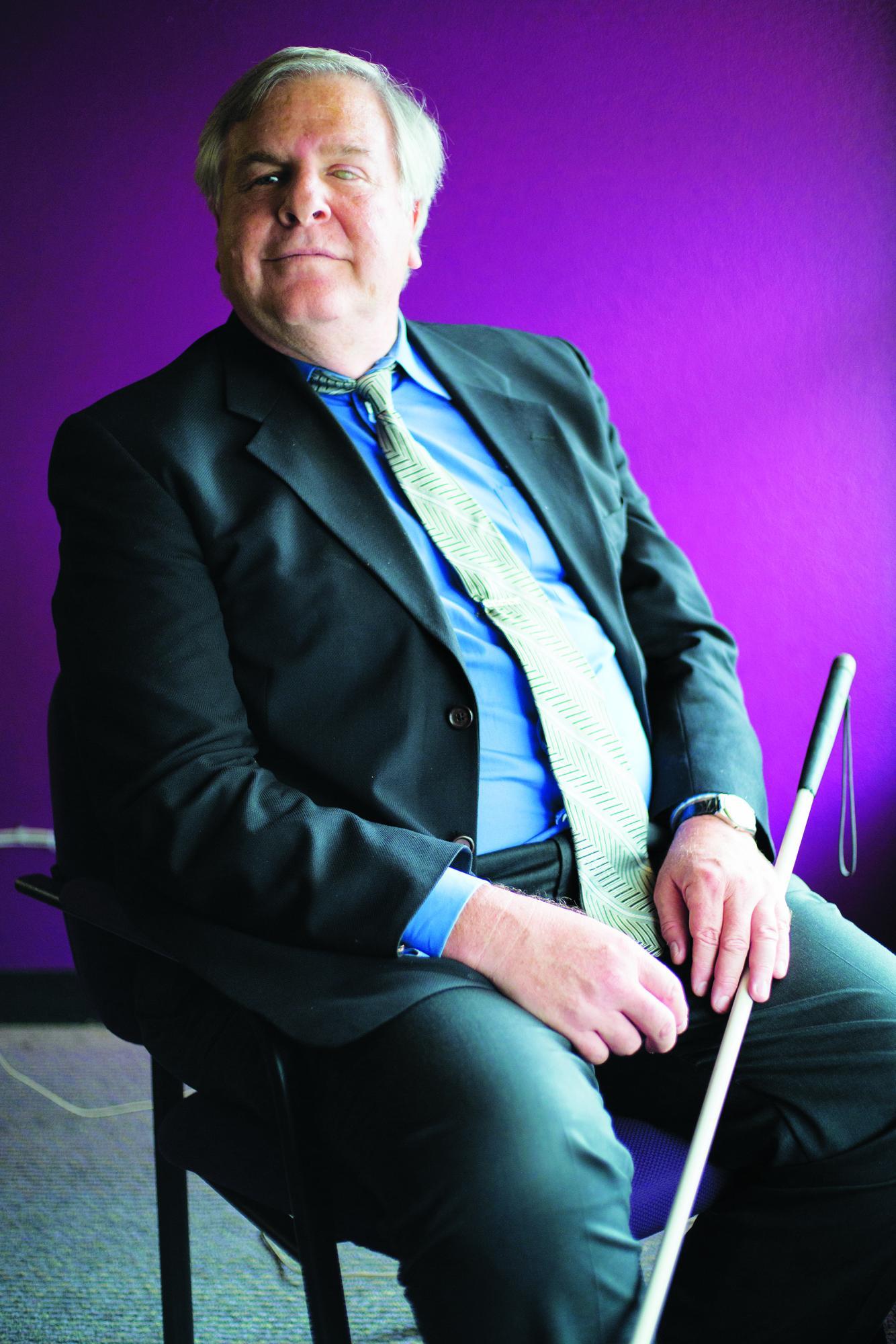
For the LightHouse for the Blind and Visually Impaired, the mystery began with an email from a lawyer. It reported the death of an obscure Seattle businessman whose will designated that the San Francisco charity was to receive the bulk of his estate.
The note offered few details about the man, but a slow drip of information over the next few weeks offered clues that his wealth was considerable. One tipoff: The donor owned 40,000 square feet of prime office space in Seattle. That alone was obviously worth millions.
When all the assets were tallied, the LightHouse gift totaled about $125 million. The executive director, Bryan Bashin, believes it is the largest-ever donation to a charity for the blind. Fortuitously, it arrived just as the 114-year-old organization, which raises about $2 million a year, is setting a new course. Yet strangely, this outpouring of generosity came from a stranger: The donor, 86-year-old Donald Sirkin, had never given the organization a dime.
This type of nine-figure lightning strike is not without precedent. In 2012, the Community Foundation of Elkhart County, a small charity in Indiana, received a surprise $150 million bequest from 56-year-old David Gundlach. The entrepreneur and film producer, who lived in Elkhart as a boy, had first contacted the organization only months before his death from a heart attack.
Famously, the pharmaceutical heiress Ruth Lilly pledged an estimated $100 million in stock to Poetry magazine in 2002. Ms. Lilly, it was learned, had frequently submitted her work under a pseudonym; though never published, she appreciated the editor’s cordial, handwritten rejection letters.
Unlike with those gifts, however, LightHouse had not even a remote connection to its benefactor. Who was this man? What motivated his bequest? Before releasing news of the gift publicly, Mr. Bashin felt obligated to find answers. Without more information, news stories would focus on the money, not the man behind the extraordinary gift. And Mr. Bashin believed that a full recounting of the grand, late-in-life display of generosity could inspire others.
Pete McCown, head of Elkhart County’s community foundation, conducted a similar search to understand his organization’s benefactor. (Mr. Gundlach had visited the foundation’s office only once; he left a check for $100,000, its disbursement to be decided in subsequent phone calls and correspondence.) “We did walk a mile in his life’s story,” Mr. McCown says.
The board thoughtfully considered whether it was obligated to interpret Mr. Gundlach’s values as it deployed his money. But he had never expressed more than a general interest in doing good for his hometown.
Self-Made Man
Mr. Bashin’s fact-finding mission took him to Seattle, where he interviewed Mr. Sirkin’s friends, family, and colleagues. What emerged was a portrait of a scrappy, self-made man. Born in New York City during the Depression, Mr. Sirkin as a young man hitchhiked across the country, working oil rigs, ranches, mines, and more. After settling in Seattle, he started a series of businesses, including a newspaper for construction contractors and an insurance agency.
Associates say Mr. Sirkin intentionally designed his will for maximum impact. He could have sprinkled his fortune over dozens of organizations and done modest good in each, Mr. Bashin says. “But he wanted to make a splash and do something that was distinct and memorable and paradigm-changing.” (Mr. Sirkin reportedly left his two children only $250,000 each.)
The money could have been sprinkled over dozens of charities. ‘But he wanted to make a splash.’
Visiting the millionaire’s Puget Sound house with another LightHouse executive, Mr. Bashin discovered the likely reason the organization was chosen to receive the bulk of Mr. Sirkin’s fortune. Rooms were filled with books but also giant magnifiers that he apparently relied on to read. There were also enormous TV or computer monitors. The kitchen, meanwhile, was stocked with pomegranate juice, which some believe promotes good eyesight.
Mr. Sirkin’s friends had suggested his eyesight was fading. And in the clutter of his house, Mr. Bashin saw the signs of someone desperately fighting failing vision.
Mr. Bashin, who is blind, knows this battle all too well. When he began to lose his sight in his late teens and early 20s, he, too, fought back. Embarrassed, he refused to use a cane or other aids that would mark him in public as blind.
Mr. Sirkin, he concluded, may also have tried to hide his blindness out of shame. His gift to LightHouse was perhaps his way of encouraging others to seek the help and mentorship he never did.
High-Tech Lab
LightHouse received word of Mr. Sirkin’s bequest only months after its board approved construction of a new three-story, $20 million headquarters, with extensive customized space for its training programs. Work was scheduled to begin on only the first two floors, but after the gift, the organization decided to build out all three floors right away, according to Mr. Bashin.
Later this year, LightHouse leaders will consider how to use the remainder of the gift. The organization offers a range of training and counseling services, and Mr. Bashin hopes to expand its work with tech companies to design consumer products that the blind can easily use.
The organization’s new building, which is amid San Francisco’s hub of tech companies, includes meeting space that can double as a user-experience lab. Says Mr. Bashin: “When the Facebooks and Googles of the world want to see how blind people deal with their products, they can just walk over.”