
Ditch Grand Strategies and Focus on How Change Really Happens
Philanthropy reflexively tries to solve problems with sweeping plans. Instead, fix what matters most to people — from a broken stoplight to education — to set off a chain reaction of community-driven action.

By Richard Harwood
Contributor
August 12, 2025 | Read Time: 8 minutes
Keep up with everything happening in The Commons by signing up for the Chronicle’s Philanthropy Today newsletter or our weekly Commons LinkedIn newsletter.
Across nearly four decades, I’ve worked to create change in nearly every sector of society — nonprofits, philanthropy, corporations, civic and arts groups, faith communities, school districts, newsrooms, and state governments. I’ve worked in such radically different and diverse communities as Flint, Mich.; Alamance County, N.C.; and Mobile, Ala. And I’ve been recruited to solve some of the most difficult problems of our time, including in Newtown, Conn., where I led the process for the community to collectively decide the fate of the Sandy Hook Elementary School after the 2012 mass shooting.
Here’s what I’ve found across these experiences: Efforts to create change are typically built from a well-worn call and response:
- How can we tackle all the pressing issues we face? We need a comprehensive plan.
- How can we get everyone around the table? We can’t move forward until we do.
- How can we coordinate our actions to ensure maximum impact? We need everyone moving in lockstep.
- How do we raise awareness about our community’s problems? People just don’t know enough yet.
- How do we raise more money to expand existing efforts? Without that, nothing else will matter.
Time and again, I find these questions reflexively drive decisions. The result? Sophisticated programs, grand plans, intricate strategies. An obsession with tactics and timelines. Endless calls for research and planning and meetings.
These responses, while well intentioned, routinely take us to the wrong place at the wrong time. Some even do damage. One community I worked with had built a theme park as a tribute to the auto industry and a promise for downtown redevelopment. It was razed just a few years later, becoming a symbol of the town’s failure to address what really mattered to people.
Momentum’s Power
I want to focus here on a few basic principles about how to create sustainable change. It’s essential to remember that we operate in an organic system called community and a broader society, neither of which we control. Our challenge is to move that system against forces of inertia and resistance in a more positive direction.
More From The Commons
-
Philanthropy Impact
How 59 Data Points Helped Foundations Spark Elusive Change
-
Philanthropy Impact
8 Things a Mega-Donor Did Right to Engineer a ‘Miracle’
Change efforts often start with a big splash — press conferences, national convenings, and glossy reports — then fizzle and fade. People in communities are tired of such efforts and increasingly cynical because of the false hope they generate. We need a different approach that intently focuses on what it takes to build momentum over time.
The trick? Start small. While counterintuitive, this is critical to unlocking significant, systemic change. A few years back, our institute conducted a 30-year study to analyze change efforts across nine very different communities, with the findings documented in my book Unleashed: A Proven Way Communities Can Spread Change and Make Hope Real for All. In every case, an initial small action unleashed a chain reaction of actions that took root, grew, and spread. At the heart of each chain reaction was a focus on what really matters to people.
Consider rural Red Hook, N.Y. The local library was “dingy,” “understaffed,” and largely off the radar. Seeking to revitalize its role, the library worked with us to pull together an ad hoc community team that engaged residents to learn about their shared aspirations. One issue leaped to the fore: The town’s sole stoplight had been malfunctioning for more than 20 years, symbolizing long-festering mistrust between residents and local leaders.
With that, the ad hoc team brought together a collection of critical players to work in a new way. The stoplight was fixed, proving to the community that change was possible.
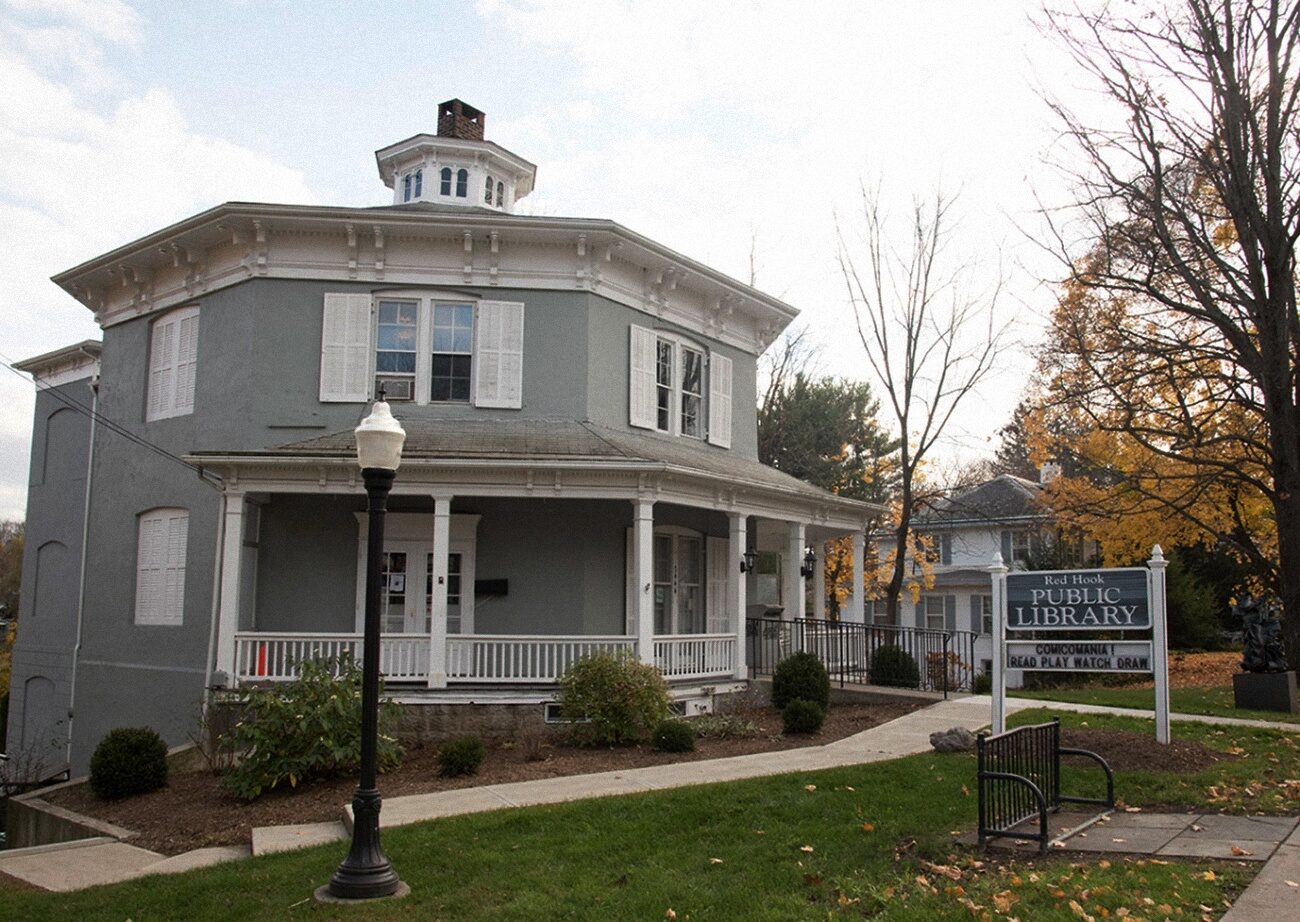
This small effort started a chain reaction. The library developed 15 youth-centered programs and formed nearly two dozen partnerships with groups like Bard College, the Red Hook Historical Society, and the Chamber of Commerce. More people and groups began working together, breaking down longstanding silos and taking on long-simmering challenges posed by a shrinking economy and an exodus of youth. A new, can-do spirit and a stronger civic culture took hold.
Recognizing the library’s increased local relevance and impact, residents voted to double its budget. The library was even named a finalist for the Best Small Library in America.
Making Down Payments
Let’s be clear: Initial actions simply get us in motion. It’s necessary to stay in motion and unleash an ever-expanding chain reaction. Movement over time creates momentum, and momentum over time creates a new trajectory of hope. That’s why I often say, “It’s more like physics than civics!”
Momentum alone cannot restore belief and produce change. Many of our challenges are daunting and ever-evolving. And our external context constantly shifts. Under these conditions, we have to consistently make down payments, generating and showing proof to a community that our approach is different from past efforts. We must also signal that change is taking hold. With that, more people join, momentum builds, and the work spreads like a positive contagion.
Here’s another illustration. A few years back, I started working with Reading, Pa., once declared the nation’s poorest community. We started by developing a communitywide agenda. One priority was English as a Second Language (ESL). The chain reaction began when a local pastor recognized that native Spanish speakers felt uncomfortable practicing their language skills and feared venturing into unfamiliar parts of the community for classes because of widespread violence.
So the pastor hosted a dinner at his church, bringing Spanish speakers and English speakers together to share a meal and practice language skills. It was so well received that the church organized more. Practice dinners spread to other churches, eventually jumping from the faith community to arts groups to workplaces. The dinners, while small, addressed what mattered to people while creating a sense of safety, connection, and belonging.
Meanwhile, demand for ESL classes soared. More community members stepped forward to volunteer as instructors, with organizations offering training. The literacy council formed a partnership with the school district to host new classes. The community college partnered with major employers to offer on-site classes to employees.
Amid all this, ESL providers developed a resource directory to align their efforts and refer individuals to each other’s programs, moving from competition to cooperation. Over time, the entire community wrapped its arms around language learning. Separate efforts bloomed to enhance early-childhood education and after-school and out-of-school activities. Indeed, Reading was soon addressing broader concerns like youth violence and economic development.
When the work in Reading was just beginning, one funder pointedly asked me, “How will this initiative be different from previous ones that started with a lot of promise only to stall out?” My answer: a relentless focus on proactively growing momentum. After witnessing this alternative approach succeed, this same funder noted, “Success breeds success. People want to join something that’s successful.”
Predictor of Success
There’s one other critical factor to consider: a community’s civic culture — its relationships, networks, leaders, norms, and shared purpose. I’ve come to believe that the strength of a community’s civic culture is the single biggest predictor of success.
In both Red Hook and Reading, the actions of individual community members bolstered the civic culture. Leaders worked together in new ways, networks strengthened and expanded, relationships deepened, a new shared purpose emerged, norms changed.
The principles I’ve outlined — building momentum, making down payments, sending signals, strengthening our civic culture — offer a blueprint to address the crisis of belief in this country. This approach proves that we can restore our belief in ourselves and one another. I’m witnessing it happen every day in communities where we’re working, from Michigan to Florida to Kentucky to North Carolina to Ohio and beyond.
If we want to create real, sustainable change in American public life, I think we’d do well to adopt a new mantra: Think physics, not civics.
The Commons is financed in part with philanthropic support from the Arthur M. Blank Family Foundation, Einhorn Collaborative, and the Walton Family Foundation. None of our supporters have any control over or input into story selection, reporting, or editing, and they do not review articles before publication. See more about the Chronicle, the grants, how our foundation-supported journalism works, and our gift-acceptance policy.





