$53 Million Fund Blends Philanthropy and Investing for a Big Bet in Education

By Drew Lindsay
Senior Editor, Special Projects
October 4, 2016 | Read Time: 3 minutes
This article is one of a series The Chronicle is featuring this month about leaders who are pushing unorthodox ideas to give philanthropy more power to do good.
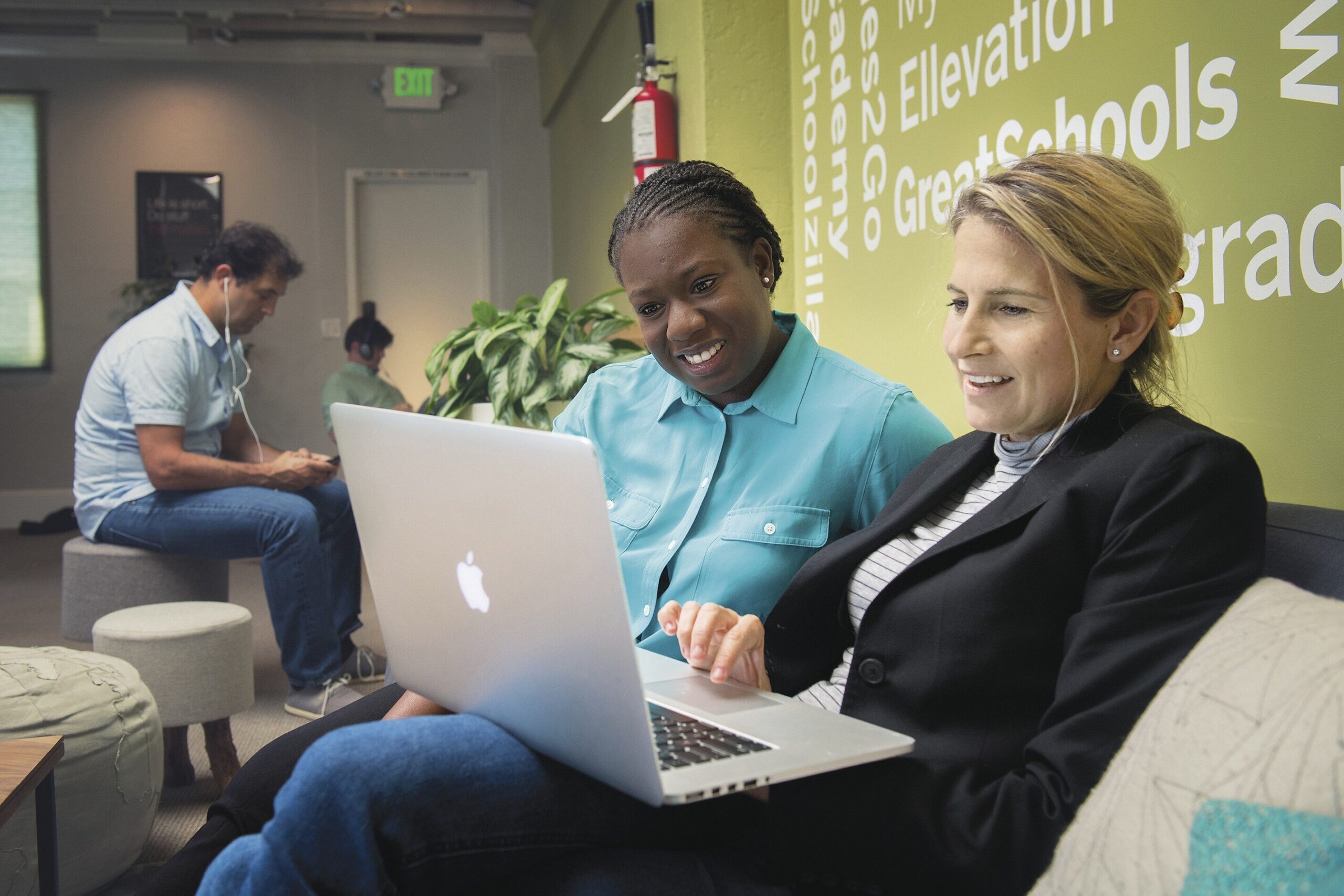
Jennifer Carolan and Shauntel Poulson believe in a simple idea. Technology, they contend, can narrow the achievement gap in K-12 education, personalizing instruction and expanding learning opportunities, particularly in urban schools.
To fuel development of such life-changing tech tools, the two have brokered an unusual marriage of traditional philanthropy and Silicon Valley entrepreneurship. Last year, they founded Reach Capital, a for-profit investment fund to back young, socially minded companies in the ed-tech industry. It quickly raised $53 million — from philanthropic sources such as the Gates Foundation and the Emerson Collective but also from individual tech investors (among them Intuit co-founder Scott Cook); TAL Education, a Nasdaq-traded Chinese company; and even the venture arm of the nonprofit that produces Sesame Street.
This “blended capital” approach was born of a pragmatic decision that philanthropy could only do so much. Beginning in 2011, Ms. Carolan had helped the NewSchools Venture Fund, a venture-philanthropy nonprofit, raise $12 million via grants and donations for an ed-tech fund. But a lack of capital stymied expansion; relatively few foundations earmark assets for business ventures. So NewSchools spun off Reach Capital as a commercial investment entity that can capture both charitable nonprofit giving and for-profit investor money.
New ideas about philanthropy are springing up from all sorts of places. See how creative thinkers are helping nonprofits break out of the mold.
Reach believes the philanthropist-investor partnership is ideal to nurture the ed-tech companies whose products will benefit schoolchildren most. Grant makers focused on education inherently know the dynamics of the fragmented, complicated marketplace that’s made up of 100,000 locally run schools.
“Foundations often have a lot of people on the ground, and they understand what tools are missing and what barriers there might be to bringing a product to market,” says Ms. Poulson, a former Procter & Gamble chemical engineer who has both an MBA and master’s in education from Stanford.
In the early days of the NewSchools seed fund, foundations wrapped their support in a lot of string that could play havoc with a company’s go-to-market strategy, says Ms. Carolan, a former history teacher. “I feel like they’re getting better at understanding the needs of for-profits and knowing that if they tangle too much in that process, the company’s going to be out of business.”
So far, Reach has invested in 23 companies, including KickUp, which aims to improve data analytics in schools, and WriteLab, an online service that gives students immediate feedback on their writing. Ms. Carolan and Ms. Poulson are planning to raise another round of capital next year and are exploring other ways to support new companies, such as through debt financing. “It’s early. We’re still learning,” Ms. Carolan says.