Audacious Goals: Meet a Leader Who Turned a Nonprofit Start-Up Into a Quarter-Century Success

By Drew Lindsay
Senior Editor, Special Projects
January 4, 2022 | Read Time: 8 minutes
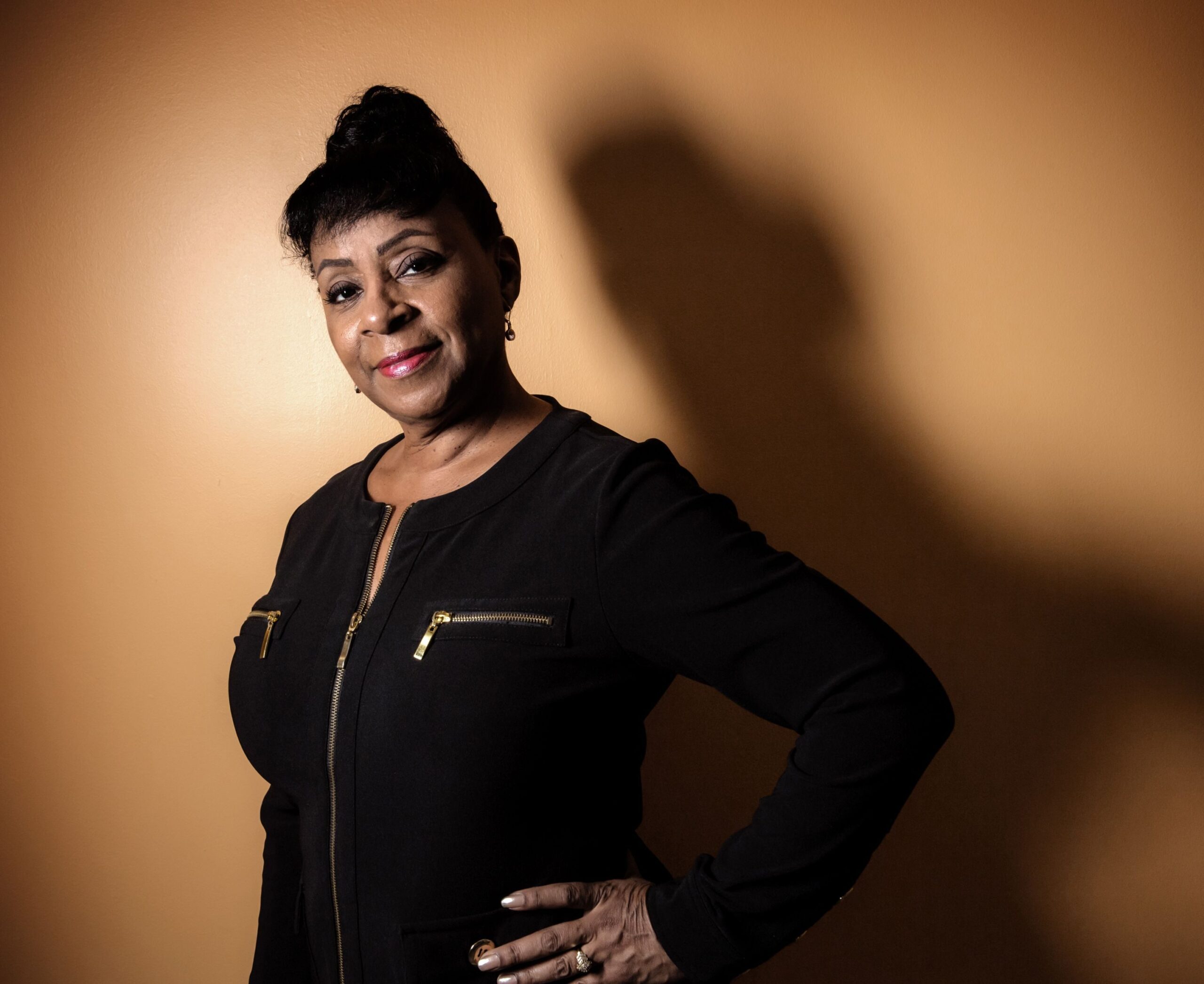
When Argelia Rodriguez took the helm of the District of Columbia College Access Program,, a start-up nonprofit, she was charged with audacious goals. Powerful Washington business leaders were behind the organization’s launch, and they wanted to double the number of D.C. public-school students enrolling in college and triple the number who graduate.
“I was like, oh my God, how do you do that for a city?” Rodriguez remembers.
In June, nearly a quarter-century later, the 62-year-old Rodriguez will step down as DC-CAP president and CEO confident that she accomplished her mission. The group has helped more than 35,000 D.C. students go to college. About 60 percent of the city’s public high-school graduates now pursue postsecondary education — up from less than a third when DC-CAP began and on par with the national average, despite the District’s high poverty rate. Half of those graduate, more than triple the earlier 15 percent rate.
“Thank goodness for Argelia Rodriguez,” said Donald Graham, one of the founders of DC-CAP and former publisher of the Washington Post, when her retirement was announced this fall. The city has seen four mayors and 11 school superintendents since the organization launched. “D.C.’s public and charter school leaders had no better collaborator through all the changes of the last 23 years.”
Key to DC-CAP’s success is a federal law that Rodriguez, Graham, and others lobbied for that defrays tuition costs for D.C. high-school graduates attending a public college or university elsewhere in the country. (The District of Columbia has no state-funded institutions of higher education.) The organization also helped to establish a broad college-going culture in the city. It has awarded nearly $55 million in scholarships, put college advisers and information centers at every high school, and built an extensive outreach program to parents and families. Over time, DC-CAP became a trusted fixture in the lives of many D.C. families, with Rodriguez recognized throughout the city as “the college lady.”
“Thank you for my job!” is a common refrain she hears from individuals she meets randomly in stores and offices, at the bank, and on the street.
DC-CAP was Rodriguez’s first nonprofit job, and she brought to her work a deep commitment to education along with strategies from a career in management consulting. Her mother was the first Black woman to receive a Ph.D. in mathematics and astrophysics at the University of Havana, and Rodriguez studied engineering at Stanford and earned a Harvard MBA.
After many years as a consultant with Booz Allen Hamilton, she started her own educational and management consulting firm serving education and corporate clients, including D.C.’s public schools and several universities. For education clients, the firm focused on curriculum development, research, staff development, and achievement by students of color, particularly in STEM subjects.
Rodriguez spoke with the Chronicle about the ingredients of DC-CAP’s success and what she learned about bringing business strategies to the nonprofit world.
The interview has been edited for clarity and brevity.
Why DC-CAP established hard-target numbers as goals
When you start a business, you have to start with the goal. You have to start with what you’re trying to achieve and then back into how you get it. Because if you don’t have a goal set in front of you, the pieces and the mechanics and the operations and the protocols won’t make sense.
First steps for the organization
We had to go back to the root of the matter, so helping the parents understand the value of education was critical. First, I decided we had to have parent training and outreach. With many families we are working with, no one’s ever been to college. It’s just daunting for them.
At first, families were very skeptical of us. “Who are these people? Why would they want to do this? And why are they reaching out to me every two minutes?” I don’t think anybody has been as persistent with parents as we have. And there was no judgment. We assumed that they were just as capable of sending their children to college as people making $300,000 a year.
Because of our consistency, parents began to trust us, but they also started to rely on us for stuff that had nothing to do with college. They were coming to us asking about housing, about unemployment. So we ended up creating a directory of community services.
Creating a college-going culture
Historically, college-access programs pick and choose the students they will work with: “We’re going to help you because you seem like college material.” But our philosophy from the beginning was that every child benefits from higher education, whether it is two-year community college, a vocational or technical program, or a four-year university. We went into every school and approached every student with the mind-set: “You’re college material.”
In order to change the mind-set of a population and create a culture, everybody has to participate.
On the need for structure and adaptability
I’m an engineer by training, and I approached this like it was an engineering problem. We set protocols for the advisers, very specific guidelines that would allow us to measure their productivity — how many kids they would see, how much time they would spend with each student. On a weekly basis, advisers input into the database what students they saw, what they talked about, how long they talked. At the end, this helped us do analysis and make changes to the program.
We had to do that in order to meet our goals. The data also helped us spot problem areas. If your goal is to have, say, 100 kids apply to college and only 50 of them have done their FAFSA [Free Application for Federal Student Aid], you know that’s a problem.
So we set protocols, like telling advisers how much time they could spend with each child. But then, obviously, if the circumstances require that you spend more time with the child, you do that. There’s a lot of unpredictability in family circumstances, so we have to adapt and really meet the child and the family where they’re at.
We’ve got people from all backgrounds — educators, psychologists, people from the criminal-justice system — as advisers. Some can’t keep up with the reporting requirements. We work with them: “What’s the issue? Can we help you here and there?”
Some people just don’t like to have to report and have to count. They say, “I’m working with a child. I want to just be with them.” But at the end of the day, the goal was to make our objectives. The reality is that you either hang or you don’t.
How a big change grew out of the focus on data
The data showed that our boys were way, way behind in terms of graduation rates, college enrollment, etc. So we did research for a couple of years, and then we came up with a program for young men of color. We have workshops for the boys in freshman year where we talk about the responsibility of men in the community. At the same time, the parents are going through workshops where we talk about what you need to know to parent a young man of color.
We asked the boys: “Why are you hanging on the streets? Why are you joining gangs?” And they said, “We have nothing else to join.” So we created the Alpha Leadership Fraternity, a peer group of like-minded boys. It’s a fraternity in the sense that there’s a requirement of community service and leadership. They get rewards as they accumulate “wolf points.” [The group’s mascot is the wolf.] We took them to baseball games and basketball games and on college tours and museum trips. We wanted to publicly show within the school environment that boys who are doing what they’re supposed to do get rewarded.
Today, about 90 percent of kids who are in this program graduate from high school.
The partnership with D.C.’s public schools
People always talk about public-private partnerships, but this was the real deal. It was the power of the corporate community joining forces with the school system. We said, “We’re completely privately funded. We’re not going to ask you for a dime. But we’re going to do this together.”
It’s a huge thing. I would tell any other group to take any opportunity you have to combine corporate knowledge, resources, money with a public system.
What kept her motivated over 23 years
Working with young people in education — they just keep you on your toes in a way. You can’t hide.
I love the challenge of solving problems or refining your procedure or increasing your numbers. If you’re active and you’re involved, it’s hard to get bored. I wake up excited.