Foundation Support of Journalism Too Often Ignores News ‘Deserts’, Report Says

By Drew Lindsay
Senior Editor, Special Projects
June 18, 2018 | Read Time: 4 minutes
Philanthropy is often held up as journalism’s potential savior, helping to build nonprofit digital news ventures to fill voids left by crumbling commercial media.
But in truth, philanthropy is funding a lot of activity related to journalism without earmarking much to what’s critical — newsgathering in places where the collapse of newspapers has created journalism “deserts.”
That’s the conclusion of a report released today by Harvard University’s Shorenstein Center on Media, Politics, and Public Policy that examines $1.8 billion in grants made in the name of journalism by more than 6,500 foundations from 2010 through 2015.
Only about 20 percent of those dollars directly supported digital news nonprofits, and only a quarter of that went to organizations operating at the local or state level.
By contrast, foundations dedicated a third of the funding to college journalism programs, research, technology development, legal support, and other ancillary efforts.
Public media received nearly $800 million over the six years analyzed, or about 44 percent of the total, but significant sums went to non-news content related to the arts, culture, or entertainment.
| Top U.S. Foundations Supporting Nonprofit Media-Related Activities, 2010-2015 | |
|---|---|
| Freedom Forum | $175 million |
| Knight Foundation | $133 million |
| Donald W. Reynolds Foundation | $72 million |
| Annenberg Foundation | $67 million |
| Ford Foundation | $67 million |
| MacArthur Foundation | $61 million |
| Bill & Melinda Gates Foundation | $50 million |
| Omidyar Network Fund | $29 million |
| California Endowment | $26 million |
| Kendeda Fund | $25 million |
Source: “Funding the News: Foundations and Nonprofit Media”/Shorenstein Center on Media, Politics, and Public Policy and Northeastern University.
“Elites Supporting Elites”
The report, titled “Funding the News: Foundations and Nonprofit Media” and written by scholars at Northeastern University in Boston, noted a concentration of funding to organizations on the coasts and in major metropolitan areas. Seventeen of the 25 public-media grantees that received the most funding, for instance, are based in Boston, Chicago, Los Angeles, Minneapolis, New York, San Francisco, or Washington, D.C.
Such an “elites supporting elites” funding pattern raises concerns that philanthropy is financing journalism for the readership and audiences of the New York Times, the Washington Post, and NPR, the report concludes.
Matthew Nisbet, one of the authors, said foundations do not yet see the value of a healthy news-media system to a democracy, or even to their own missions.
“If a foundation is going to make any progress on the issues they care about — social justice, the environment, economic growth, health, education — you must have a news-media system informing local residents and voters and holding institutions accountable,” he said.
Nisbet added that he does not think money should be shifted to newsgathering from college instruction or other journalism -related activities: “It’s not a zero-sum game.” But he said more foundations should step in to support the still-young nonprofit news industry.
Nisbet said the report was released in advance of a gathering this week of Media Impact Funders, a network of grant makers focused on the media and society.
Biggest Supporters
The report identifies the Freedom Forum as the largest supporter of media activities. Formed out of the Gannett media company, Freedom Forum awarded nearly $175 million in journalism-related grants from 2010 through 2015. Few, if any, of those dollars directly supported newsgathering, however; all but about $4 million went to the Newseum, the museum of journalism and the First Amendment the organization operates in Washington, D.C.
The grant maker committing the second-most dollars to journalism was the Knight Foundation, which was formed by John and James Knight, publishers of the former Knight Newspapers (later Knight Ridder) chain.
Knight, which awarded $133 million to journalism-related work from 2010 to 2015, has invested far more than other foundations in developing nonprofit news alternatives, Nisbet says. Its grants accounted for 20 percent of funding for digital news operations.
“Knight is driving things, but not a lot of other foundations have come on board,” he said.
The report suggests foundations will back journalism focused on one of their key issue areas — the environment, say, or health — but often don’t have the expertise or interest to back journalism broadly.
Nisbet and his co-authors interviewed nonprofit-news executives, foundation leaders, and others to provide context for their numbers. Those conversations revealed tensions over foundations’ tendency to eschew startups and focus on established organizations, or those that are well-financed from their launch.
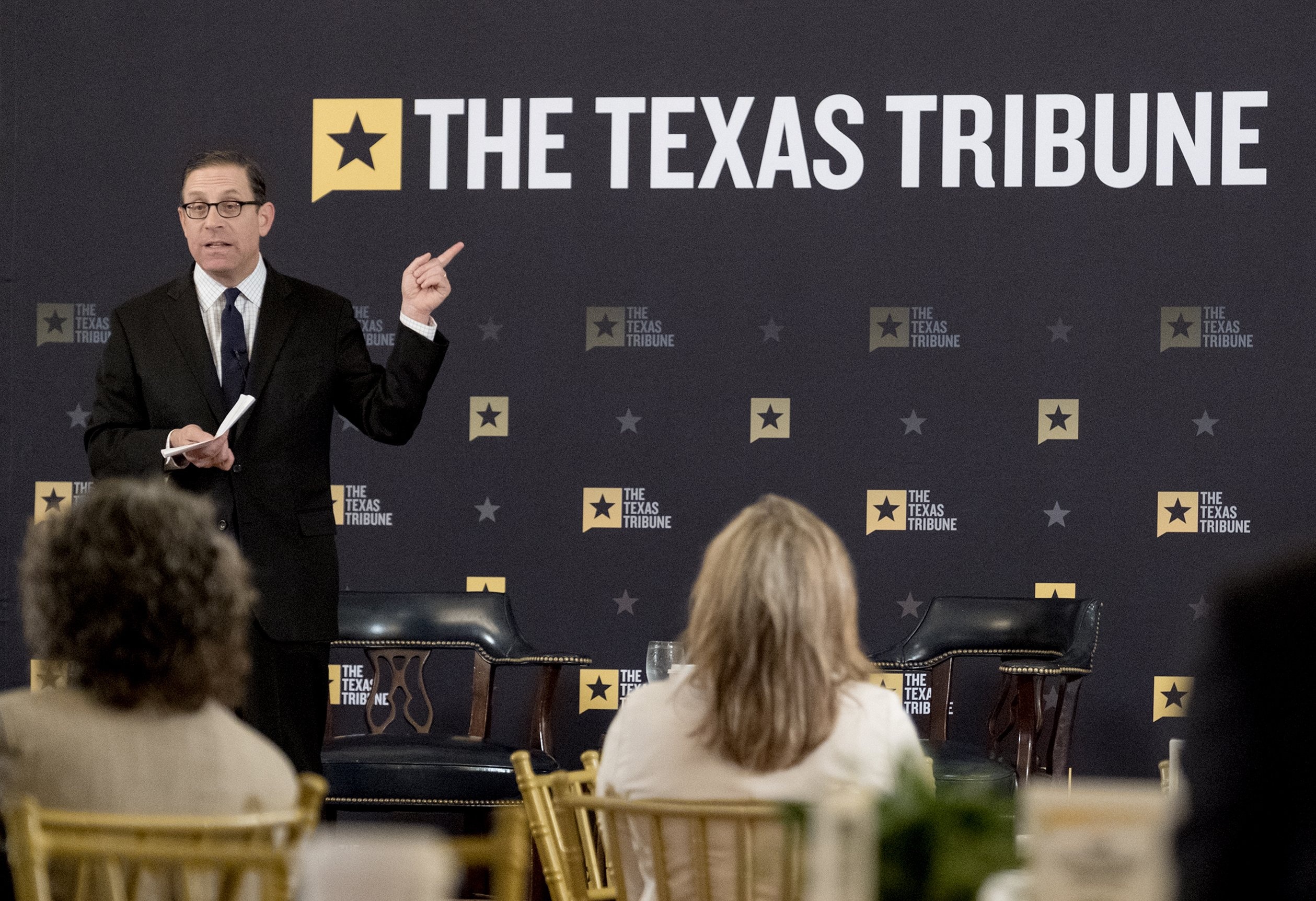
The Texas Tribune and ProPublica, which are among the most successful nonprofits news outlets, both had solid funding from their beginning and continue to draw significant backing, the report notes. The Texas Tribune raised more than $6 million from 2010 to 2015, the most of any local or state nonprofit news organization.
The report says some nonprofit news leaders describe this funding pattern as “pack philanthropy,” wherein “money follows money.” Foundations, meanwhile, told the researchers that the Texas Tribune and ProPublica are well-funded because they are wisely run. The journalists launching startups sometimes don’t have the savvy or business acumen to create a successful venture, they contend.
“It’s a real kabuki dance” between the donor and grantee, Nisbet said.
Evan Smith, CEO and co-founder of the Texas Tribune, said his organization’s evolution speaks to both sides of the argument. When the Tribune launched, he said, an initial significant grant from the Houston Endowment, a blue-chip foundation, sparked interest and eventually a gift from Knight.
At the same time, Smith said, “many national foundations did not want anything to do with us until we proved the theory of the case.” The Tribune now counts the Gates and Ford foundations as backers, but “that took years.”