Readers’ Choice: Tulsa
The Oklahoma town wins the popular vote as “best city for philanthropy.”

By Drew Lindsay
Senior Editor, Special Projects

December 4, 2018 | Read Time: 4 minutes
What’s the best city for philanthropy? We put that question to Chronicle readers and nonprofit watchers, asking them via social media to pick the place that is a model of charitable giving.
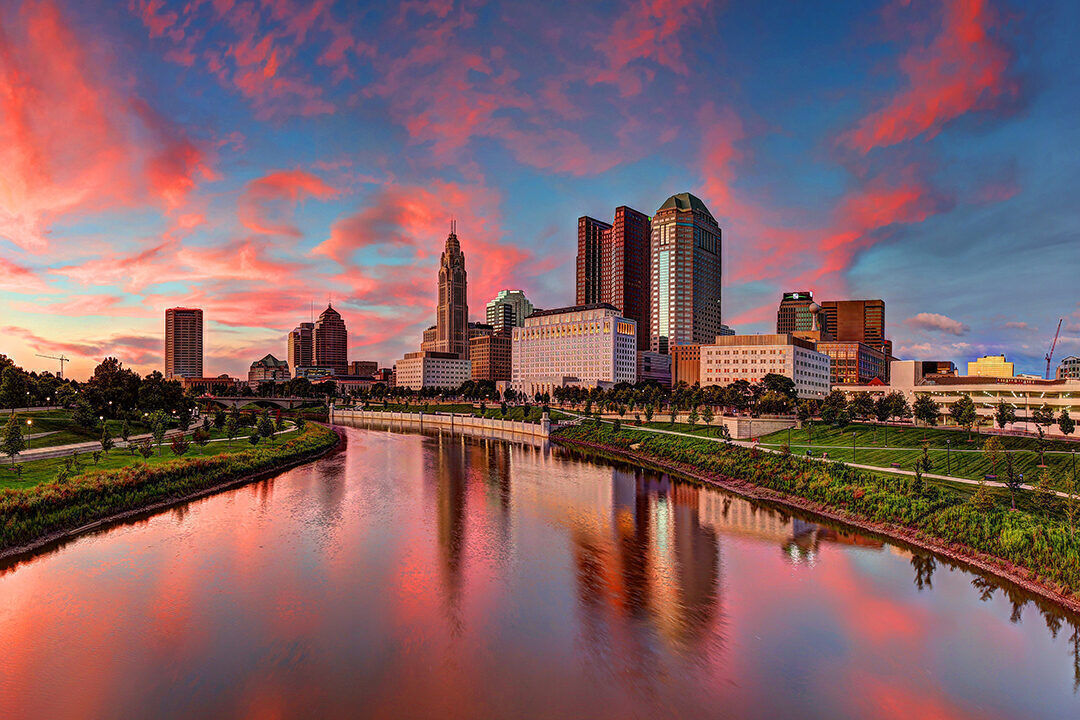
When votes were tallied, Tulsa, Okla., emerged the winner. “I believe Tulsa is unique in many ways,” wrote Lynn Jones, a retired police officer and active community volunteer. She says that whenever a problem emerges, funders step up, check the national landscape, and move purposefully and responsibly, often with success. She points to philanthropy-backed health efforts that have increased life expectancy in low-income neighborhoods; programs for housing the mentally ill that have won national acclaim; and arts groups that have strong backing.
The economic health of Tulsa, known as the oil capital of the world, ebbs and flows with the fortunes of the energy industry, but its charitable giving is generally reliable. Residents gave away nearly $867 million in itemized donations in 2016, or 5.3 percent of the average income, according to federal tax data. That’s the 50th highest total of the country’s nearly 400 metro areas, according to a Chronicle analysis.
Giving to Tulsa’s United Way reached almost $26 million last year, just $5 million shy of the giving total to the United Way of New York City — even though metro Tulsa’s population doesn’t even top 1 million.
Tulsa’s major philanthropists set the pace for giving, with big investments in both the area and the work of the city’s nonprofits. The late Henry Zarrow, an entrepreneur, and his wife, Anne, established what is now one of Oklahoma’s biggest grant makers and targeted a lot of their funds to help Tulsa social-service groups, improve mental health, and lift people out of poverty. Last year, their foundation made a $6.7 million grant to the local Habitat for Humanity and opened a new building to house area social-service nonprofits.
Billionaire Lynn Schusterman, widow of energy tycoon and oilman Charles Schusterman, heads their family foundation (more than $2.2 billion in assets in 2016), which earmarks grants for Jewish causes but also various Tulsa efforts related to its schools and culture, among other things.
George Kaiser, the oil, gas, and banking titan, is arguably the godfather of Tulsa philanthropy. He has a reported net worth of some $11 billion and was one of the first to sign on to the Giving Pledge, committing to give away at least half his fortune. Kaiser led the effort to create what will be a 100-acre, $465 million public park, the Gathering Place, along the Tulsa riverfront. His foundation (assets of more than $3 billion) put up $200 million and helped raise millions in private funding.
Kaiser is also known for his commitments to improving early-childhood education and fighting poverty in Tulsa. His foundation and Schusterman’s are also part of the Blue Meridian Partnership that in 2015 pledged $1 billion to help charities serving low-income children.
“No child is responsible for the circumstances of her birth and should not be punished for them in this life,” he wrote when signing on to the Giving Pledge. “I have therefore developed my charitable focus around the concept of providing the greatest opportunity for self-fulfillment for each child, focusing on those who arrive in the least advantaged circumstances.”
Runners-up
Other cities that fared well in the online vote include:
Kansas City: “We have proven to be caring,” wrote one individual in support of the Missouri city. The Greater Kansas City Community Foundation raised a half-billion dollars in 2017, top among community foundations save for Silicon Valley and the Foundation for the Carolinas.
Dallas: Several backers pointed to the North Texas Giving Day as proof of the area’s generosity. One of the most successful giving days in the country, the event raised $48 million in September, up from $39 million the year before.
St. Louis: The United Way for the area raised $86 million in 2017, more than all of its sister organizations except for Houston and Atlanta.
Top 10 Metro Areas for Giving
| Total Itemized charitable contributions, 2016 | |
|---|---|
| New York | $22.1 billion |
| Los Angeles | $11.2 billion |
| San Jose | $8.6 billion |
| Chicago | $7.9 billion |
| Washington | $7.1 billion |
| Atlanta | $6.9 billion |
| San Francisco | $6.9 billion |
| Dallas | $6.1 billion |
| Boston | $5.3 billion |
| Philadelphia | $4.7 billion |
Source: Internal Revenue Service
Correction: An earlier version of this article incorrectly referred to the late Charles Schusterman as George Schusterman.