Scientist Leaves $200 Million to Boost the Search for Extraterrestrial Intelligence
The bequest to the SETI Institute is the second nine-figure donation announced in recent weeks from the estate of Franklin Antonio, a Qualcomm co-founder.

By Maria Di Mento
Senior Editor
November 13, 2023 | Read Time: 4 minutes
A roundup of notable gifts compiled by the Chronicle:
SETI Institute
Franklin Antonio left $200 million to the scientific research organization that explores the origins of life on Earth and beyond. Researchers there specialize in astronomy and astrophysics, exoplanets, planetary exploration, astrobiology, climate and bio-geoscience, and the search for extraterrestrial intelligence.
The gift will be used to endow and expand the group’s research efforts, establish postdoctoral fellowships and internal grants for science and education programs, and support new educational programs to reach people from under-served populations.
Antonio was a scientist who helped found the San Diego technology giant Qualcomm. He earned a bachelor’s degree in applied physics and information science from the University of California at San Diego in 1974. While there, he was a student of Irwin Jacobs, who at that time was a professor of computer science and engineering and a co-founder of Linkabit, a satellite-encryption device maker. Antonio went on to work for Jacobs at Linkabit for 12 years and then helped Jacobs and Andrew Viterbi launch Qualcomm in 1985.
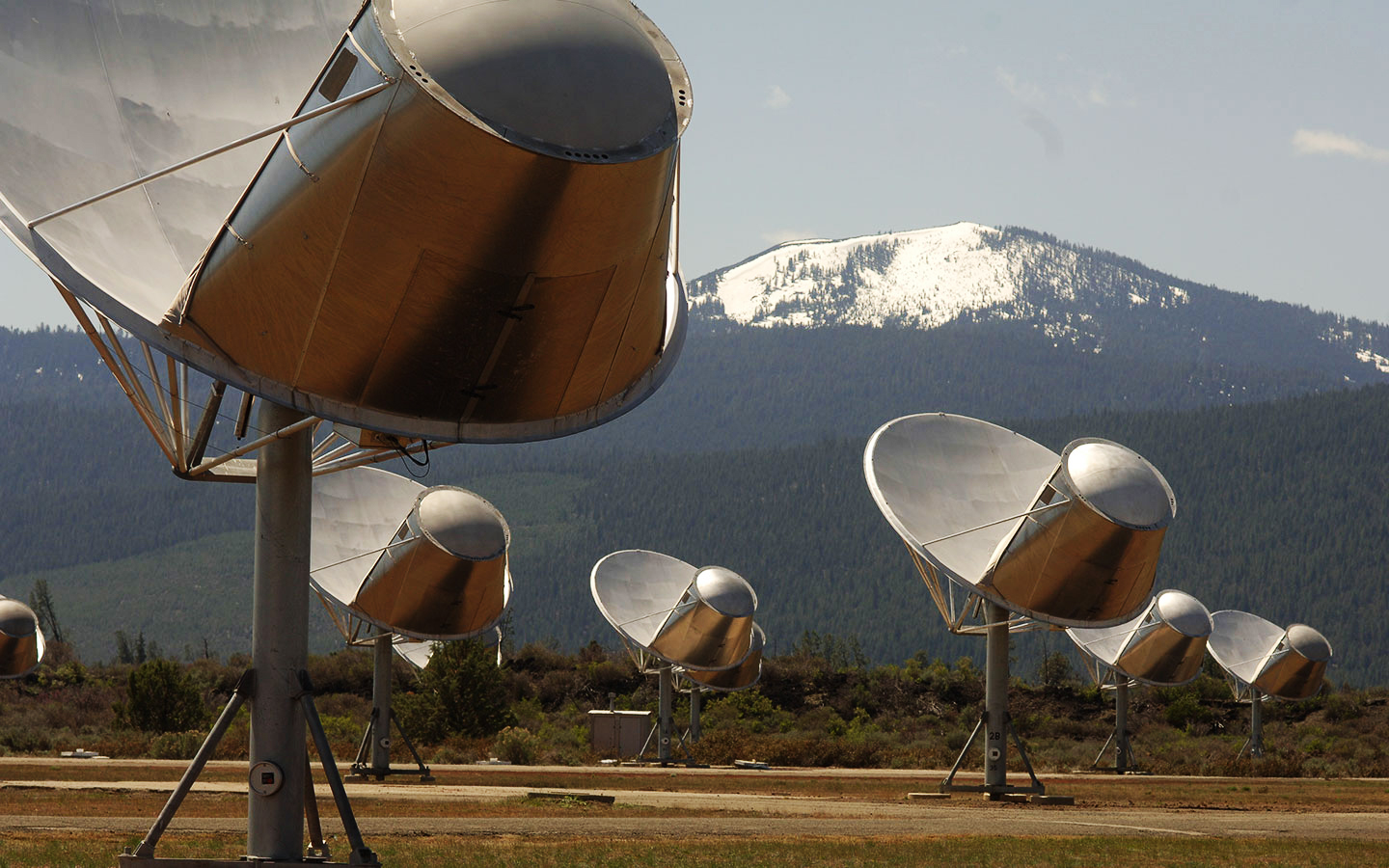
He had been involved with SETI for a dozen years as part of the technical team and the primary financial backer of the Allen Telescope Array, a radio telescope in Shasta County, Calif., that scientists use to search for extraterrestrial intelligence. Antonio died last year at 69.
This is the second nine-figure bequest Antonio left to a science group with which he was associated during his lifetime. He bequeathed $200 million to Summer Science Program, a nonprofit that provides advanced science-immersion experiences for high-school seniors from around the world. Antonio participated in the program in the late 1960s.
Hoag Hospital Foundation
Richard Pickup pledged $50 million to launch the Richard H. Pickup Center for Brain Health, which will provide patients and their families with a “whole-family” approach to prevention, early detection, and care for cognitive impairment and mental-health disorders like dementia and Alzheimer’s disease. Patient care and treatment will include consideration for the ways in which these disorders affect a patient’s overall physical health, erode their quality of life, and increase health-care costs for them and their families.
Pickup founded Eagle Four Partners, a private-equity firm in Newport Beach, Calif., that invests in hospitality, golf, and high-end residential real estate. He and his family own the Balboa Bay Resort & Club and Newport Beach Country Club, two private clubs in Orange County, Calif. He gave the hospital $15 million in 2017 to name the Pickup Family Neurosciences Institute. He started supporting brain health after losing a brother to Alzheimer’s disease.
National Medal of Honor Museum Foundation
Ken Griffin gave $30 million through his Kenneth C. Griffin Charitable Fund to support the construction of the museum, which is being built in Arlington, Texas. The museum was created to honor U.S. Armed Forces Medal of Honor recipients and is scheduled to open in 2025. Officials have named the museum’s education center the Griffin Institute. Educational programming will focus on teaching young people about leadership, character, community service, and civic engagement.
Griffin founded Citadel Investment Group, a Miami hedge fund, and has given extensively to arts and culture groups, medical care and research, universities, and other nonprofits. He appeared on the Chronicle’s annual Philanthropy 50 list of the biggest donors in 2014, when he gave Harvard University $150 million primarily to support financial aid.
Carnegie Mellon University
Ray and Stephanie Lane gave $25 million to establish an endowment to support programs in the Computational Biology Department, which will be named for them, and to support the construction of the department’s new home in the Richard King Mellon Hall of Sciences.
Ray Lane is managing partner of GreatPoint Ventures, a venture-capital firm in San Francisco. He began his career at IBM in the 1960s and is credited with turning around the Oracle Corporation in the 1990s as its president and chief operating officer. He later served as executive chairman at Hewlett-Packard and as managing partner at the venture capital firm Kleiner Perkins. He has served on the university’s Board of Trustees for three decades.
John Muir Health
Martha Jean Hofmann gave $25 million through her Hofmann Family Foundation to establish the UCSF-John Muir Health Jean and Ken Hofmann Cancer Center, which will be located on the John Muir Health Walnut Creek Medical Center campus.
Hofmann’s late husband, Kenneth Hofmann, founded Hofmann Construction in 1959 and was later an owner of the Seattle Seahawks football team and the Oakland A’s baseball team. He died in 2018 at 95.
Jobs for the Future
MacKenzie Scott gave $20 million to this nonprofit that helps low-income people gain the skills and credentials needed to secure well-paying jobs and succeed in the workforce. Officials said in a news release that they plan to use the donation to launch a fundraising campaign to raise $60 million over the next three years to expand its programs and research.
Scott is a novelist who has given over $14 billion to more than 1,600 nonprofits over the last three years. Her estimated $37 billion fortune comes from stock she holds in the online retailing giant Amazon, which she helped to found with her former husband Jeff Bezos nearly 30 years ago.
To learn about other big donations, see our database of gifts of $1 million or more, which is updated regularly.