Why Gender Gap in Nonprofit CEO Pay Just Might Be Closing

By Drew Lindsay
Senior Editor, Special Projects
October 4, 2016 | Read Time: 6 minutes
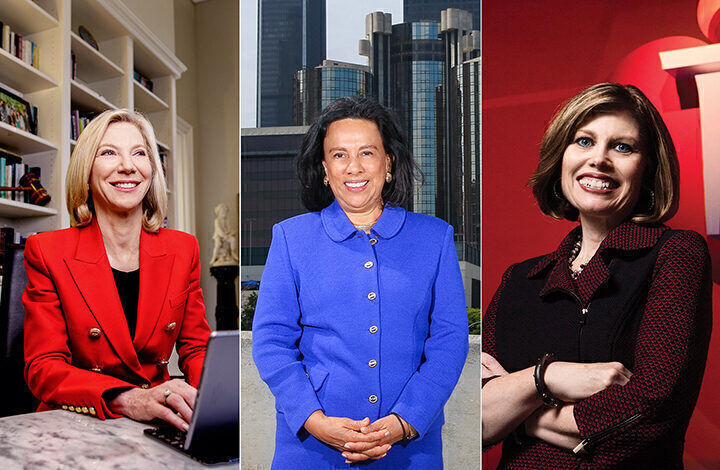
Amy Gutmann and Ronald Daniels run universities of roughly equal stature and size. Each is an accomplished fundraiser. Yet Ms. Gutmann, president of the University of Pennsylvania, earns $3 million a year — nearly double what Mr. Daniels collects at Johns Hopkins. Indeed, she’s among the highest-paid ivory-tower chiefs in the country, pulling down more than most of her Ivy League peers.
Ms. Gutmann is probably just the exception that proves the rule: Men make more than women, particularly at large nonprofits. But she may also be a sign that women are gaining ground in the CEO suites of America’s nonprofits.
A Chronicle analysis of CEO compensation at more than 400 of the nation’s largest nonprofits offers more reason to hope. It found that median pay for women leading private colleges and universities in 2013 was $926,827 — 93 percent of what their male counterparts made. The divide between male and female CEOs of social-service organizations that year was even smaller; the median paycheck for women reached 95 percent of the men’s compensation.
Meanwhile, a small sampling of CEO pay at international relief and development groups in 2014 found that the median compensation for women was roughly $350,000, only about $20,000 less than for men.
Other data offer encouraging signs:
- The proportion of women leading nonprofits has grown in all but the smallest groups in the past decade, according to GuideStar. Even the largest organizations, where women CEOs are rare, have seen change: In groups with annual budgets of $25 million to $50 million, 28 percent of the CEOs are women — up from 20 percent in 2004. This is good news for those concerned about gender-pay disparities. The lack of women leading large organizations — and taking home the hefty paychecks that come with those jobs — is the biggest driver of disparities among nonprofits as a whole, experts say.
- Raises for women CEOs are consistently on par with — or better than — the pay boosts for their male counterparts, according to GuideStar’s compensation study. “There is some work happening around the edges in terms of getting rid of the pay gap,” says Chuck McLean, GuideStar’s vice president for research.
- A recent study that broke down Northern California nonprofits by size found that women CEOs at all but the largest groups earned, on average, at least 92 percent of what men took home. Females leading nonprofits with budgets of $2.5 million to $9 million either outearned men or were on par with them.
Statistical Hiccup?
Of course, huge pay disparities remain, and pay experts say the numbers don’t represent a seismic change. Women “are not making up ground very quickly,” Mr. McLean says.
Lyn Freundlich of Third Sector New England sees a statistical hiccup in a narrowing of the pay gap reflected in her organization’s 2014 survey of executive compensation at Massachusetts and Rhode Island nonprofits. “I would love to say that I predict that the data will look different in our 2016-2017 study,” she says.
Yet the data may represent green shoots of progress. When Nonprofit Compensation Associates began its Northern California surveys 38 years ago, gender-pay disparities were “dramatically awful,” says co-owner Bob Orser. Today, the difference in pay is not as great as you might expect, says his partner, Rita Haronian. “Men are not predictably always paid more than the women.”
If change is afoot, what’s prompting it? The boards of big organizations may be seeing the issue in a new light, says Peggy Outon, executive director of the Bayer Center for Nonprofit Management at Robert Morris University. “The very large groups are so much like corporate America. And there’s no doubt that corporate America has begun to take real steps toward pay equity.”
At the American Heart Association, 53 percent of the most senior executives are women, according to CEO Nancy Brown. At meetings, “it is commonplace and completely unremarkable … to see that at least half of the executives seated with me are female,” she said in an email.
Women may be benefiting from increased awareness about gender-pay inequities. Massachusetts and California recently passed fair-pay laws that require compensation transparency for employers, and other states are considering similar legislation. The Internal Revenue Service’s recent commitment to releasing nonprofit tax filings in machine-readable format will also allow for easier compensation comparisons.
The pay gap is “definitely a hot topic,” says Sandra Pace, a New York-based compensation consultant. “Boards are really just more conscious of that than ever before.”
Gaps remain, she adds, “but I think those gaps are closing now.”
Big Organizations, Big Paychecks
Women in The Chronicle survey who topped $1 million or more in annual compensation.
| Nancy Schlicting | Henry Ford Health System | $3.5 million |
| Amy Gutmann | University of Pennsylvania | $3.1 million |
| Donna Shalala | University of Miami* | $1.3 million |
| Sandra Fenwick | Boston Children’s Hospital | $1.2 million |
| Nancy Brown | American Heart Association | $1.1 million |
| Rebecca Rimel | Pew Charitable Trusts | $1.1 million |
| Barbara Snyder | Case Western Reserve University | $1.1 million |
*Ms. Shalala is now president of the Clinton Foundation.
Compensation is form 2013 or 2014, the latest years available.